
Unbiased headlines. Facts, not spin.
Unbiased Headlines is an independently owned news organization. We bring you the facts, not opinions, written fresh from 110+ named sources. Sources linked so you can verify it yourself.
 health
Major Story (7/10)
Study Estimates 50,391 Heat Deaths in 854 European Cities This Summer, a Record
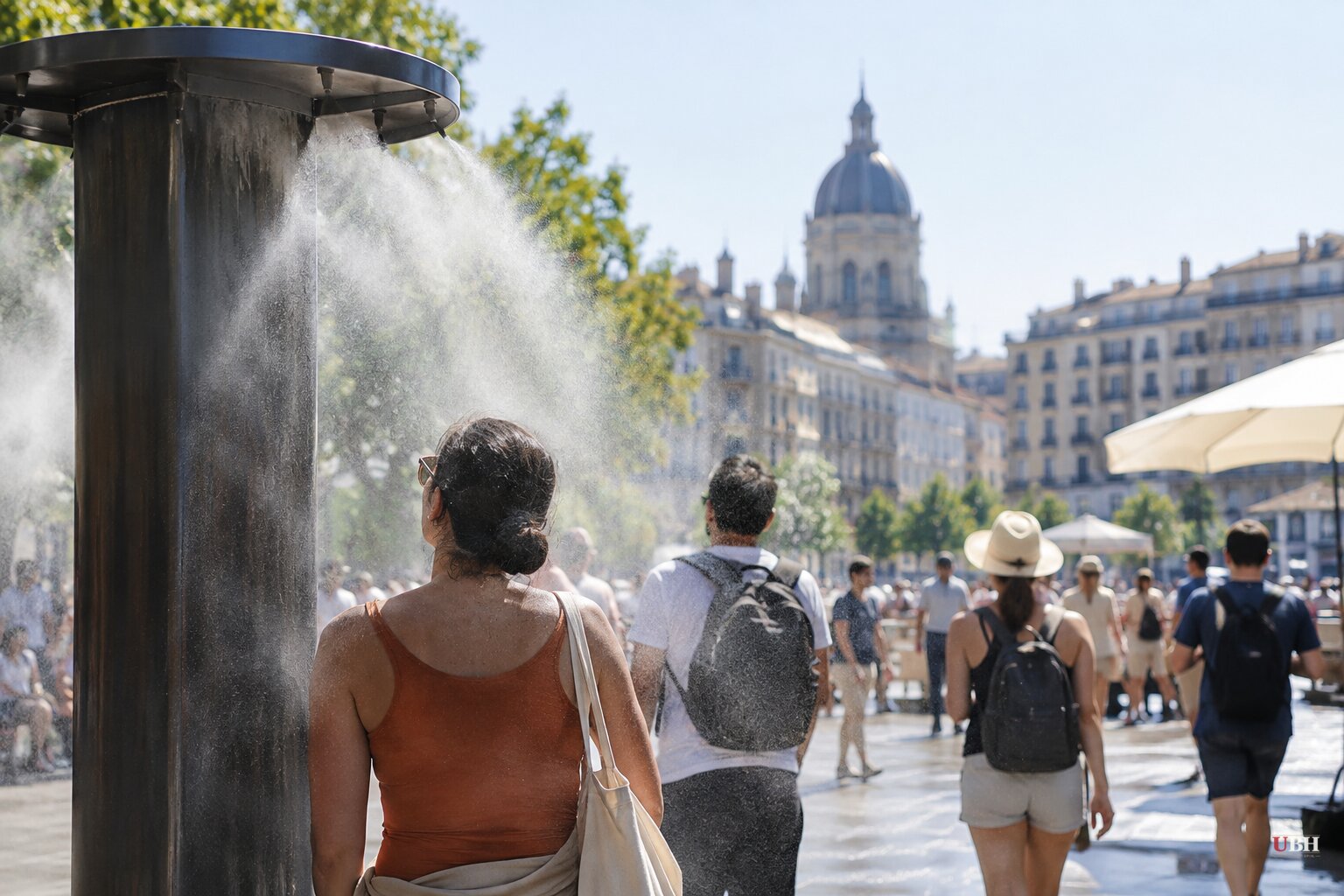
A modeling study released Oct. 23 estimates that 50,391 people died from heat in 854 European cities between June and August 2026. That would be the highest summer toll on record.
The work comes from researchers at Imperial College London and the London School of Hygiene & Tropical Medicine, and is published in two papers in Nature Health. It covers 30 countries: the EU-27, the UK, Norway and Switzerland. The cities hold about 40% of those countries' population.
The authors attribute more than 32,000 of the deaths, roughly two-thirds, to warming caused by fossil fuel emissions. They say that share has climbed from about 40% at the start of the century to 65% this summer.
How the numbers were built
The team compared this summer's actual temperatures with a simulated version of the same summer without human-caused warming. They then applied peer-reviewed relationships between temperature and daily deaths to estimate heat mortality month by month.
This summer's toll compares with about 29,000 heat deaths in the same cities in 2022 and about 28,000 in 2003, according to the research.
The late-June wave was the deadliest. Between June 17 and July 1, daily mean temperatures across the region ran about 5°C (9°F) above the 1991 to 2020 average. That stretch accounted for about a third of the summer's deaths. Western Europe's summer as a whole ran about 2.9°C (5.2°F) above that baseline, with some days up to 12°C (21.6°F) hotter than usual.
Where the toll fell
Italy, France, Spain, Germany and the UK recorded the highest absolute numbers. Per capita, death rates were highest in Malta, Italy and Hungary.
Naples was the hardest-hit city, at 815 deaths per million people on an age-standardized basis. In the UK, researchers estimated 4,354 heat deaths. UK climate transition minister Katie White said the figures "represent thousands of families who have lost a loved one this summer due to the climate crisis."
For Spain, the study estimates 6,824 deaths across 44 cities, about 1,000 more than the country's own MoMo mortality monitoring system. It attributes 77% of those to warming.
The highest death rates were among people 85 and older. The researchers also found that younger adults were affected, with more than 800 people between ages 20 and 44 estimated to have died from heat-related causes.
Mario Guarino, an emergency doctor at Ospedale CTO in Naples, said he saw a 15% rise in emergency room visits during the hottest weeks. He described a terminal cancer patient living in a hot attic because the family could not find a company to install air conditioning that summer.
The method's limits
The death counts are modeled. They are not tallies from actual 2026 death records.
The Science Media Centre Spain published a review of the research that raises the point directly. It said the estimates rest on observed temperatures and epidemiological models, "which do not incorporate actual data on deaths that occurred in the summer of 2026."
It also said the methodology bases the attribution to heat on the temperature associated with minimum mortality, "which may result in high estimates." Public health work, it noted, typically uses thresholds where risk rises significantly. The review said the results should be distinguished from observed mortality data and from official Spanish estimates, while calling the common framework across cities a valuable contribution.
The authors say their approach has produced estimates broadly in line with those later published by national health authorities. Imperial's Clair Barnes said: "I think we can be quite confident in stating that the summer of 2026 is likely to have been the worst on record for heat-related mortality across much of Europe."
The gap in Spain, about 1,000 deaths above MoMo, is one place where the model and an official system already diverge.
The cost beyond deaths
A separate analysis from Bloomberg Economics put the summer's economic damage at about 0.17% of EU GDP from April through September, close to €17 billion ($18.9 billion). That is two and a half times the average loss for the period over the previous decade.
Wildfires destroyed homes, hospitals overheated and transport broke down in parts of the continent, according to Bloomberg's account.
What the researchers want
Barnes said heat waves that would have been dangerous anyway became "really, really dangerous" with the added warming. She said governments need faster action and coordination.
Co-author Pierre Masselot of the London School of Hygiene & Tropical Medicine called for better adaptation, including expanded health care for people most vulnerable to extreme heat.
The Naples case points to a plain adaptation gap. Guarino cited loneliness and poverty as factors that worsened outcomes, and said many elderly people left alone in summer cannot afford air conditioning or avoid turning it on because of the cost of electricity.
The study lands weeks before world leaders gather in Turkey for the annual UN climate talks. Barnes tied the findings to a recent UN report warning that the world's chance of limiting warming to 1.5°C has vanished.
The authors say many national statistics have not yet been released for the full 2026 summer season. Those counts will test whether the model overshot, as the Spanish review cautions, or landed close, as the authors say their method has done before.
Sources used for this briefing
7 links from 6 independent newsrooms (syndicated copies of the same report count once)
These are the sources it draws on, linked so you can verify.


