
Unbiased headlines. Facts, not spin.
Unbiased Headlines is an independently owned news organization. We bring you the facts, not opinions, written fresh from 110+ named sources. Sources linked so you can verify it yourself.
 energy
Notable (6/10)
Magnitude 5.7 quake in Shizuoka injures at least 22 in central Japan, no deaths reported
A magnitude 5.7 earthquake shook central Japan at 1:04 a.m. Sunday, Nov. 8, local time. That was Saturday morning, Nov. 7, in the United States. The Japan Meteorological Agency placed the epicenter in Shizuoka Prefecture, west of Tokyo, at a depth of about 40 kilometers (25 miles).
No deaths have been reported. No tsunami warning was issued.
The U.S. Geological Survey measured the quake slightly lower, at magnitude 5.5. Smaller aftershocks followed.
Injuries mostly minor
Local media counts of the injured vary. Japanese outlets cited by the Associated Press put the toll at at least 22. Kyodo News, citing authorities, reported more than 20 hurt across Aichi and Shizuoka prefectures. The Chunichi Shimbun newspaper and Tokai Television separately reported at least 24.
An emergency official in Aichi said authorities had received 16 reports of mostly minor injuries. In neighboring Shizuoka, officials said at least three women sought emergency care. One of them, a woman in her nineties, hurt her shoulder falling out of bed during the shaking.
Some people were hurt falling on stairs as they tried to flee buildings. The quake was felt as far west as Osaka, where a foreign resident was taken to a hospital after falling from a second-floor apartment when the shaking startled them, local media reported.
Damage across Aichi and Shizuoka
Japanese television showed shattered storefront windows and glass scattered across streets. In Toyohashi, Aichi, the windows of a car dealership were found broken. A large bookstore in Toyota city, also in Aichi, reported books thrown from its shelves in heaps.
The most violent shaking was recorded in Aichi, according to official seismic assessments. The affected area was wide. It included Hamamatsu, Kyoto, Nara, Gifu, and Yamanashi, the prefecture where Mount Fuji sits. The epicenter was far enough away that Tokyo did not feel it.
Trains slowed and suspended
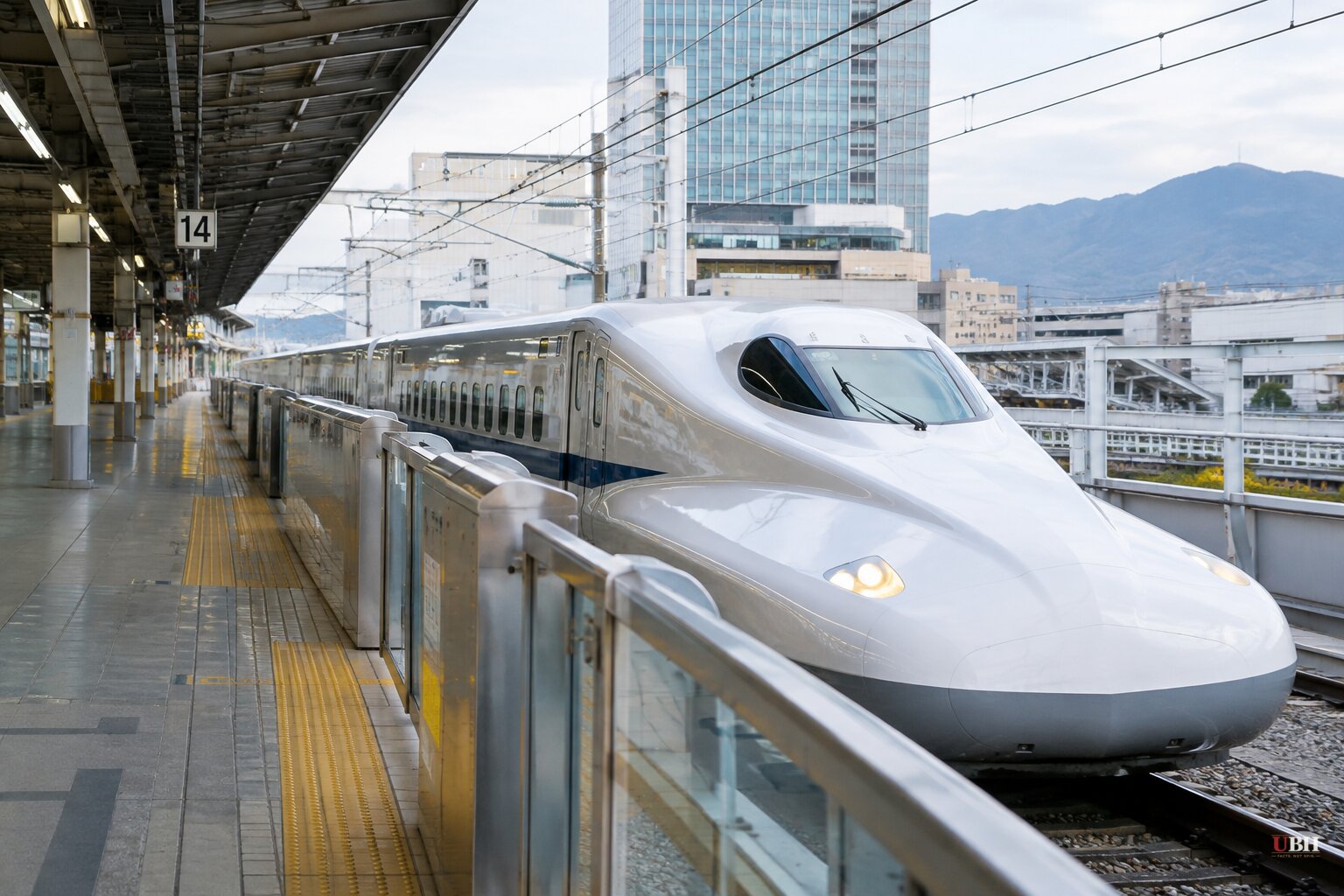
Rail service took a hit. Some local lines were suspended Sunday morning. Shinkansen bullet trains ran at reduced speeds in the affected areas as a precaution, since quakes can damage track.
JR Central said trains on the Tokaido Shinkansen line, which links Tokyo and Osaka, were delayed between Shizuoka and Gifu-Hashima stations while crews ran safety checks.
Aftershock warning and the Nankai Trough
The Japan Meteorological Agency told residents to brace for possible strong quakes in the coming week, especially over the next two to three days. Agency official Ayataka Ebita told reporters: "Please be on the lookout for mudslides, falling rocks and the possible effects from rainfall."
Ebita said no apparent change had been detected so far in the Nankai Trough. That undersea trench, where two major tectonic plates meet under parts of Japan, is where scientists say a megaquake could occur. The agency's finding means the Shizuoka quake has not, so far, altered its reading of that zone.
A second quake in Kumamoto
Separately, a magnitude 4.3 earthquake hit the Kumamoto region in southwestern Japan at 10:53 a.m. Sunday, according to the meteorological agency. There were no immediate reports of serious damage or injuries.
Kumamoto and the surrounding southwest are still recovering from a magnitude 7.1 quake in July. That quake killed 38 people, flattened homes and left tens of thousands without power. The two Sunday quakes are not linked in any reporting to date.
Routine preparation
Japan sits on the Pacific "Ring of Fire" and records hundreds of earthquakes a year. The 9.0-magnitude undersea quake of 2011 triggered a tsunami that killed or left missing about 18,500 people and wrecked the Fukushima nuclear plant.
Authorities regularly tell residents to stock bottled water, food and batteries, plan to shelter under tables and keep walking shoes within reach. Several of Sunday's injuries came from people falling in the dark, in bed or on stairs, in the middle of the night.
The next concrete checkpoint is the meteorological agency's two-to-three-day window for possible strong aftershocks, along with JR Central's safety inspections on the Tokaido line and continued monitoring of the Nankai Trough.
Sources used for this briefing
7 links from 7 independent newsrooms (syndicated copies of the same report count once)
These are the sources it draws on, linked so you can verify.


