
Unbiased headlines. Facts, not spin.
Unbiased Headlines is an independently owned news organization. We bring you the facts, not opinions, written fresh from 110+ named sources. Sources linked so you can verify it yourself.
 energy
Major Story (7/10)
Event date: November 3, 2026 ·
Cloudy, Windless Spell Hits Europe as German Power Forecast Tops €300 a Megawatt-Hour
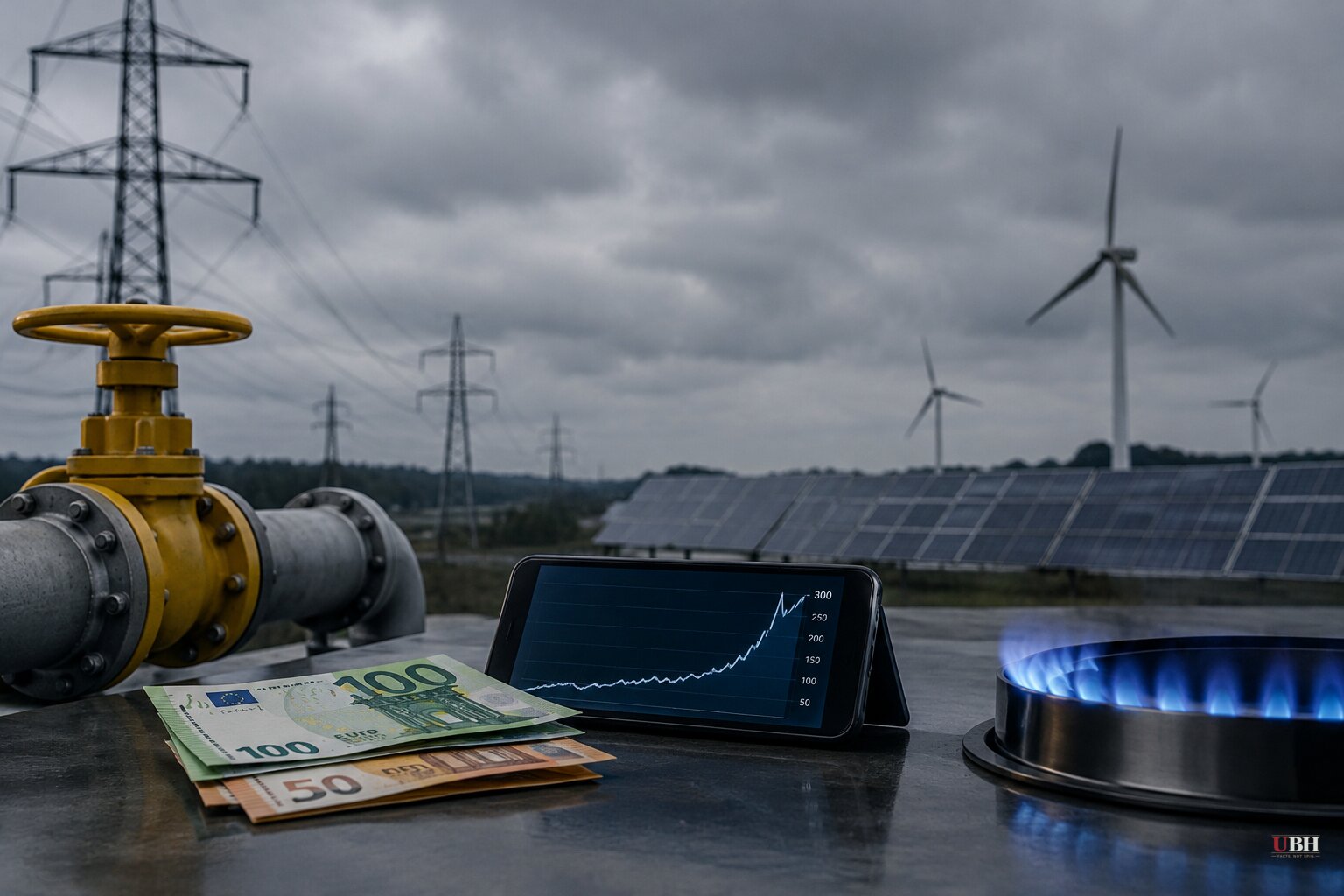
Europe's solar boom has hit the part of the calendar where it works least.
A stretch of cool, cloudy and windless weather is squeezing wind and solar output across the continent. Power prices are already at their highest levels since 2022, according to Bloomberg.
The German term for it is Dunkelflaute, a "dark lull." It typically runs from October through February in Northern Europe, when short days, heavy cloud and fog cut solar output. Cold weather drives up heating demand over the same months.
Prices spike when the grid leans on gas
Bloomberg forecasts put German day-ahead power for Thursday, Oct. 29 above €300 a megawatt-hour. That is about double the October average. Hourly prices were forecast to top €500 during the evening peak.
The cause is the backup. When wind and solar fade, grids call on gas-fired plants. Bloomberg reported that gas futures crossed €100 a megawatt-hour for the first time since the energy crisis, after supply disruptions in the Middle East this year.
Euronews links the Middle East disruption to the war on Iran, which it dates to Feb. 28.
Multi-day dunkelflauten are rare, per Euronews. Bloomberg says shorter bouts of cloudy, windless days have become more common in recent years.
Storage was behind schedule
The gas picture was already tight before the weather turned. At the end of August, EU storage sites were about 63% full, against an average of 80% for that point in the year, according to energy analyst Aura Sabadus in a piece for Enlit.
Sabadus argues that storage volumes are too narrow a test of winter readiness. In her view, the pressure-control equipment that moves gas from storage to power stations, factories and homes deserves the same scrutiny. This is her assessment, not an official finding.
She also points to a hot summer. Copernicus recorded summer 2026 as Europe's third warmest, with western Europe's warmest on record. Extreme heat raised cooling demand and put added pressure on electricity systems, with gas-fired generation helping to meet it.
What households are seeing
One UK resident with 12 panels and 6.36 kW of capacity told Euronews Earth that output collapsed this week. On Wednesday, Nov. 4, the system produced 10.90 kWh and the home imported another 27.40 kWh from the grid.
On Thursday, Nov. 5, with the city overcast all day, it generated 2.40 kWh and imported 20.60 kWh. The household described the experience as "extremely disheartening."
Those are figures from one rooftop, not a national average. They show the pattern, though. When panels go quiet and gas is expensive, the household bill takes the hit.
The case for solar still stands
Solar's defenders have numbers of their own. Euronews says solar has saved the EU €42.9 billion in avoided gas imports since the Iran war began. It also says solar helped stabilise the grid in summer, when back-to-back heatwaves drove up cooling demand.
In the right conditions, the outlet says, solar can generate a unit of power for as little as €0.024, undercutting coal, gas and wind.
The Independent makes the point that panels still work in winter. They respond to light, not warmth, and cold can improve cell efficiency. The drop is about daylight. A typical UK December day has around eight hours against roughly 16 in midsummer, and output can fall to 25 to 30 percent of summer levels in the darkest months.
That is the tradeoff in plain terms. Cheap summer solar lowers gas use when the sun is out. It does not replace dispatchable power on a still, overcast evening in November.
What comes next
The dunkelflaute window runs through February, so this first episode is the start of the season, not the end. Whether gas holds above €100 a megawatt-hour will depend on how long the weather stays flat and how far storage has been rebuilt since August's 63%. Neither the EU nor member-state grid operators have published a winter-wide figure in the reporting so far.
Sources used for this briefing
4 links from 4 independent newsrooms (syndicated copies of the same report count once)
These are the sources it draws on, linked so you can verify.


