
Unbiased headlines. Facts, not spin.
Every story is an unbiased news briefing written from 110+ sources across the spectrum — sources linked so you can verify it yourself.
 defense
Major Story (7/10)
July 5, 2026 at 05:52 PM
defense
Major Story (7/10)
July 5, 2026 at 05:52 PM
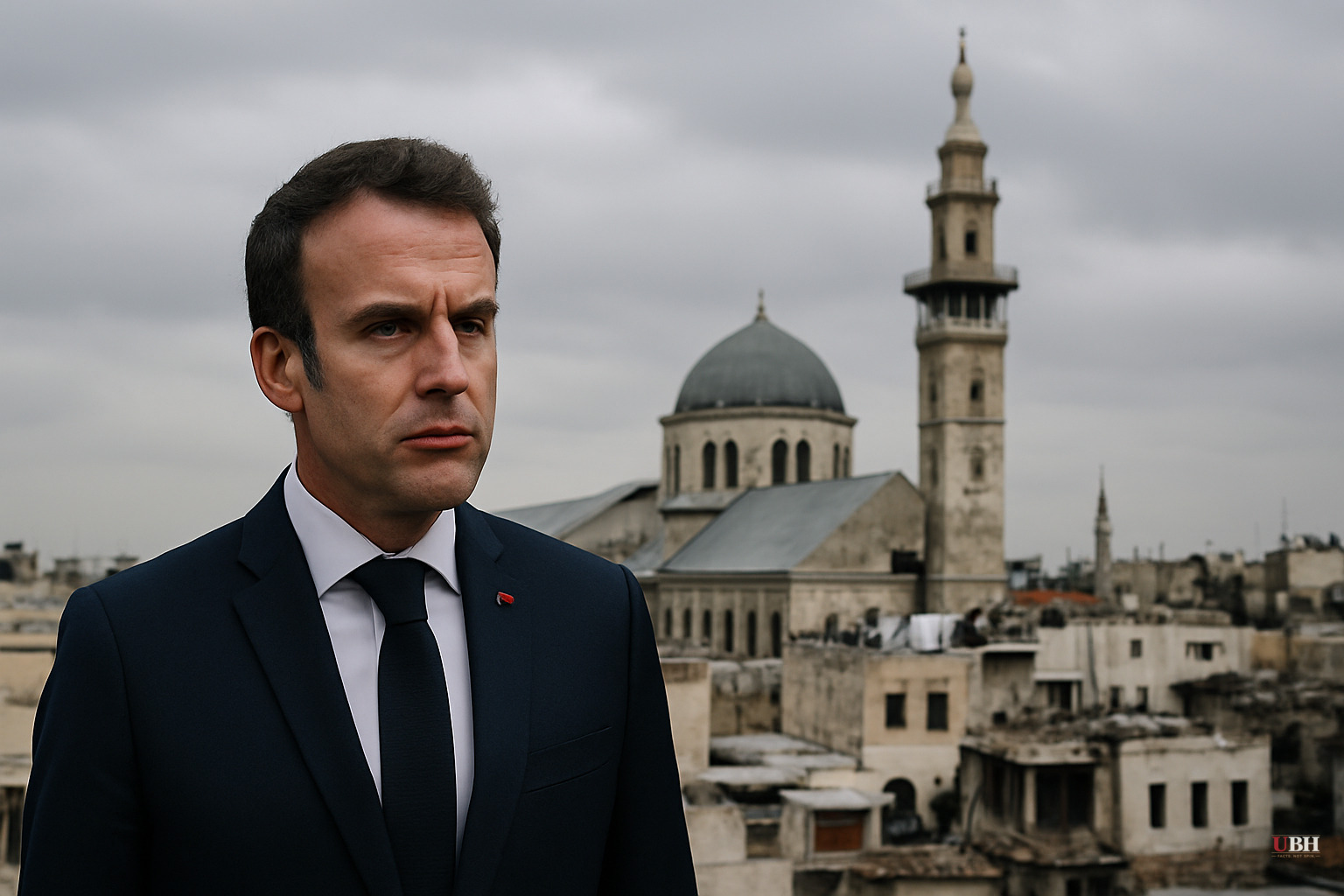
Macron Set to Visit Syria, Becoming First Western EU Leader to Enter Damascus Since Assad's Fall
What Syria Said
Syria's state news agency SANA, citing the Syrian presidency's media office, announced Sunday that French President Emmanuel Macron is expected to visit Damascus. The purpose: "strengthening bilateral relations and issues of common interest," per SANA's wording. No date was specified.
Macron will not travel alone. SANA said the delegation will include investors and representatives of French companies, framing the visit explicitly as an economic outreach effort alongside diplomatic talks on "regional and international" developments.
The Historical Weight
The last French head of state to set foot in Syria was Nicolas Sarkozy in 2009, before Assad's government violently suppressed pro-democracy protests starting in 2011. That crackdown triggered a civil war that, according to TRT World, killed more than half a million people and gutted the country's infrastructure and economy over more than a decade.
Assad was ousted in late 2024. Syria is now led by President Ahmed al Sharaa.
Where Macron Fits in the Diplomatic Sequence
Macron is not the first foreign leader to reach out to the new Syrian government. Qatar's Emir Sheikh Tamim bin Hamad al Thani was the first foreign head of state to visit Damascus after Sharaa took power. European Commission President Ursula von der Leyen visited in January 2026. Ukraine's President Volodymyr Zelenskyy followed in April 2026.
But Macron would be the first sitting head of an EU member state, as opposed to an EU institutional leader like von der Leyen, to visit Syria under the new government, according to TRT World. AP News confirmed the same framing from Damascus. He also previously hosted Sharaa in Paris.
The Strategic Case for Going
France has legitimate reasons to engage. Syria sits at the crossroads of Middle Eastern stability that directly affects European migration flows, counterterrorism operations, and energy corridors. Paris lost significant influence in the Levant over the past decade as Russia and Iran backed Assad while France backed opposition factions. Re-establishing a physical diplomatic presence and getting French businesses into reconstruction contracts is straightforward national interest, not charity.
Sharaa's government has been actively courting Western investment and legitimacy. Trump praised Syria's leadership in recent months, according to TRT World, calling it a "good job." This marks a notable shift in U.S. posture that has given European governments more political cover to normalize ties.
The Legitimate Concerns
The strongest objection to Macron's visit deserves a fair hearing. Ahmed al Sharaa's Hayat Tahrir al Sham-linked background raises real questions about the character of the new Syrian government. Critics argue Western leaders rushing to Damascus risk lending legitimacy to a government whose democratic credentials and human rights record are unproven. Syria under any government has a recent history of brutal internal suppression, and post-conflict transitions frequently see new rulers consolidate power at civilians' expense.
What isolation fails to settle is whether it is the better alternative. Western disengagement from Syria's reconstruction would not make Sharaa's government more democratic. It would hand influence to China, Russia, and Gulf states with fewer human rights strings attached. Engagement can include conditions; absence leaves an empty seat at the table.
Timing
The announcement came days after a bombing Thursday at a Damascus cafe killed 10 people, according to TRT World. The Syrian government has not publicly attributed responsibility for that attack as of the sources available. Macron's team has not issued a statement connecting or distancing the visit from the bombing, and no date for the trip has been set.
France will face a choice whether to attach any concrete conditions to the economic cooperation it is offering, on governance, press freedom, or minority protections, or whether the investor delegation signals that commercial opportunity has already become the primary driver of French Syria policy.
Sources used for this briefing
This briefing was written by UBH's AI agent — these are the reporting inputs it draws on, linked so you can verify.


