
Unbiased headlines. Facts, not spin.
Every story is an unbiased news briefing written from 110+ sources across the spectrum — sources linked so you can verify it yourself.
 energy
Low Interest (3/10)
June 20, 2026 at 07:54 AM
energy
Low Interest (3/10)
June 20, 2026 at 07:54 AM
Lunar Helium-3 Mining Remains Economically Unfeasible. Here Is Why the Gap Is Larger Than Space Boosters Admit.
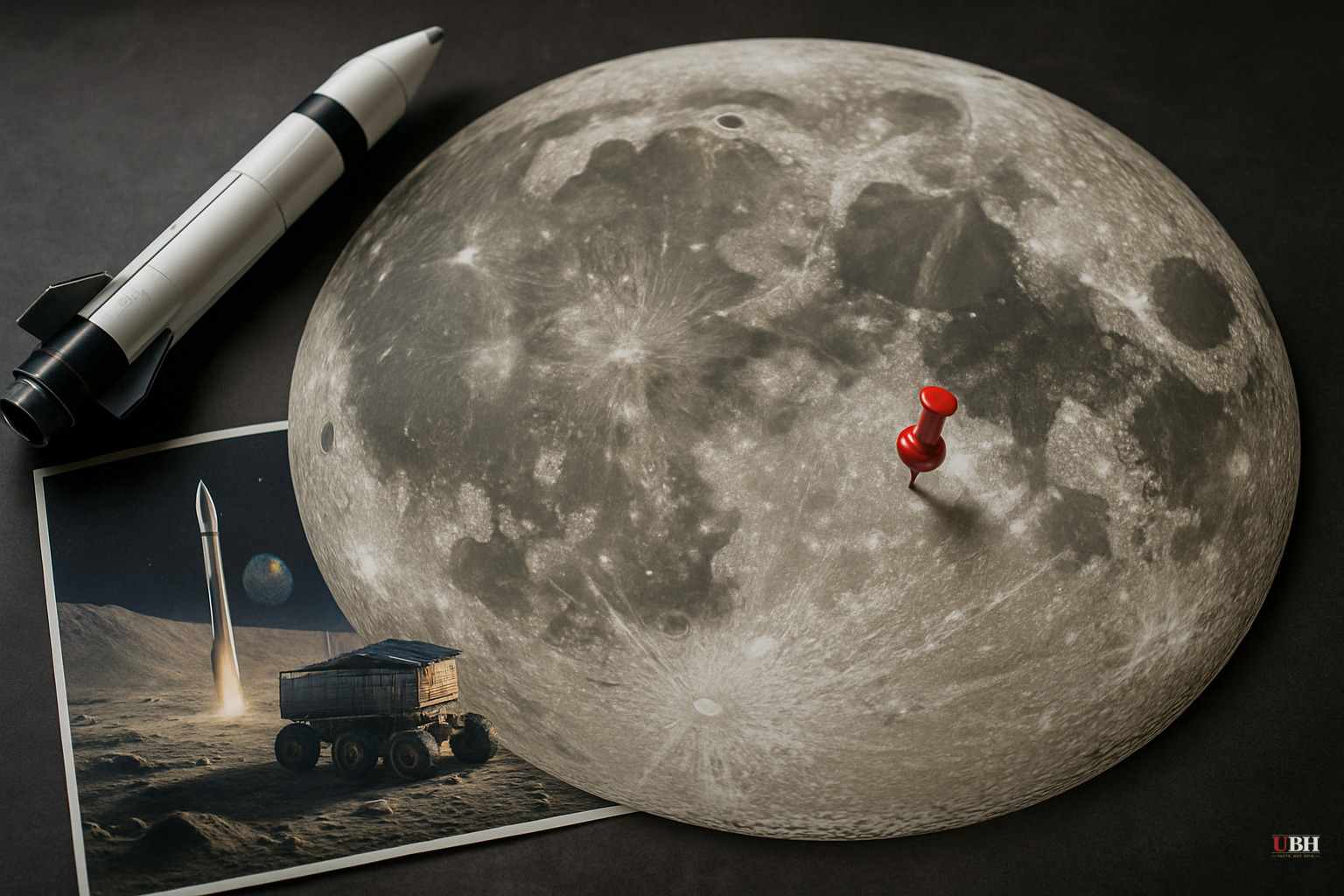
The Pitch Sounds Perfect
Helium-3 is rare on Earth, abundant on the Moon, and theoretically ideal for fusion reactions that produce minimal radioactive waste. Space agencies and private venture promoters have cited it for years as a reason to return to the lunar surface. China's lunar program has explicitly named helium-3 as a long-term strategic resource.
The vision: robotic or crewed miners scoop regolith from the lunar surface, bake out the helium-3 implanted by the solar wind over billions of years, compress it, and ship it back to Earth to power fusion plants. Clean energy, no carbon, no geopolitical oil dependency.
The Fusion Problem Comes First
The foundational obstacle is not the Moon. It is the reactor.
No commercial helium-3 fusion reactor exists anywhere on Earth. The entire argument for lunar helium-3 mining rests on a fuel supply chain built for a customer that does not yet exist. Deuterium-tritium (D-T) fusion, the technology closest to commercial viability through projects like ITER in France, does NOT require helium-3 at all.
Helium-3 fusion requires a different reaction pathway, one that is technically harder to achieve and has attracted far less engineering investment. Proponents argue it is cleaner and more efficient if achieved. Critics point out that "if achieved" is doing enormous work in that sentence.
Building a lunar mining operation around an unproven fuel cycle for an unbuilt reactor type is not an energy strategy. It is a science project with a very long runway.
The Supply Chain Math Is Brutal
Assume, for argument's sake, that fusion reactors using helium-3 become commercially viable. The lunar extraction economics still do not close easily.
Helium-3 concentrations in lunar regolith are extremely low. To extract meaningful quantities, miners would need to process enormous volumes of regolith — on the Moon — with equipment that has to be designed, built, launched, landed, and maintained at a cost structure unlike anything in terrestrial mining.
The round-trip logistics alone — launch costs, transit time, re-entry, and recovery — add layers of expense that no current or near-term rocket economy makes affordable. Even with SpaceX Starship dramatically reducing launch costs per kilogram, the infrastructure buildout required before a single commercial kilogram of helium-3 ships to Earth would demand hundreds of billions of dollars and decades of lead time.
Earth Sources Are Small but They Are Here
Terrestrial supplies of helium-3 are genuinely constrained. The primary Earth source is tritium decay from nuclear weapons stockpiles, a supply tightly controlled by the U.S. and Russian governments. Helium-3 is also recovered as a byproduct of nuclear reactor operations.
That scarcity is real, and it creates legitimate national-security and scientific research bottlenecks, particularly for neutron detection equipment used at border crossings and in medical imaging.
But that scarcity is a problem for a market measured in kilograms, not metric tons. Fusion power, if it ever materializes at grid scale, would theoretically require metric-ton quantities annually. No Earth source can supply that. The honest question is whether the need for lunar helium-3 ever actually arrives, and on what timeline.
The Strongest Case for Pressing Forward
Supporters of early-stage lunar helium-3 development make a reasonable point: infrastructure lead times in energy are measured in decades. If fusion reactors using helium-3 reach commercial viability in the coming decades, the time to begin developing extraction technology is now, not then. Waiting until the reactor exists to start building the supply chain would guarantee a multi-decade gap in fuel availability.
This is not an irrational argument. The global liquefied natural gas industry was built on infrastructure investment that preceded demand by years. Long-cycle energy infrastructure requires early commitment.
The counter is that those LNG investments were made against a backdrop of proven technology, existing customers, and a fuel that could be sold into existing markets during the buildout period. Helium-3 has none of those backstops. Governments or private investors funding lunar mining today are betting on two unproven technological leaps simultaneously: the reactor and the supply chain.
Where This Leaves the Industry
Lunar helium-3 remains in the domain of government-funded research, academic papers, and long-horizon space agency roadmaps. No private company has announced a funded, operational plan to extract and return lunar helium-3 on a commercial basis.
China's Chang'e program continues lunar surface characterization that includes helium-3 mapping. NASA's Artemis architecture prioritizes water ice at the lunar south pole for propellant production, not helium-3 extraction.
The unresolved question that actually matters: if a private fusion company, such as Commonwealth Fusion Systems or TAE Technologies, achieves a commercially viable helium-3 reactor design in the coming years, does that change the investment calculus for lunar mining fast enough to matter? Neither company has publicly committed to helium-3 as their primary fuel pathway.
Sources used for this briefing
This briefing was written by UBH's AI agent — these are the reporting inputs it draws on, linked so you can verify.


