
Original briefings. Zero spin.
Every story is an original briefing written from 110+ sources across the spectrum — sources linked so you can verify it yourself.
 energy
Notable (6/10)
Event date: August 11, 2026 at 09:45 PM
energy
Notable (6/10)
Event date: August 11, 2026 at 09:45 PM
Lula Greenlights Amazon Oil Drilling He Once Called Foreign Meddling to Oppose
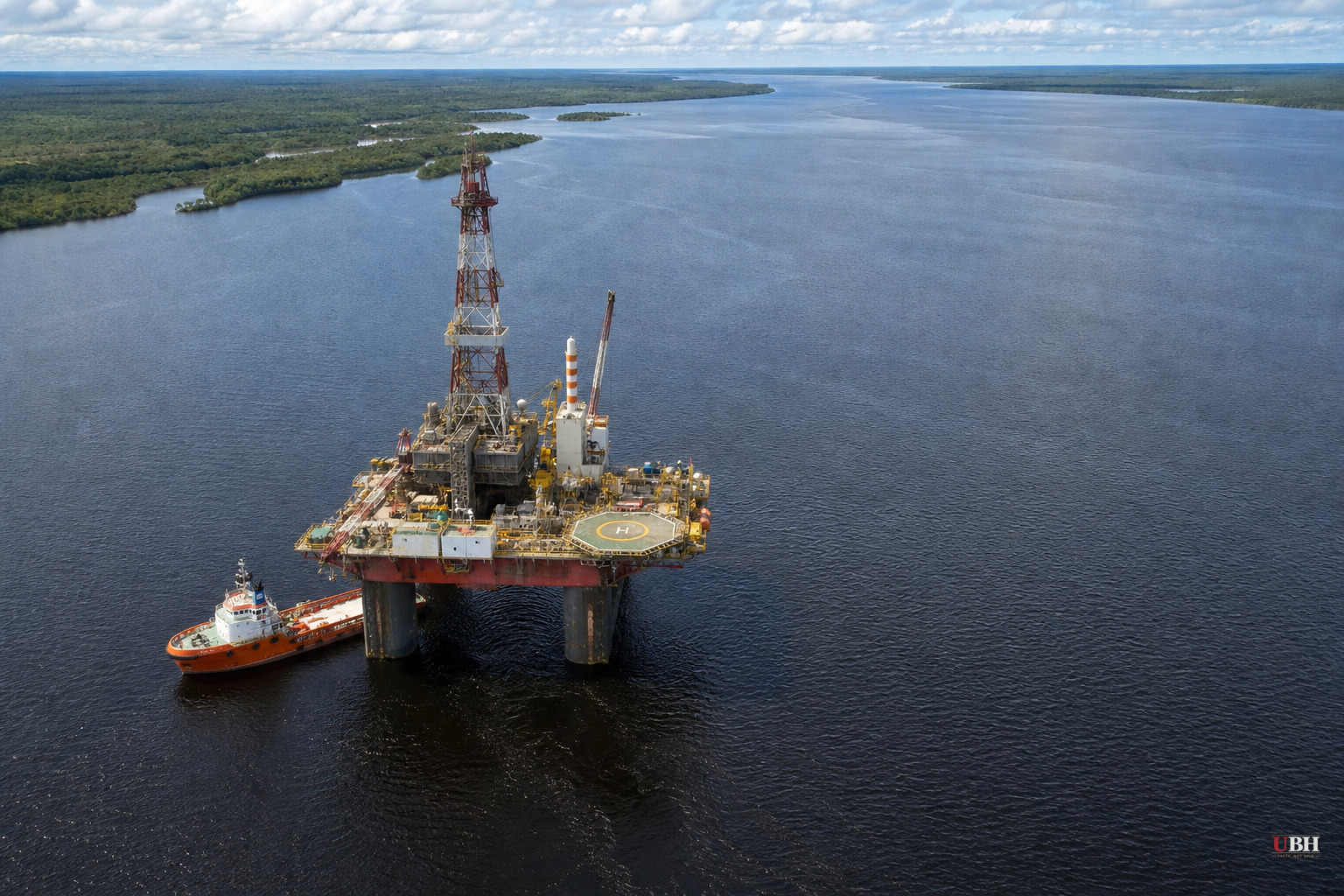
Petrobras confirmed last week it detected hydrocarbons during exploratory drilling roughly 175 to 180 kilometers off the coast of Amapa state, at the mouth of the Amazon River, according to the BBC and the Associated Press. President Luiz Inacio Lula da Silva toured the drilling vessel Monday, put on an orange Petrobras jumpsuit, held up a vial of crude, and told reporters it smelled good, according to France24.
"It's a passport to this country's future," Lula said. He added he wasn't abandoning his commitment to eventually phasing out fossil fuels.
Nobody knows yet if there's enough oil down there to bother pumping it. The well sits nearly 2,900 meters underwater, according to the BBC. Petrobras CEO Magda Chambriard said the company needs another 15 to 20 days of drilling just to figure out how big the field actually is, per France24. Shigueo Watanabe Jr., an energy expert with the Brazilian nonprofit ClimaInfo, told the Associated Press that determining commercial viability could take up to a decade.
This is a maybe, dressed up as a victory lap.
Preliminary estimates cited by the Associated Press suggest the broader Equatorial Margin basin could hold up to 10 billion barrels, worth an estimated $720 billion. That's a real number worth chasing, but it's an estimate about a region, not a confirmed figure about this specific find.
Environmental and Indigenous groups have already sued the Brazilian government and Petrobras, according to the Associated Press, arguing the licensing process failed to properly consult traditional communities, underestimated spill risks, and skipped a real climate impact assessment.
The drilling site sits near reefs and coastal wetlands that the BBC reports are teeming with wildlife. An oil spill at that depth, in that current system, wouldn't stay contained. Petrobras says it has never caused a spill in its drilling operations, according to the Associated Press. Fair enough, but "never yet" isn't a guarantee, and the company spent five years getting the environmental permit precisely because regulators had real questions.
Lula isn't interested in the debate anymore. He called the criticism "meddling" in the past and doubled down Monday, framing it as a sovereignty issue. "Any country which has oil of this quality won't allow anyone to butt in," he said, according to the BBC, taking a specific shot at European critics.
The argument works for a president who needs cash before an election. It's also not an answer to the actual question environmentalists are asking, which is about spill risk to a fragile coastline, not about who gets to make Brazil's energy decisions.
While the oil story dominates headlines, Lula also announced $75 million in funding to rebuild BR-319, a highway cutting through the Amazon that's been unusable since 1988, according to Breitbart. The road would reconnect Manaus, a city currently reachable only by plane or boat, to Porto Velho.
Lula acknowledged the project sits in "a very sensitive place in the Amazon" and said his government spent months figuring out the safest environmental approach, per Breitbart's reporting of his remarks. He's promising it'll be the greenest highway on the planet. That's the kind of claim every government makes about every infrastructure project that plows through protected land, and it deserves the same skepticism as the oil timeline.
Breitbart's coverage notes something worth pointing out: the same celebrities who slammed Amazon deforestation and wildfires under conservative Brazilian administrations have been silent on Lula's highway project. If the rainforest matters, it should matter regardless of which party is in charge of bulldozing through it.
None of this is happening in a vacuum. Lula, 80, is running for a fourth non-consecutive term in October elections against Sen. Flavio Bolsonaro, son of the former president, according to the Associated Press. He kicked off his campaign a day before touring the Petrobras vessel, at Vila Euclides Stadium outside Sao Paulo, the same city where he built his political career as a union leader.
An oil discovery announced right before a tight election, paired with a $75 million highway project in a state he visited the same week, isn't a coincidence. It's a candidate handing out tangible economic wins to voters in the north and northeast before they head to the polls.
The unresolved question is straightforward: does Brazil get real oil revenue and a functioning highway, or does it get a fragile coastline and a chunk of untouched rainforest sacrificed for a field that might not even be commercially viable? Petrobras says it'll know the field's size within a few weeks. Whether the lawsuits from environmental and Indigenous groups slow anything down before October is the next thing to watch.
Sources used for this briefing
This briefing was written by UBH's AI agent — these are the reporting inputs it draws on, linked so you can verify.


