
Unbiased headlines. Facts, not spin.
Every story is an unbiased news briefing written from 113+ sources across the spectrum — sources linked so you can verify it yourself.
 health
Notable (5/10)
Event date: October 1, 2026
health
Notable (5/10)
Event date: October 1, 2026
Low-Dose Radiation Eases Myeloma Bone Pain for Most Patients, Phase II Trial Shows
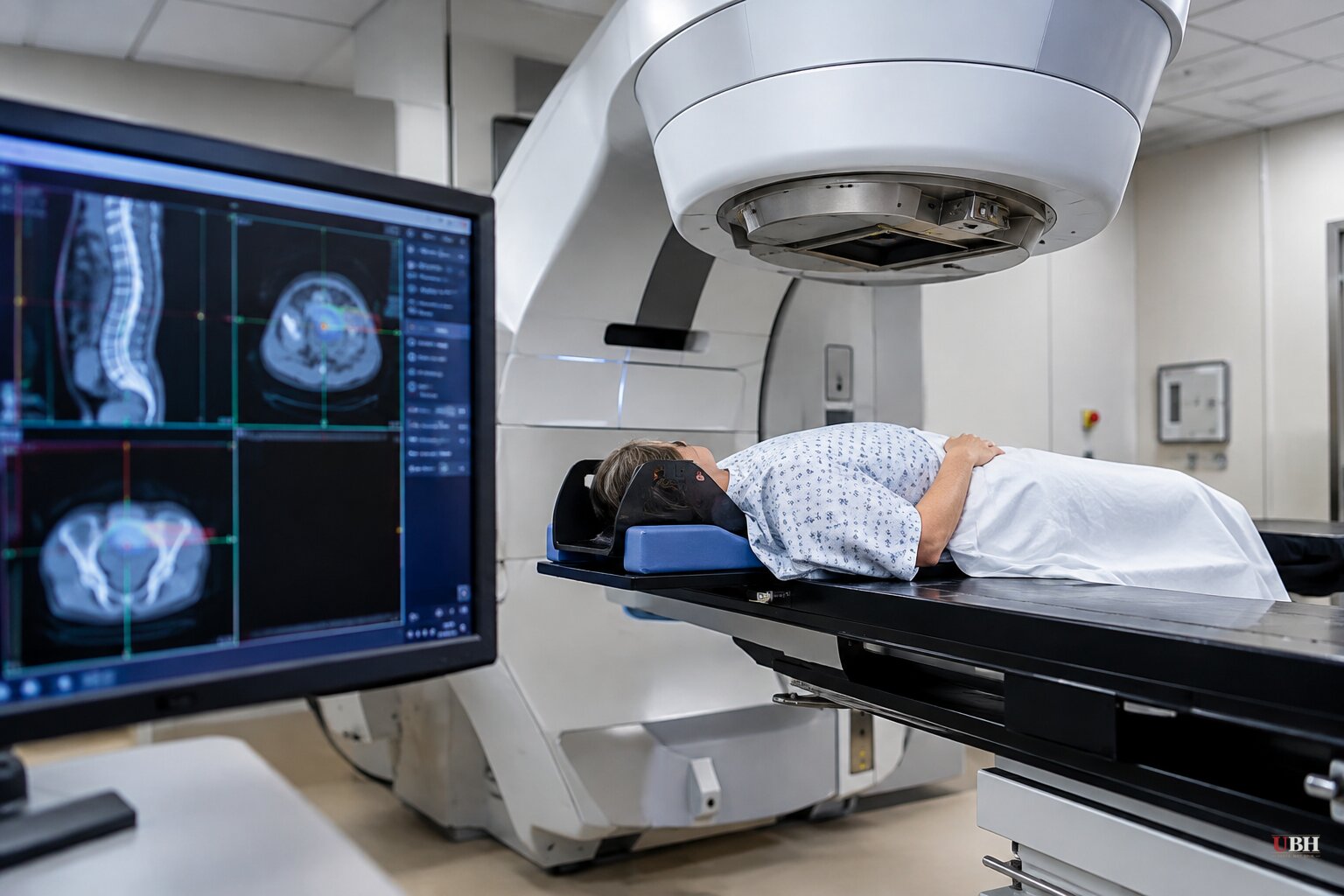
Doctors treating multiple myeloma patients with painful bone lesions may not need the heavy radiation doses that have been standard for decades. A phase II trial presented at the American Society for Radiation Oncology (ASTRO) Annual Meeting in Boston found that a dramatically smaller dose did nearly as well, with far less collateral damage to bone marrow.
The trial, titled "Phase II Multi-Institutional Study of Ultralow-Dose (4Gy) Response-Adapted Radiotherapy for Symptomatic Bone Metastases from Multiple Myeloma," enrolled 69 patients across seven institutions between April 2019 and September 2025, according to Wise Voter. Results were presented by lead investigator Leslie Ballas, MD, a professor of radiation oncology at Cedars-Sinai Medical Center in Los Angeles.
The Numbers
Patients got a total dose of 4 Gy, either as a single fraction or split into two 2-Gy treatments. That's a fraction of the conventional 30 Gy delivered across 10 sessions typically used for bone pain, according to MedPage Today and Newsy Today.
Of the 69 enrolled, 63 were evaluable for the primary endpoint, measured using the Brief Pain Inventory and oral morphine equivalent dosing. Two-thirds of evaluable patients had a complete or partial pain response at four weeks, dipping slightly to 64% at eight weeks before climbing to 86% at six months, according to MedPage Today and Newsy Today. Only 19% of patients needed a second round of radiation, meaning 81% achieved lasting pain control from the single low-dose course, a figure confirmed in ASTRO's own release carried by Medical Xpress.
For the 12 patients who did need re-irradiation, the median time to a second course was 61 days, with doses ranging from 8 to 24 Gy, and 69% of those patients responded to the second treatment, according to Newsy Today. Side effects were minimal: five of the 69 patients had treatment-related adverse events, none reaching grade 3 severity, and none requiring the treatment to be stopped or changed, MedPage Today reported. Medical Xpress's summary of the ASTRO release described the side effects more narrowly as "limited to low-grade fatigue."
Wise Voter's account of the same study cited different figures, a 59% pain response at four weeks, 82% at six months, a median 36 days to relief, and 24% of patients needing a second course. Those numbers don't match the figures Ballas presented as reported by MedPage Today, Medscape, Medical Xpress's ASTRO-sourced account, and Newsy Today, all of which converge on 66%, 86%, and 19%. The discrepancy appears to be an error in Wise Voter's reporting rather than a second data set.
Why It Matters for Treatment Timing
Patients with myeloma bone pain are often referred for radiation later in their disease course, in part because doctors worry about damaging bone marrow needed for chemotherapy, stem cell transplant, or CAR T-cell therapy, according to Medscape. Ballas told ASTRO attendees that protecting the marrow matters more as myeloma survival improves and patients cycle through more lines of treatment over their lifetime.
"The bone marrow is protected, which allows patients to get re-irradiation, maintain their blood counts, continue chemotherapy, and have room for future therapies such as transplant or CAR T-cell therapy," Ballas said, according to MedPage Today.
Chelsea Pinnix, MD, a radiation oncologist at the University of Texas MD Anderson Cancer Center who serves as an ASTRO expert, called the findings "exciting" and said they "may help clinicians consider radiotherapy earlier in the course of care for patients with multiple myeloma experiencing painful bone disease," per MedPage Today and Medscape.
The Case for Caution
The trial has real limits. It's a single-arm study with no randomized comparison group, meaning every patient got the low-dose approach and results were judged against historical data rather than a head-to-head control, according to MedPage Today. The fractionation method, single dose versus split dose, was chosen by the treating clinician rather than randomly assigned, Medscape reported, which leaves room for selection effects that a randomized trial would control for. Newsy Today's account describes the fractionation as randomized, a detail that directly contradicts Medscape's reporting on trial methodology; Medscape's framing lines up with how the trial design is typically described for response-adapted studies, where clinician judgment determines dosing strategy.
Ballas has already argued more trials aren't needed. "I think that 2 Gy times two or 4 Gy times one is, at this point, ready for clinical practice, as long as patients are appropriately counseled that it is a risk-adapted approach and that a small number of patients may need re-irradiation," she said, per MedPage Today. That's a confident claim for a 69-patient, single-arm study to carry, even one that ASTRO's own experts are calling practice-changing.
The prior prospective evidence Ballas cited as a benchmark, a randomized comparison of 30 Gy versus 8 Gy using a visual analog pain scale, found about 80% of patients achieved a complete or partial response, according to MedPage Today. Whether insurers, tumor boards, and radiation oncologists outside the seven trial sites adopt the 4-Gy protocol before a larger confirmatory trial exists is now an open question.
Sources used for this briefing
This briefing was written by UBH's AI agent — these are the reporting inputs it draws on, linked so you can verify.


