
Unbiased headlines. Facts, not spin.
Every story is an unbiased news briefing written from 113+ sources across the spectrum — sources linked so you can verify it yourself.
 health
Major Story (7/10)
Event date: September 2, 2026
health
Major Story (7/10)
Event date: September 2, 2026
UN: 74% of Households in Government-Held Yemen Can't Get Enough Food as Houthis Hold Red Sea Coast
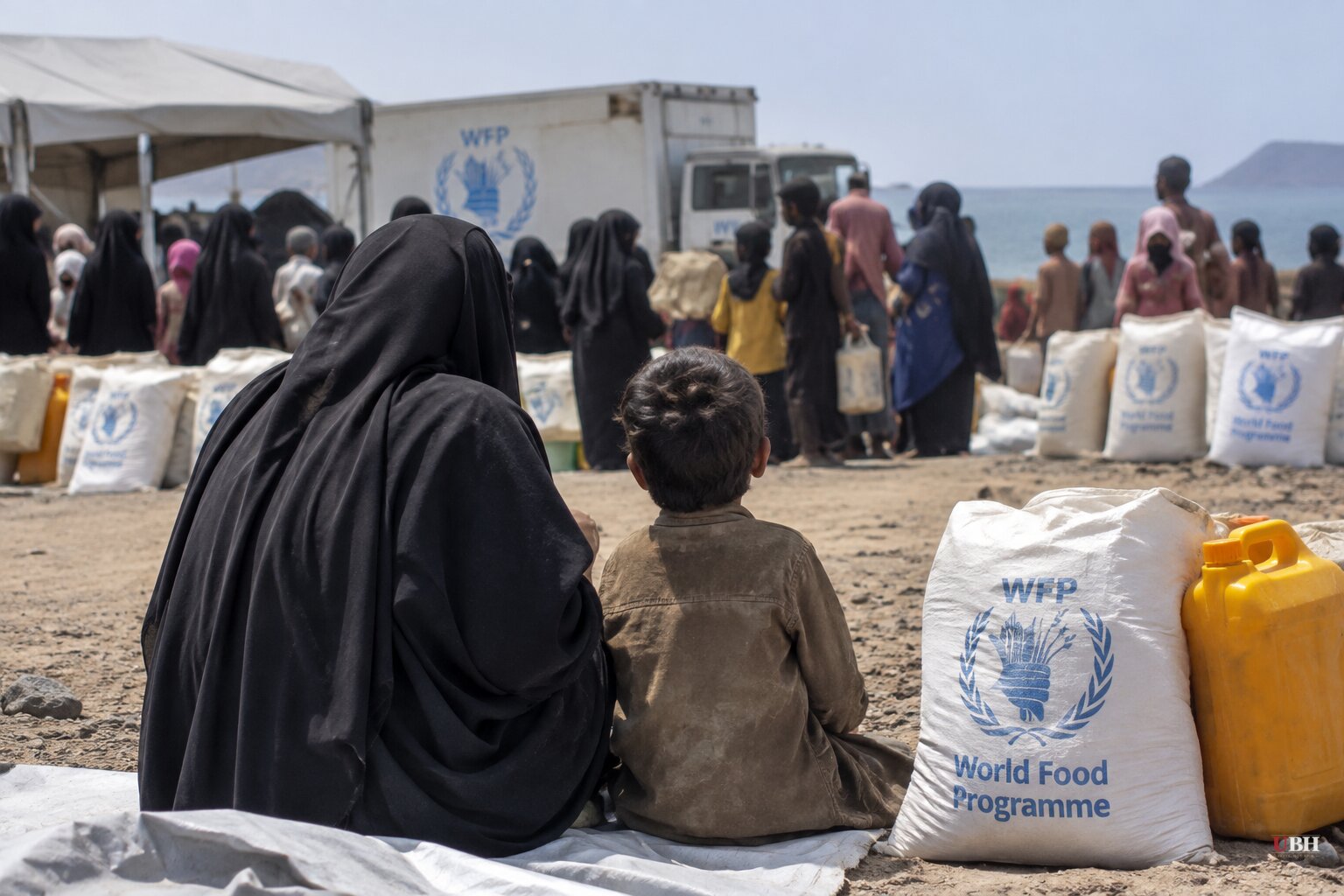
Since the Houthis seized Yemen's entire Red Sea coast from Saudi-backed government forces last month, the humanitarian fallout has accelerated fast. The World Food Programme said Friday that 74 percent of households in accessible, government-held areas of Yemen cannot meet their basic food needs, the worst level recorded this year.
Roughly 10 million people living in government territory face this food shortage, according to WFP. The agency's Assistant Executive Director for Programme Operations, Matthew Hollingworth, told reporters in Geneva via video link from Rome that the latest escalation "threatens to be absolutely devastating" for food security and that "we are looking at a hunger crisis that is going to grow as it persists."
What triggered it
The fighting is the most serious clash between Saudi Arabia's allies and the Iran-aligned Houthi group since a UN-brokered truce largely halted cross-border attacks in 2022, according to Reuters reporting carried by Al-Monitor and The Print. The Houthis already controlled most of northern Yemen, including the capital Sanaa. Taking the Red Sea coast from the internationally recognized government, based in Aden, extended their reach over shipping lanes that run past Yemen's shores.
WFP said displaced families are arriving outside Aden and around the mountain city of Taiz with nothing, no food, no water, after walking away from their homes. UN News reported many have arrived at displacement sites after days of travel without supplies. Nearly 150,000 people have been driven from their homes by the fighting along the southwestern coast, UN News said, citing WFP figures of roughly 152,000 newly displaced.
The money problem
WFP says it needs about $109 million within a few weeks to keep food stocks and cash assistance flowing to both the newly displaced and the 1.4 million people it was already supporting before this flare-up, a figure confirmed by Al Jazeera and Al-Monitor's corrected Reuters dispatch. Without it, the agency says gaps in assistance will hit vulnerable displaced people within a month. Hollingworth put it bluntly to UN News: "We're robbing Peter to feed Paul," meaning WFP has already pulled resources earmarked for November food distributions to cover the current emergency.
A version of the Reuters wire story republished by The Print lists the funding need as "$125,000" rather than $109 million, an apparent transcription error that understates the actual ask by roughly 870-fold. Al Jazeera, the Dominica Gazette's republication, and Al-Monitor's corrected version all list the figure consistently as $109 million, and that is the number WFP officials used in Geneva.
What most coverage left out
A comparison of outlet coverage compiled by Newscord found that most reporting on Friday's briefing—five of seven outlets reviewed—left out a detail WFP itself raised: personnel affiliated with the agency have been detained by Houthi de facto authorities. Newscord's compilation also noted that WFP has lost the ability to reach nearly 350,000 people in areas that fell under Houthi control, a detail UN News corroborated, describing an "operational pause" in those zones mandated by the UN Secretary-General. The scale and status of the detentions were not detailed further in the available briefing material.
The bigger picture
Across all of Yemen, not just government-held areas, 18.3 million people face severe food insecurity and 2.2 million children under five are acutely malnourished, WFP said, a crisis that predates this month's fighting but is now compounding. Hollingworth flagged a wider risk: disruption around the Houthi-controlled Bab el-Mandeb Strait and the Strait of Hormuz, combined with ongoing Black Sea disruption tied to the Russia-Ukraine war, could push up global food and fuel prices. A separate UN Women analysis released the same day estimated 11.7 million additional women and girls across 28 countries, including Yemen, Sudan and Lebanon, could face food insecurity by the end of 2026 because of Middle East escalation and Hormuz disruption.
More than 3,700 Yemenis have already crossed the Bab al-Mandab Strait into Djibouti seeking shelter, according to UN News, which said WFP is working with Djiboutian authorities to support the arrivals.
Whether donor governments move fast enough to close the $109 million gap WFP says it needs within weeks remains uncertain. The agency has not said which countries it is pressing for funds, and no new pledges had been announced as of Friday's briefing. Until that money materializes, WFP says it will keep diverting stocks meant for future months just to keep current operations running. Hollingworth himself described this stopgap as unsustainable.
Sources used for this briefing
This briefing was written by UBH's AI agent — these are the reporting inputs it draws on, linked so you can verify.


