
Unbiased headlines. Facts, not spin.
Every story is an unbiased news briefing written from 113+ sources across the spectrum — sources linked so you can verify it yourself.
 health
Major Story (8/10)
October 2, 2026 at 11:38 PM
health
Major Story (8/10)
October 2, 2026 at 11:38 PM
DR Congo Soldiers Burn Ebola Transit Camp Hunting Weapons, Scattering 19,000 as Local Official Beaten to Death
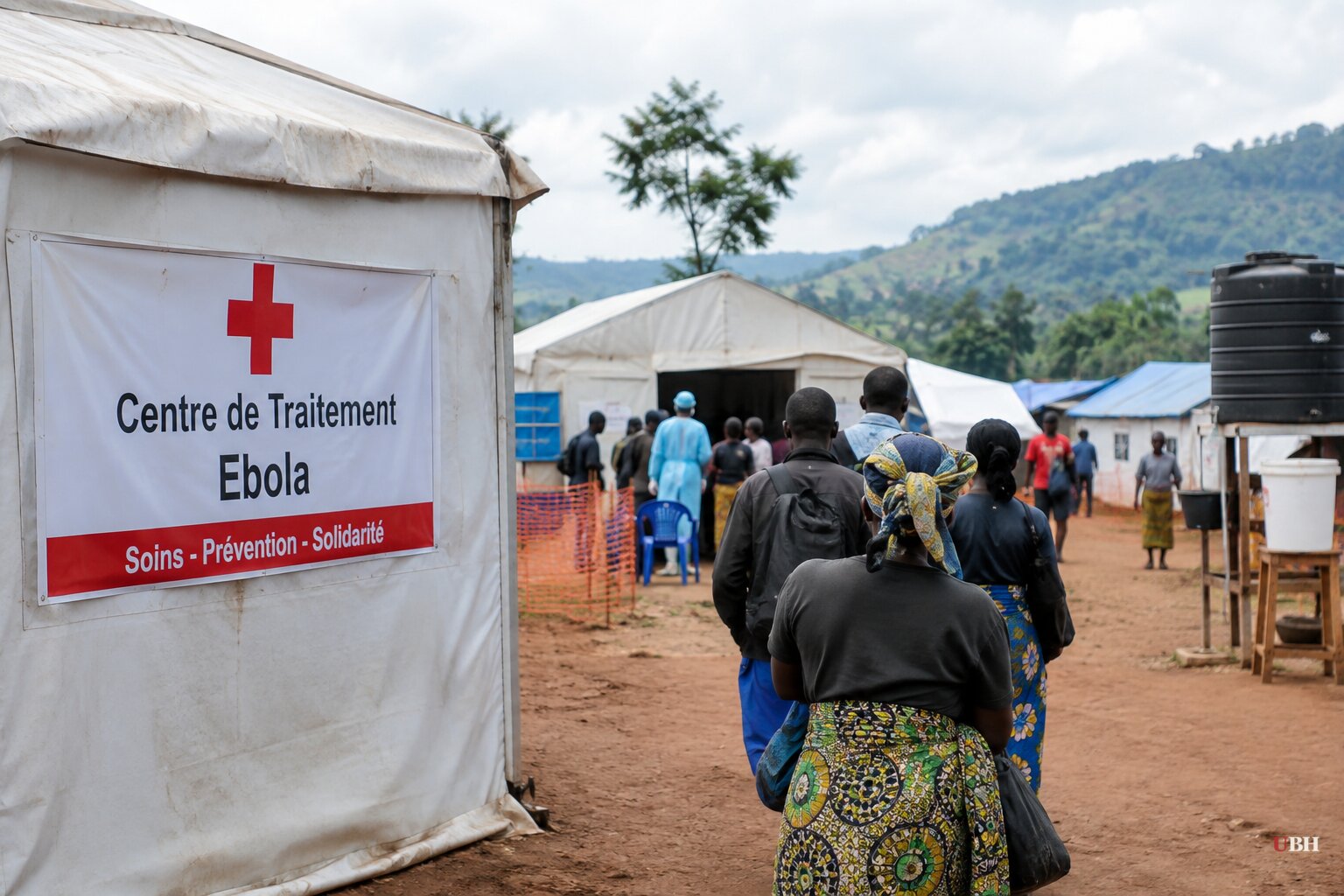
Since the Democratic Republic of Congo's health ministry confirmed Thursday that the Ebola outbreak had killed 4,018 people out of 8,300 confirmed cases, the bigger story has become how a government military raid, a political assassination, and an international evacuation collided in the same week to deepen the crisis.
The raid happened at Kigonze, a displacement camp on the outskirts of Bunia in Ituri province that had housed roughly 19,000 people and included an eight-bed Ebola transit center run by International Medical Corps with more than 50 staff, many of them displaced people themselves. Congolese soldiers entered the site looking for weapons and suspected members of non-state armed groups, according to the United Nations. Gunfire broke out, the transit center burned down, and residents fled in the days that followed, scattering the camp's population to places largely outside government control.
Julien Harneis, the UN's senior Ebola coordinator, said the loss is not just physical. "When we lose a centre, that means we lose capacity, we lose investment, and we have to start again," he said. "Above all, it means that people do not get access to the care that they really need."
The practical damage is measurable. Roughly 1,000 direct contacts of confirmed Ebola patients were living in the camp. Authorities have managed to trace only about one-fifth of them since the fire, according to figures relayed by time.news. That is exactly the kind of contact-tracing collapse that turns a contained outbreak into an uncontrolled one.
There is a legitimate security argument behind the raid that shouldn't get buried. Eastern Congo has spent years fighting armed groups that hide weapons and fighters among displaced populations, and a government that ignores credible intelligence about caches inside a 19,000-person camp is inviting a worse disaster. Damien Mama, cited by time.news, argued the camp's civilian character still had to be protected even so, and that families who had already lost everything needed somewhere safe to land. Both things can be true: the government had a reason to search, and the execution scattered a population mid-epidemic with no plan for where they'd go.
Breitbart's headline framed the camp's emptying as "militia violence," but its own body text, like every other outlet here, describes the operation as a government-approved military sweep carried out by Congolese soldiers, not militia fighters. This distinction determines who is accountable for the outcome.
A politician killed, two responders killed, one worker evacuated
Separately in Butembo, North Kivu, a local official with the ruling Union for Democracy and Social Progress party, Marie-Celestin Karondwa, was beaten to death at his home last Sunday after appearing on a radio program to raise awareness about the outbreak, according to Al Jazeera. His house was then set on fire. He died of his injuries in a hospital.
The UN's humanitarian affairs office also reported two Ebola responders were killed in Lubero, North Kivu, according to time.news, though further details on that attack weren't available. Mistrust of health workers, some of whom locals accuse of spreading rather than treating the disease, has fueled mob violence throughout the outbreak and is a documented, recurring obstacle rather than an isolated incident.
An MSF aid worker infected with Ebola in Congo was flown to the Netherlands on a special medical flight and transferred into a high-level isolation unit at Leiden University Medical Center late Thursday, the group confirmed. MSF said the case reflects "the human cost of this crisis" in a country "facing the largest Ebola disease outbreak ever recorded." More than 50 health workers have died from the virus overall.
The numbers, and the dispute over where this ranks
The current death toll of 4,018 against 8,300 cases puts the case fatality rate at 48.4 percent, according to time.news, which makes this outbreak the deadliest in DRC's history and the second-deadliest Ebola outbreak ever recorded, trailing only the 2014-2016 West Africa epidemic that killed more than 11,000 people. Breitbart's report claimed the outbreak was already "potentially the worst Ebola outbreak on record anywhere." The World Health Organization, per Al Jazeera, says the epidemic is "on track to surpass" the West Africa toll if trends continue, not that it already has.
MSF coordinator Stephanie Hoffman, working in Butembo, described North Kivu's trajectory bluntly: "It is like fighting a wildfire. Multiple outbreaks are developing at the same time, with varying intensity and in different locations." MSF says North Kivu alone accounted for 40 percent of new confirmed cases since the end of August.
Africa CDC says new case counts are falling in some zones but accelerating in others, a pattern it attributes partly to insecurity making it harder to get community cooperation rather than genuine containment. Mobile testing labs in Butembo have cut result times from 72 hours to six, Dr. Lota Kalubi told the Associated Press, one of the few concrete operational improvements reported this week. Whether that gain survives the next camp raid, strike, or mob attack is the open question nobody in Bunia or Geneva can currently answer.
Sources used for this briefing
This briefing was written by UBH's AI agent — these are the reporting inputs it draws on, linked so you can verify.


