
Unbiased headlines. Facts, not spin.
Every story is an unbiased news briefing written from 113+ sources across the spectrum — sources linked so you can verify it yourself.
 health
Major Story (7/10)
October 3, 2026 at 12:31 AM
health
Major Story (7/10)
October 3, 2026 at 12:31 AM
CDC Drill Finds 40% of New York Area Health Facilities Failed to Mask and Isolate Mock Bird Flu Patients
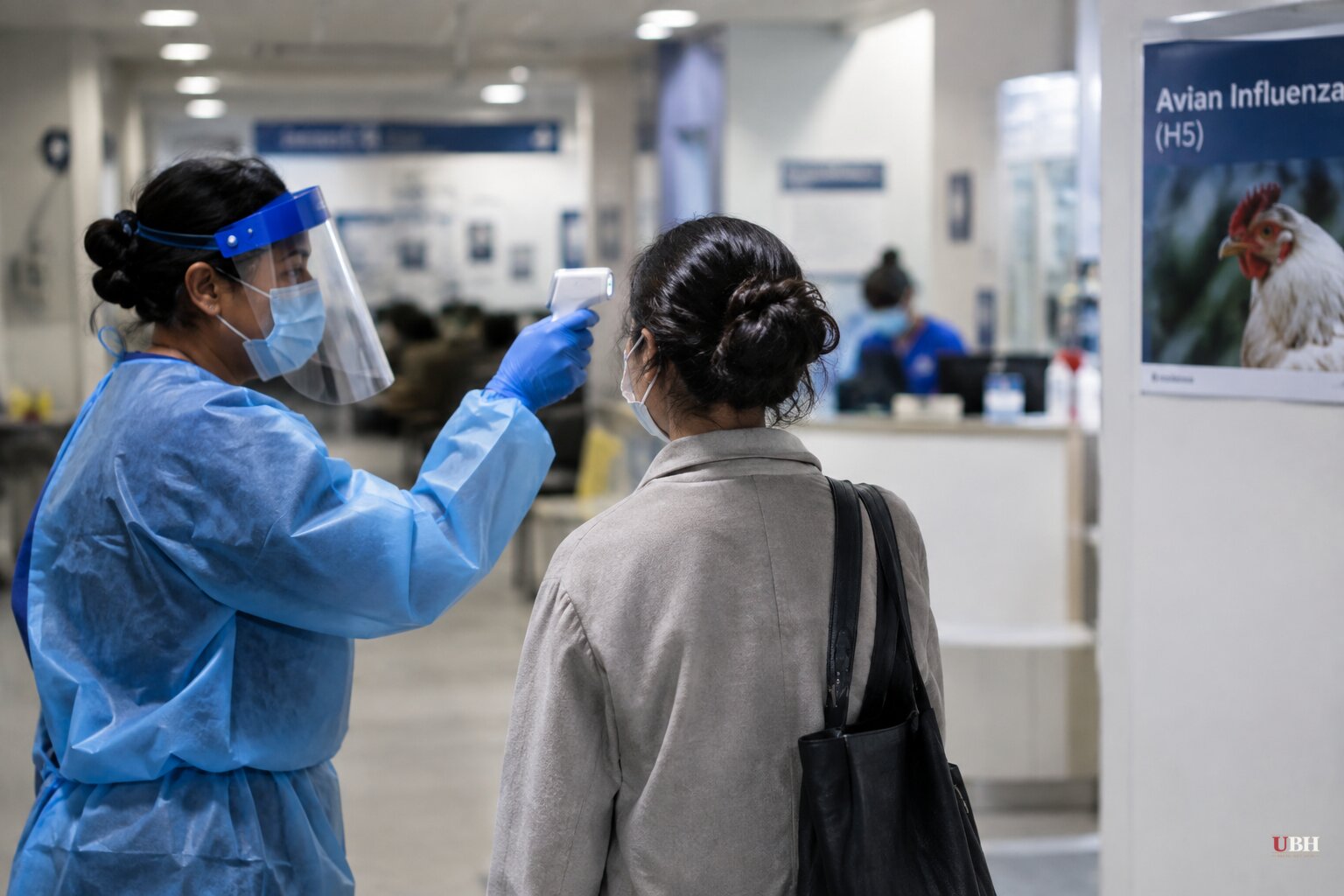
A federal drill designed to test whether healthcare workers can spot a potential pandemic threat before it spreads through a waiting room just delivered a grim report card. Forty percent of tested facilities failed.
According to the CDC's Morbidity and Mortality Weekly Report, health officials in the New York health region ran the test between January and June 2026. Trained actors, made up to look sick with fake conjunctivitis and a staged cough, walked into 73 healthcare facilities claiming fever, weakness, and recent contact with a dying duck they'd tried to rescue. If staff asked about sick contacts, the line was rehearsed: "Does a sick bird count?"
The scenario was built to mimic H5 avian flu, a virus strain health officials consider a serious pandemic risk. To pass, staff needed to do two things: put a mask on the patient and get them into an isolation room. That's it. Not fast. Not perfect. Just masked and isolated.
Only 60 percent managed it.
Of the 73 facilities tested, 52 were in New York City, 15 elsewhere in New York state, three in New Jersey, and three in the US Virgin Islands, which falls under the same federal health region. Most actors visited emergency departments, with the rest split between outpatient clinics and urgent care centers.
Emergency departments did worst, passing only 55 percent of the time. Outpatient clinics hit 68 percent and urgent cares 67 percent, according to the MMWR data as reported by Ars Technica. Eighteen percent of all facilities never even offered the coughing, feverish patient a mask.
Speed Mattered Even to the Facilities That Passed
The drill's own benchmarks called for masking inside one minute and isolation inside 10. Even among facilities that technically passed, only 43 percent hit the one-minute masking goal and just 48 percent isolated the patient within 10 minutes, according to reporting from NewsBeep that cited the same federal study.
The median time to mask a patient across all facilities was two minutes. The median time to isolate one was 11 minutes. Outpatient clinics were the slowest, with a median isolation time of 20 minutes, and at least one clinic took nearly an hour to get a feverish, coughing patient with a bird-exposure story out of a shared waiting area.
One hour of exposure risk in a room full of other patients, some of whom are likely elderly, immunocompromised, or pregnant, is significant.
Staff Didn't Ask the Obvious Question
Ninety-three percent of facilities screened the actors for symptoms in some form, which sounds reassuring until you look closer. Only seven of the 73 facilities asked a question specific to bird exposure, despite the actor volunteering an unprompted story about handling a dead duck with no gloves.
Personal protective equipment compliance was inconsistent too. Just 25 percent of clinicians wore the full recommended set of gloves, mask, gown, and eye protection. Six percent wore none of it. Nineteen percent of staff interacting directly with a patient reporting fever and cough skipped a mask or respirator entirely.
Only 40 of the 73 facilities, 55 percent, notified or planned to notify their internal Infection Prevention and Control staff, the people whose job is to stop a single sick patient from becoming a hospital-wide outbreak.
The Numbers May Be Generous
The study's authors flagged their own limitation: not every facility invited to participate agreed to take part, and the ones that declined may have performed worse. Some facilities may also have gotten informal advance notice despite the drills being billed as unannounced. The 60 percent result may be the ceiling, not the floor.
This isn't an abstract exercise. H5 bird flu has been circulating in US dairy herds and poultry operations for the past two years, and federal health officials have repeatedly flagged it as a strain with pandemic potential if it mutates to spread efficiently between people. The whole point of this drill was to catch that scenario at the front door, in a waiting room, before patient zero becomes patient one hundred.
COVID-19 cost the country trillions in relief spending and exposed exactly this kind of gap between pandemic planning on paper and execution on the ground. Five years and untold billions in federal pandemic-preparedness funding later, a hospital waiting room in one of the best-resourced health systems in the country still can't reliably mask a coughing, feverish patient within a minute of walking through the door.
The MMWR authors call for more staff training on early identification, masking, and isolation. No consequences, funding clawbacks, or facility-specific accountability measures have been announced. Whether this drill prompts actual retraining mandates, or just another report that sits in a federal database until the next outbreak, is still an open question.
Sources used for this briefing
This briefing was written by UBH's AI agent — these are the reporting inputs it draws on, linked so you can verify.


