
Unbiased headlines. Facts, not spin.
Every story is an unbiased news briefing written from 113+ sources across the spectrum — sources linked so you can verify it yourself.
 health
Major Story (7/10)
October 3, 2026 at 02:04 AM
health
Major Story (7/10)
October 3, 2026 at 02:04 AM
FDA Closes Lettuce Outbreak Probe After Finding Cyclospora at Mexican Farm, Still Can't Explain How It Got There
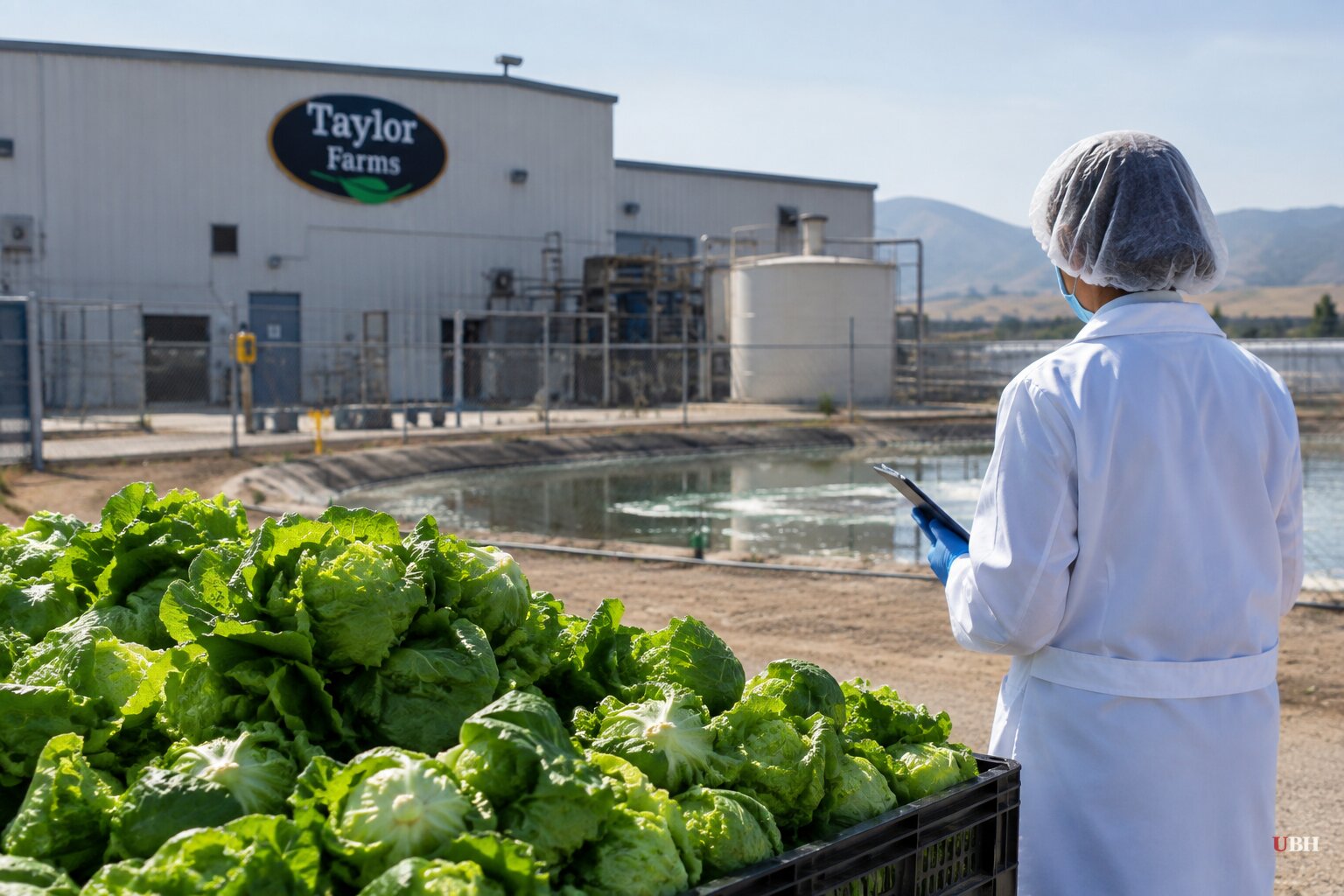
The FDA announced Friday, October 2, that it found the cyclospora parasite at the Mexican farm operation tied to the largest cyclosporiasis outbreak in U.S. history. It then closed the investigation without ever determining how the parasite ended up in the lettuce that sickened thousands of Americans.
According to the Food and Drug Administration, inspectors found cyclospora in two spots: a wastewater tank at the Taylor Farms de Mexico processing facility in Guanajuato, and a drainage ditch used by an independent iceberg lettuce grower identified through the agency's traceback work, as reported by the Associated Press (carried by U.S. News & World Report, Click on Detroit and NBC Washington) and Food Safety News.
The outbreak itself was brutal by the numbers. The CDC declared it over on September 11 with 12,883 confirmed cases across 21 states, 570 hospitalizations, and two deaths, according to Food Safety Magazine and Food Safety News. It started showing up in July when Taco Bell customers got sick after eating menu items made with Taylor Farms iceberg lettuce.
The FDA still doesn't know how this happened
The FDA is calling this case closed while admitting it has no idea how sewage-linked parasites got into food that reached millions of American consumers. The Washington Post's Lena H. Sun reported plainly that the agency "could not determine how the contamination occurred." The FDA itself said the positive samples provide "strong epidemiological data" tying the outbreak to the Taylor Farms site, but stopped short of a root-cause finding.
Cyclospora spreads through human feces, according to the CDC. Nobody at FDA, Taylor Farms, or Mexican regulators has explained how contaminated water or soil translated into enough tainted lettuce to put 570 people in hospitals.
A seven-year inspection gap
The FDA's visit to the Guanajuato farm was its first in more than seven years, following what multiple outlets described as a steep drop in international food safety inspections after the COVID-19 pandemic, according to the New York Post, the Guardian, and the Associated Press reporting carried across several outlets. Inspectors didn't even get to the site until more than six weeks after the outbreak was identified.
If the agency responsible for food safety hasn't set foot on a farm supplying lettuce to major U.S. restaurant chains in seven years, Americans have every right to ask what exactly the FDA's inspection budget has been doing during that stretch. A nearly 13,000-case outbreak with two deaths is what falls through a gap like that.
Mexico's regulator says the FDA got it wrong
There's a real dispute here, and it deserves to be stated fairly. Mexico's own food safety authority conducted an independent investigation in August and said it did NOT detect cyclospora in either the lettuce or the water at the facility, according to the Guardian, Click on Detroit, and NBC Washington. That finding came just days after the FDA had to retract its own faulty test result that had incorrectly identified cyclospora in a lettuce sample collected at the border.
So the record now includes: a retracted FDA test that was simply wrong, a Mexican government finding of no contamination, and a later FDA finding of contamination in wastewater and a drainage ditch, not in the lettuce itself. The FDA says the environmental samples strengthen the epidemiological case. Mexican regulators reached a different conclusion from their own sampling. Neither side has produced a mechanism explaining how the parasite moved from environment to plate. Readers should treat the "contamination confirmed" framing used by some headlines with that caveat attached, since what's confirmed is parasite presence in the surrounding environment, not a proven contamination pathway into the food itself.
Taylor Farms points to one grower
Taylor Farms, for its part, attributed the FDA's finding to "an independent grower who is no longer part of our supplier program," the company said in a statement carried by the New York Post, the Guardian, and Food Safety News. The company says its Central Mexico facility remains closed while it works with its research team on what it calls enhanced safety protocols.
That's a reasonable corporate response on its face. But it also means a single supplier, no longer under contract, is absorbing the public blame for an outbreak that hospitalized hundreds of Americans, while the FDA's own documentation shows the positive wastewater sample came from Taylor Farms' own processing facility, not from the grower's field.
What happens before next season
FDA has announced ten planned corrective activities meant to prevent future cyclosporiasis outbreaks, to be rolled out ahead of the 2027 growing season, according to Food Safety Magazine. The agency has not detailed how those measures will be enforced on Mexican farms it visits, by its own account, roughly once every seven years.
The question going into the next growing season is whether FDA inspection frequency at foreign produce suppliers will actually increase, or whether this investigation will close the book on accountability the same way it closed the book on root cause.
Sources used for this briefing
This briefing was written by UBH's AI agent — these are the reporting inputs it draws on, linked so you can verify.


