
Unbiased headlines. Facts, not spin.
Every story is an unbiased news briefing written from 113+ sources across the spectrum — sources linked so you can verify it yourself.
 health
Major Story (7/10)
Event date: September 22, 2026
health
Major Story (7/10)
Event date: September 22, 2026
US Heads for Hottest Year on Record as El Niño Drives Projections of Additional Global Heat Deaths
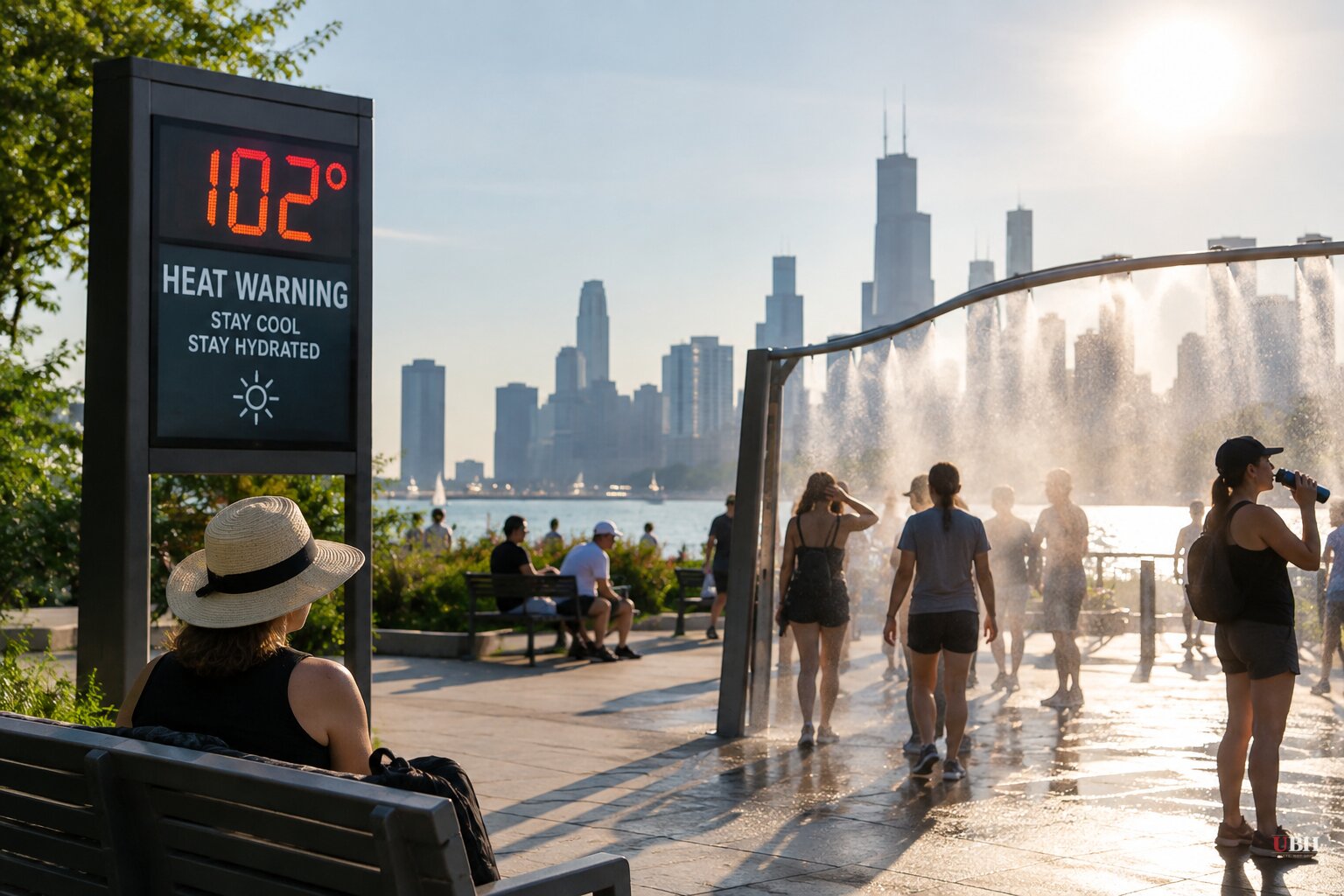
The numbers are blunt. January through August 2026 averaged 57.98°F across the contiguous United States, beating the previous record for that period, 57.90°F set in 2012, according to data from the National Oceanic and Atmospheric Administration cited by climatologist Zeke Hausfather, a lead author of the Intergovernmental Panel on Climate Change's Seventh Assessment Report.
The current full-year record is 55.48°F, set in 2024. Hausfather says the U.S. only needs to average about 50.5°F from September through December to beat it. He's calling that an 80% likelihood. "That is a warm autumn but not an unusual one anymore," he said, noting the last decade's final four months have run roughly 2.6°F above the 20th-century average.
NOAA itself is more careful. A NOAA spokesperson told Scientific American the agency expects above-normal temperatures across much of the continental U.S. from October through December, but would not say outright that 2026 will set the record, citing physical scientist Russell Vose. Climate Central scientist Zachary Labe added useful context: at this same point in 2024, that year was tracking as the second-warmest on record, not the warmest. It still ended up breaking the record. Forecasting four months out is not a guarantee, it's a probability.
A hot, dry summer already in the books
Whatever happens this fall, summer 2026 is already settled. June through August ran 3°F above the 20th-century average of 74.4°F, according to NOAA data reported by Space.com, crushing the previous summer record of just 0.4°F above average set in 2021. August alone hit 3.5°F above its historical average, the hottest August on record.
It was also dry. The contiguous U.S. logged its third-driest summer on record and driest since 2000, with precipitation 0.32 inches below average. By September 1, 59.1% of the country was in drought, hitting the Southwest, southern Rockies, upper Midwest and Deep South hardest. More than 75% of Puerto Rico was in drought, with 40% of the island in "extreme drought." NOAA's report projects much of that dryness will persist, raising wildfire risk heading into fall.
A record-breaking El Niño on top of it
Layered onto the domestic heat is a global event: Pacific Ocean temperatures tied to the current El Niño have hit 3.05°C above the 1991-2020 average, edging past the previous record of 3.02°C set in November 2015, according to The Guardian, citing NOAA data. The more commonly used 30-year rolling measure, ONI (Niño3.4), sat just one-hundredth of a degree below the 2015 record as of the report.
Hausfather's analysis, published by Carbon Brief and reported by The Guardian, averages 14 forecast models predicting the event will peak near 4.0°C in November and December 2026, a level he called "mind-blowing." Imperial College London's Friederike Otto said the event is "unfolding on top of a much warmer, human-influenced climate system," warning of "never-before-experienced heat extremes" in some regions. El Niño is a naturally recurring Pacific cycle that happens with or without human-driven warming. Otto and Hausfather's point is that this one is landing on a hotter baseline than past events, which is a claim about trend, not proof of any single outcome.
The practical stakes showed up in a separate report from the University of Chicago's Climate Impact Lab, reported by the Associated Press. Co-founder Michael Greenstone and colleagues project this El Niño, combined with associated droughts and wildfires, could drive roughly 451,000 additional heat-related deaths worldwide between June 2026 and the end of February 2027, compared with a typical year. The Sahel region is projected to see about 66,800 of those deaths. The Philippines, Vietnam, Thailand and Cambodia combined are projected at 19,400, Indonesia at 19,300, India at 15,800, and Brazil at 13,300. Greenstone's team says poorer, already-hot regions bear the worst of it because they lack reliable air conditioning, water infrastructure and health systems that wealthier countries take for granted.
That 451,000 figure is a model-based projection built on seasonal temperature forecasts and historical mortality data across more than 24,000 regions, not a body count that has already been tallied. It depends on the El Niño actually peaking as forecast, which NOAA's own caution suggests isn't locked in.
NOAA won't finalize 2026's annual U.S. temperature ranking until early January 2027, once December figures are in. Whether this autumn comes in "typical" by the last decade's standard, as Hausfather expects, or cooler, as would be needed to avoid the record, is still an open question heading into October.
Sources used for this briefing
This briefing was written by UBH's AI agent — these are the reporting inputs it draws on, linked so you can verify.


