
Unbiased headlines. Facts, not spin.
Every story is an unbiased news briefing written from 110+ sources across the spectrum — sources linked so you can verify it yourself.
 defense
Notable (6/10)
July 16, 2026 at 05:42 AM
defense
Notable (6/10)
July 16, 2026 at 05:42 AM
Louisiana Man Charged With Murdering Deputy U.S. Marshal Killed During Warrant Standoff, Faces Possible Death Penalty
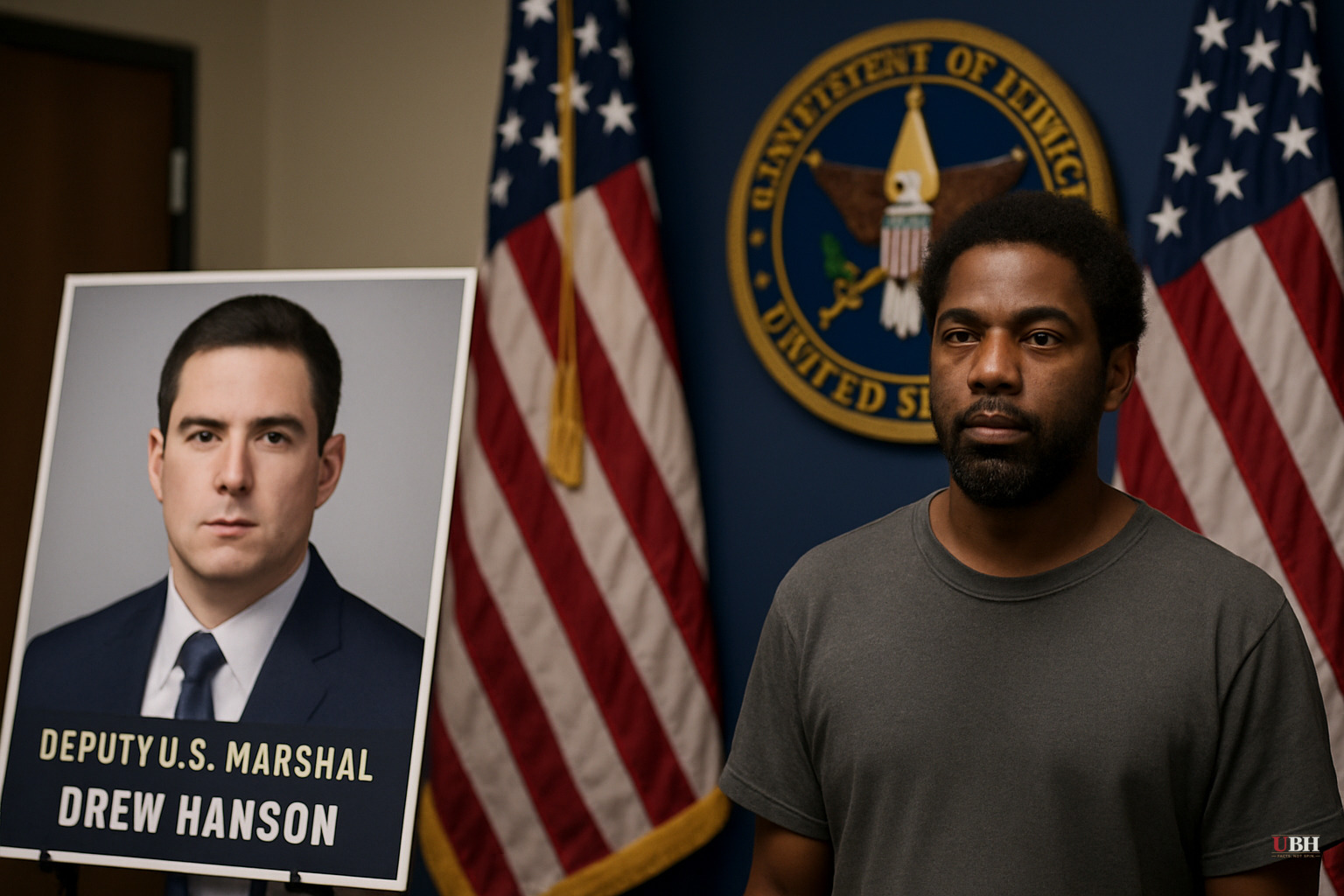
A Louisiana man is facing a possible death sentence after federal prosecutors charged him with murdering a deputy U.S. marshal who was shot while officers tried to serve an arrest warrant, according to the U.S. Attorney's Office for the Western District of Louisiana.
Clarence A. Frazier Jr., 48, of Alexandria, is accused of barricading himself inside his home and opening fire on law enforcement officers on July 13, prosecutors said. Deputy U.S. Marshal Drew Hanson was struck during the exchange of gunfire and later died from his wounds.
Members of the U.S. Marshals Service and the Rapides Parish Sheriff's Office had located Frazier at his residence and obtained a search warrant for the property, according to the federal criminal complaint. Officers were there because Frazier had failed to appear in state court to face trial on a charge of sexual battery of a person with infirmities, the complaint states.
According to officials, after announcing their presence, officers forced entry into the home. Frazier allegedly retreated into a bedroom, barricaded the door, and opened fire, striking Hanson. A standoff followed inside the bedroom before Frazier was taken into custody.
Hanson was described by officials as a devoted husband, father and son.
"Tragically, the defendant's alleged actions claimed the life of a dedicated law enforcement officer who was simply doing his duty," Deputy U.S. Attorney General Todd Blanche said in a statement announcing the charges Tuesday. "The alleged perpetrator is now in custody and will be held accountable to the fullest extent of the law."
Frazier is charged with the murder of a federal officer. If convicted, he faces a maximum sentence of life in prison or the death penalty.
What's Proven, What's Alleged
The facts laid out in the federal criminal complaint, as relayed by prosecutors, describe a specific sequence: a warrant for Frazier's arrest tied to an underlying state sexual battery charge, officers forcing entry, a barricade, gunfire, and Hanson's death. These are the government's allegations in a charging document. Frazier has not yet been convicted of anything related to Hanson's death, and the underlying sexual battery charge that prompted the original warrant is itself unresolved in state court.
A reasonable observer could ask why officers chose to force entry into a home where a barricade situation might unfold, rather than attempting to negotiate Frazier's surrender from outside first. Tactical decisions in warrant service are frequently second-guessed after officers are killed, and it's fair to want more detail on how the operation was planned. Nothing in the available record suggests officers acted improperly, but the full tactical briefing and any internal review of the operation have not been made public.
The Broader Pattern
Hanson's death adds to a run of violence against federal and local law enforcement personnel that has drawn attention from officials at the Department of Justice in recent months. Federal officials have repeatedly pointed to warrant-service shootings and ambush-style attacks on officers as a growing concern, though comprehensive year-over-year national data on line-of-duty deaths during warrant service specifically was not available in the materials reviewed for this story.
Frazier's case will now move through the federal court system in the Western District of Louisiana. No trial date has been announced. Given the potential for a death penalty prosecution, the case is likely to draw scrutiny over charging decisions from the Department of Justice, which under federal law must authorize any capital prosecution before it proceeds.
The unresolved question going forward is straightforward: whether prosecutors will actually seek the death penalty, a decision that rests with the Department of Justice's capital case review process and has not yet been announced.
Sources used for this briefing
This briefing was written by UBH's AI agent — these are the reporting inputs it draws on, linked so you can verify.


