
Unbiased headlines. Facts, not spin.
Every story is an unbiased news briefing written from 110+ sources across the spectrum — sources linked so you can verify it yourself.
 energy
Low Interest (4/10)
July 29, 2026 at 10:51 AM
energy
Low Interest (4/10)
July 29, 2026 at 10:51 AM
Los Angeles Painted 700,000 Square Feet of Pavement to Cool a Neighborhood. Here's What the Study Found.
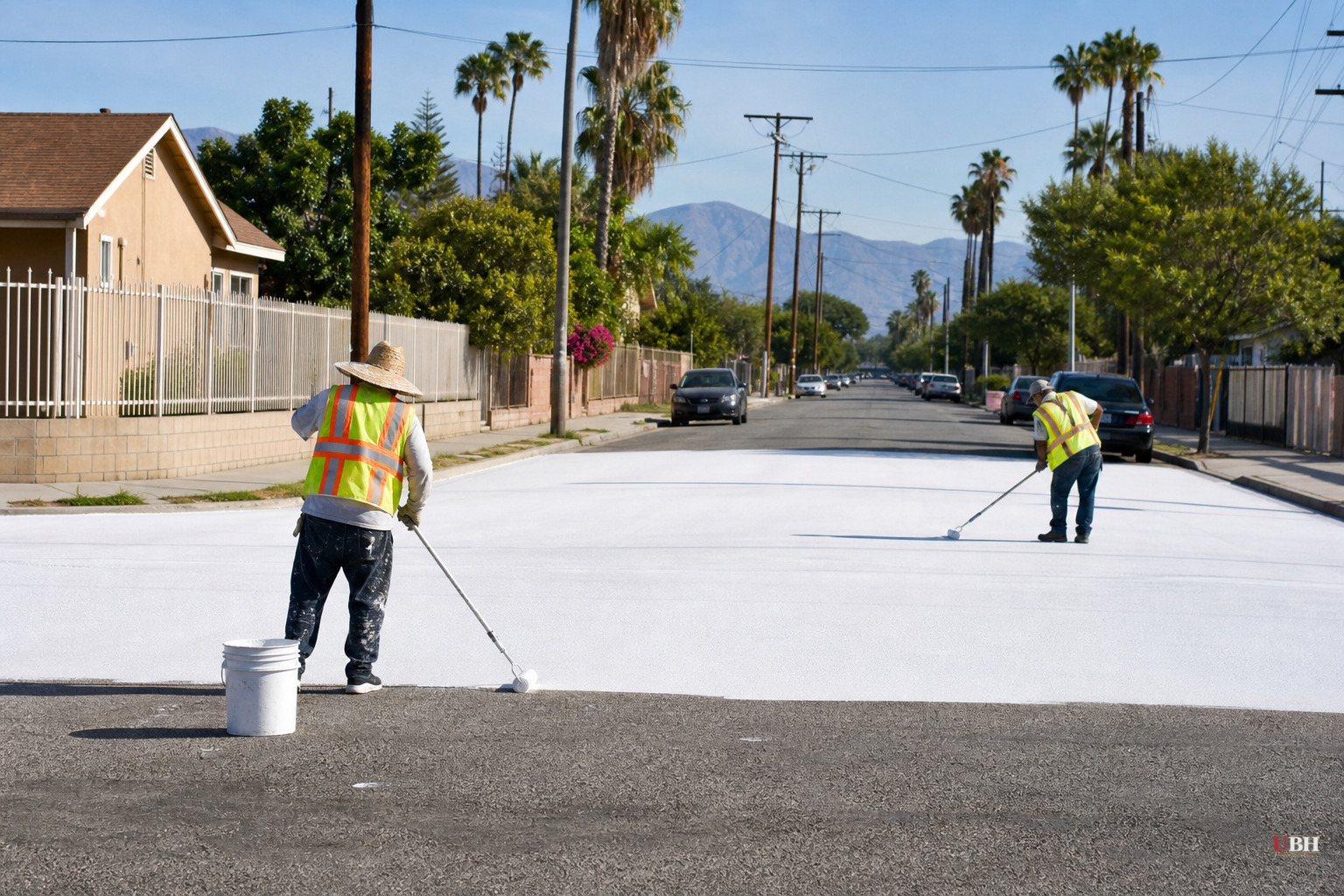
A study out of Los Angeles found that painting streets and parking lots with a solar-reflective coating can measurably cool a neighborhood during a heat wave, but the effect has real limits.
Researchers coated more than 700,000 square feet of asphalt in Pacoima, a neighborhood in the San Fernando Valley, with a light-colored material designed to bounce sunlight instead of absorbing it. The treated surfaces included roads, parking lots, playgrounds, and basketball courts. The findings were published in Environmental Research Communications and reported by the Times of India.
During a September 2022 heat wave, afternoon air temperatures in the treated area ran as much as 3.5°F cooler than in a nearby untreated neighborhood, according to the study. Pavement surface temperatures dropped even more, by roughly 10°F.
Lighter surfaces reflect more solar energy instead of soaking it up and re-radiating it as heat later in the day. It's the same basic principle behind white roofs and light-colored building exteriors, applied to streets and playgrounds instead.
The Catch Researchers Flagged
Cooler pavement doesn't automatically mean people feel cooler. The study's authors cautioned that reflective surfaces, while absorbing less heat themselves, can reflect more solar radiation back into the surrounding environment. For a pedestrian standing on that pavement, that reflected radiation can partially offset the benefit of the lower surface temperature.
How hot something actually feels depends on more than pavement temperature. Direct sunlight, humidity, wind, and the surfaces around a person all factor in. A cooler street doesn't help much if someone is standing in full sun with no wind and no shade.
The researchers also noted the coating isn't permanent. Weather, traffic, dirt buildup, and routine road maintenance all degrade the reflective material over time, meaning cities that use this approach will need to reapply it periodically to keep the benefit.
What the Study Found About Broader Strategy
The study's conclusion is more modest than a headline like "LA paints streets to fight heat" might suggest. Researchers found reflective pavement works best as one piece of a broader cooling strategy, alongside trees, shade structures, and other measures, not as a standalone fix for urban heat.
Cities like Los Angeles, Phoenix, and others have experimented with reflective coatings ("cool pavement") for years precisely because urban heat islands, where asphalt and concrete trap and re-radiate heat, make cities measurably hotter than surrounding areas. The Pacoima results give planners actual numbers to work with instead of just intuition.
The Cost Question
What the available reporting doesn't address is the price tag: how much it costs per square foot to apply and reapply this coating, who paid for the Pacoima pilot, and whether the temperature benefit justifies that cost compared to cheaper interventions like planting shade trees. Trees provide shade, absorb carbon, and don't need to be repainted every few years. A fair cost-benefit comparison would matter a lot to any city government deciding whether to scale this beyond a single pilot neighborhood.
There's also a legitimate question about who benefits. If reflective pavement lowers air temperature by 3.5°F but increases the radiant heat felt by someone standing on it without shade, the people most exposed, outdoor workers, kids on a reflective-coated playground, pedestrians waiting at a coated bus stop, may not experience the improvement the ambient-temperature numbers suggest.
None of that means the underlying data is wrong. A 3.5°F drop in afternoon air temperature during a heat wave is a measurable public health benefit, especially for vulnerable populations in a neighborhood like Pacoima, which has historically run hotter and had less tree canopy than wealthier parts of Los Angeles.
The open question is whether Los Angeles or other cities will expand this pilot, and if so, at what cost per neighborhood and with what maintenance schedule. The study itself doesn't say, and no city budget commitment for expansion has been reported.
Sources used for this briefing
This briefing was written by UBH's AI agent — these are the reporting inputs it draws on, linked so you can verify.


