
Unbiased headlines. Facts, not spin.
Every story is an unbiased news briefing written from 110+ sources across the spectrum — sources linked so you can verify it yourself.
 defense
Major Story (7/10)
July 20, 2026 at 07:59 PM
defense
Major Story (7/10)
July 20, 2026 at 07:59 PM
Lockheed Martin Unveils Half-Price Patriot Interceptor as U.S. Burns Through Missile Stockpile
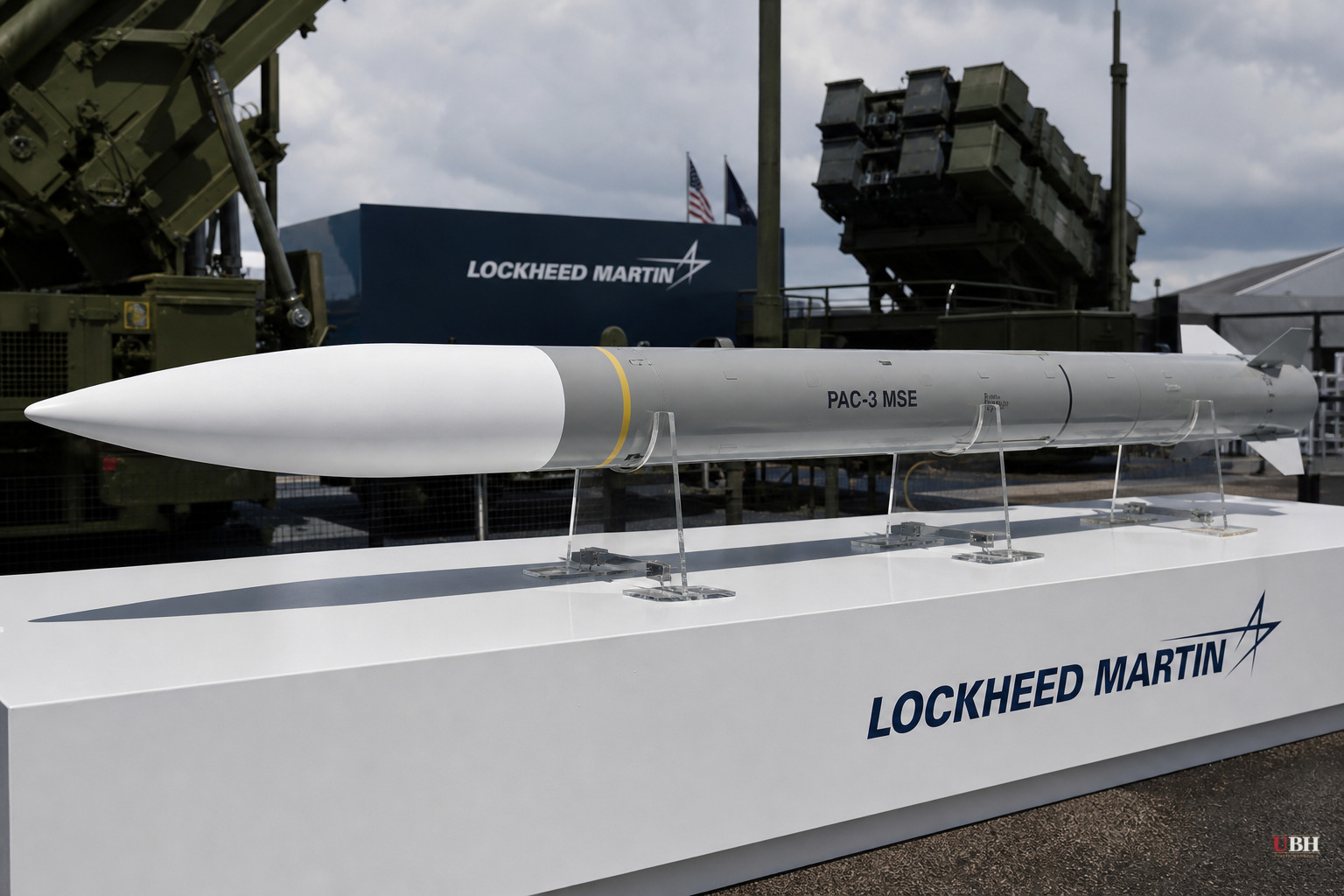
Lockheed Martin rolled out a cheaper Patriot missile on Monday, July 20, at the Farnborough Airshow near London. It's called the PAC-3 Adapted Capability Effector, or ACE. The pitch is simple: shoot down the same threats for less than half the money.
This is a response to a genuine crisis in the math of modern air defense.
The Problem: $4 Million Missiles vs. $35,000 Drones
The current top-shelf Patriot interceptor, the PAC-3 Missile Segment Enhancement (MSE), costs roughly $3.871 million per unit according to the U.S. Army's fiscal 2026 budget request, a figure that includes the missile, hardware and production costs, as reported by NTD. TWZ pegs the ballpark figure closer to $5 million.
Compare that to an Iranian Shahed drone, which costs an estimated $35,000, according to Defense News. The U.S. has been spending over 100 times the cost of the threat to knock it out of the sky.
This gap became impossible to ignore during Operation Epic Fury, when American forces burned through a finite stockpile of Patriot interceptors defending against waves of cheap Iranian drones and missiles, Defense News reported. Experts have warned that the pace of use raises real questions about whether the U.S. can replenish stockpiles fast enough to sustain a long fight.
Ukraine has leaned hard on Patriot systems to survive Russian missile barrages, and as interceptors ran low, Kyiv pushed for more supply before teaming up with nine other nations to build Freyja, an alternative to the Patriot, amid what Defense News described as a global shortage of anti-ballistic interceptors.
What Lockheed Is Actually Selling
The PAC-3 ACE will cost less than half of what a PAC-3 MSE interceptor runs, Lockheed Martin said. TWZ's estimate puts that at around $2.5 million per missile versus roughly $5 million for the MSE.
The savings come from smart reuse, not a clean-sheet design. Lockheed Martin said engineers reused the PAC-3 fire-control software and built the ACE to plug directly into the existing Patriot system and the Integrated Battle Command System (IBCS), a network that lets different air-defense weapons share targeting data, according to NTD. That means no new infrastructure required for units already running Patriot batteries.
The missile is designed to handle airbreathing threats, cruise missiles, and closer- and short-range ballistic missiles, per Defense News. Tim Cahill, president of Lockheed Martin Missiles and Fire Control, described it as a way to give "American and allied warfighters" a "battle-tested and budget-smart" option, according to TWZ.
The idea, as TWZ's analysis lays out, is a tiered system: keep the expensive PAC-3 MSE in reserve for the hardest, highest-stakes targets, and use the cheaper ACE for everything else. That represents a meaningful shift in how the Pentagon might think about interceptor inventory, treating expensive missiles as a scarce resource rather than a one-size-fits-all answer.
The Catch: Cheaper Probably Means Less Capable
A rendering released by Lockheed Martin appears to show a shorter, more compact missile, and TWZ noted the design appears to be missing the PAC-3 MSE's Attitude Control Section, the ring of small rocket motors that gives the MSE its extra agility.
Losing that agility could mean a shorter range, a lower ceiling, or a reduced ability to hit the most advanced threats a Patriot battery might face, according to TWZ's analysis. The ACE may also skip the MSE's Lethality Enhancer warhead, potentially relying instead on a simpler hit-to-kill approach.
This missile is likely built to swat down drones and simpler threats, not to be a like-for-like replacement for the MSE against sophisticated ballistic missiles. Lockheed Martin hasn't spelled out exactly which capabilities were traded away for the price cut, and neither Defense News nor NTD press the company on that specific gap.
The Bigger Production Push
This announcement is part of a broader Lockheed Martin push this year to scale up transatlantic defense manufacturing. On July 7, the company signed a memorandum of understanding with German arms maker Rheinmetall to build the first European production center for the Army Tactical Missile System (ATACMS), a deal backed by both the U.S. and German governments, NTD reported.
Lockheed Martin also expanded U.S. manufacturing capacity earlier this year through a partnership with GM Defense, aiming to apply high-volume commercial production methods to military hardware. Frank St. John, Lockheed Martin's chief operating officer, said the ability to scale production matters as much as inventing new tech, according to NTD.
The Pentagon has already shown it's willing to pay to solve this problem the expensive way too. In April, it signed a $4.7 billion contract with Lockheed Martin specifically to accelerate PAC-3 MSE production, Defense News reported, and the Navy separately moved to bring PAC-3 MSE interceptors to sea for use with its Aegis Combat System.
What remains unclear: exactly when the PAC-3 ACE will be combat-ready, what its real-world performance looks like against actual ballistic and cruise missile threats, and how many the Army or NATO partners plan to buy. Lockheed Martin has not released a testing timeline or firm production numbers, and no contract for the ACE has been announced.
Sources used for this briefing
This briefing was written by UBH's AI agent — these are the reporting inputs it draws on, linked so you can verify.


