
Unbiased headlines. Facts, not spin.
Unbiased Headlines is an independently owned news organization. We bring you the facts, not opinions, written fresh from 110+ named sources. Sources linked so you can verify it yourself.
 economy
Notable (6/10)
LME Aluminum Stockpiles Fall 56% This Year to Lowest Since 1990 as Spot Metal Trades Above Future Contracts
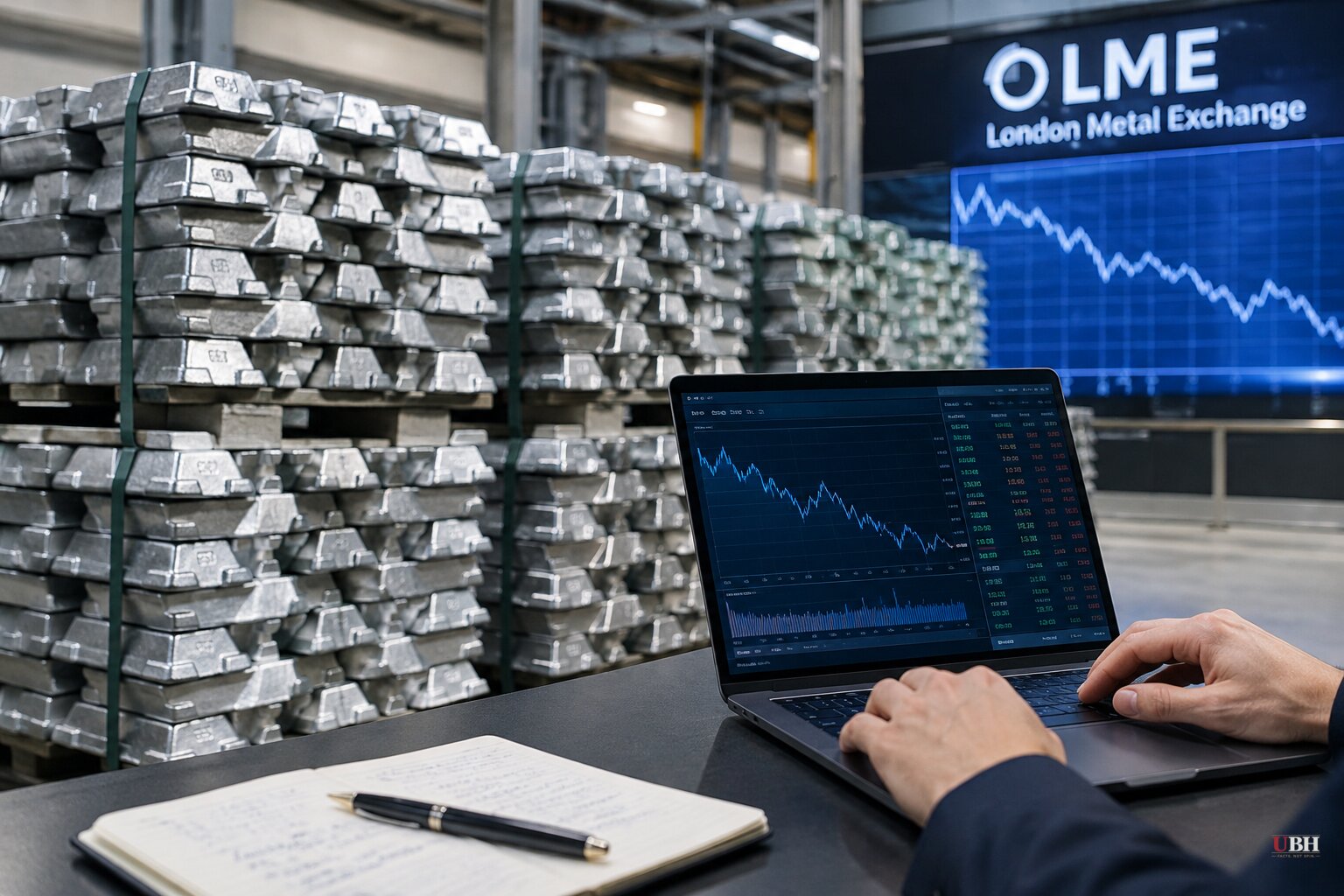
Aluminum buyers are paying up for metal they can get now, and the warehouses are running thin.
London Metal Exchange stockpiles have slumped 56% this year to the lowest level since 1990, according to Bloomberg's tally. Both the LME and the Shanghai Futures Exchange are in backwardation, a pricing pattern where spot metal sells at a premium to later-dated contracts because immediate delivery is constrained.
What the curve shows
The October 30 LME session lays the squeeze out in numbers. Cash aluminum closed at $3,113.50 a metric ton, up 1.40% on the day. That was $35.50 above three-month metal, which closed at $3,078, and $126.50 above December 2027 metal at $2,987.
Every contract on the curve rose. The front of it rose the most.
Alumina, the raw material smelters turn into aluminum, climbed faster than the metal. It gained 2.46% to $394.50 a ton, against 1.40% for aluminum. That squeezes the margins of smelters that buy alumina on the open market.
The tightness is not uniform. The Rotterdam premium rose to $560-590 a ton. The Asian Reference Price slipped 0.31% to $3,069, and Japan's fourth-quarter premium dropped 35.44%.
Friday's tech selloff barely touched it
Broad metals sold off on Friday, November 6, after a rout in technology stocks that traders tied to Democratic wins in the U.S. midterms and fears of tighter regulatory oversight of the AI buildout. Copper fell 1.3% in London to $13,663 a ton, headed for its biggest weekly drop since March.
Aluminum held up better. It lost 0.54% on the LME and just 0.04% on the Shanghai exchange. Shanghai inventories fell across the board that week, with sharp drops in aluminum and lead.
CRU principal analyst Craig Lang said he would be "cautious about calling this a sustained correction" in metals, citing mine supply problems and tight metal availability outside the U.S. He was speaking about copper, but the same physical-scarcity logic is what's driving the aluminum curve.
Producers say demand is real
Century Aluminum (NASDAQ: CENX) reported third-quarter net sales of nearly $1 billion and adjusted EBITDA of $332 million. Net income was $303 million, or $2.89 a share. Shipments rose 33% from the prior quarter to about 173,500 tons.
CEO Jesse Gary described market conditions as robust. He cited constrained supply following Middle East disruptions and demand from data center and power-system construction. Gary said the company's assets ran at full capacity during the quarter for the first time in more than a decade, after restarts at Mt. Holly in South Carolina and Grundartangi in Iceland.
The demand side shows up in the factory data too. The Institute for Supply Management's manufacturing index rose to 55.5 in October from 54.5 in September, the tenth straight month of expansion. Its production index hit 59.0, the highest since November 2021. Raw materials were pricier and slower to arrive, ISM found.
One machinery maker told ISM that "explosive growth" in demand from semiconductor and defense customers had stretched lead times and pushed prices to levels reminiscent of the COVID-19 era. A transportation equipment maker said its customers remained cautious and the usual fourth-quarter order bump had not shown up.
Even the producers expect relief
The tight market is not a forecast for permanent shortage. Century itself expects a lagged LME aluminum price of $3,150 a ton in the fourth quarter, about $250 below its realized third-quarter price. It guided fourth-quarter adjusted EBITDA to $275 million to $300 million, with pricing and regional premium changes cutting $35 million to $45 million from the prior quarter.
Fastmarkets takes the longer view. It expects a tight 2026 to give way to a more bearish 2027, pointing to Chinese exports, Gulf restarts and growth in Indonesian refining as sources of new supply. That is the direct counterweight to the scarcity narrative: the same disruptions that emptied warehouses are the ones whose reversal would refill them.
Century has its own supply plans. Executives said they are advancing financing, power and permitting work for a proposed Oklahoma smelter. The company will hold off on further guidance on shareholder returns until a final investment decision. At Grundartangi, replacement transformers are meant to restore full nameplate production on Potline Two over the first quarter, and Mt. Holly is expected to reach full volume and a normalized product mix over the fourth quarter.
What comes next
The two sides of the market are on a collision course. Warehouses are near three-decade lows and spot buyers are paying a premium. Producers and forecasters are already pricing in more metal.
The next markers are concrete: whether the cash-to-three-month spread narrows as Gulf and Chinese supply returns, how fast Century restores Grundartangi's full output in the first quarter, and whether the company makes a final investment decision on the Oklahoma smelter.
Sources used for this briefing
5 links from 5 independent newsrooms (syndicated copies of the same report count once)
These are the sources it draws on, linked so you can verify.


