
Unbiased headlines. Facts, not spin.
Every story is an unbiased news briefing written from 110+ sources across the spectrum — sources linked so you can verify it yourself.
 defense
Notable (6/10)
July 30, 2026 at 08:40 PM
defense
Notable (6/10)
July 30, 2026 at 08:40 PM
Liberia Burns $336 Million in Cocaine After Record Bust, Names Senior Police Officials as Suspects
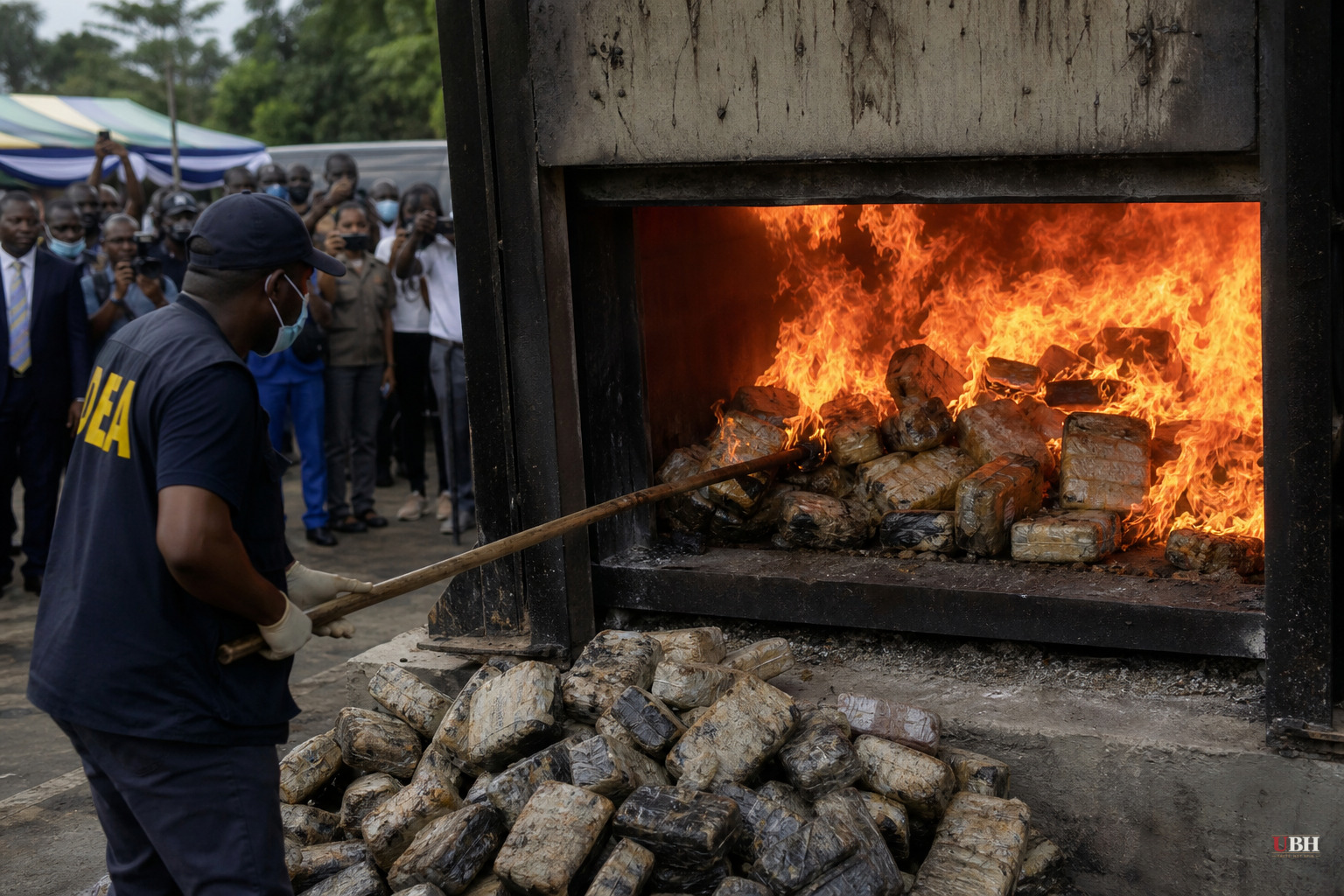
Liberian officials torched a mountain of cocaine estimated at $336 million on the street, according to AP News. It's the product of the largest drug bust in the country's history.
The public burn wasn't just theater. AP News reported that senior police officials are implicated in the case, meaning the investigation reaches into the ranks of the very institution supposed to stop this stuff from moving through Liberia in the first place.
Drug busts happen. Countries burn seized narcotics for cameras all the time. It's a much bigger deal when the people running the operation, or protecting it, wear a badge.
What We Know, What We Don't
The available reporting confirms the seizure, the dollar estimate, the public destruction of the drugs, and that senior police officials are implicated. What it does not detail is how many officers are involved, whether any have been charged, arrested, or merely named as suspects, or what rank they hold within Liberia's police hierarchy.
That distinction matters. "Implicated" is not the same as "charged" or "convicted." No court proceedings, indictments, or formal charges against specific named officers were confirmed in available reporting. Until Liberian prosecutors or a court lay out specific charges, this remains an active allegation, not an established case of police corruption.
Liberia's government deserves credit for making the implication public at all. Plenty of countries with corruption problems inside law enforcement bury that fact rather than let it become international news. A public burn of $336 million in cocaine, with officials openly stating police involvement, is not the move of a government trying to hide the rot.
Why Liberia Is a Transit Point
West Africa has become a major transshipment corridor for cocaine moving from South America to Europe, a trend documented for years by the United Nations Office on Drugs and Crime. Small, poorly resourced coastal nations like Liberia, Guinea-Bissau, and Cape Verde make attractive stopover points: weak port security, limited naval capacity, and law enforcement agencies that are underpaid and, in some documented cases across the region, vulnerable to bribery from cartels moving product through.
A $336 million seizure is enormous relative to the size of Liberia's economy. The World Bank has put Liberia's entire annual GDP in the range of a few billion dollars. A bust of this size suggests either a major crackdown success or a signal that trafficking volume through the country has grown large enough that a shipment this size existed to be caught in the first place. Both can be true at once.
The Corruption Angle Deserves Scrutiny, Not Assumption
It would be easy to read "senior police officials implicated" and assume the entire force is compromised. That's not fair without more detail, and it's not what's confirmed. It's equally unfair to wave off the implication as an isolated bad apple until Liberian authorities release specifics.
The honest position is this: this is a serious, credible allegation involving law enforcement leadership in a country that serves as a known narcotics transit hub. It deserves real follow-up reporting, and it deserves consequences if proven, not immunity because the officials involved hold rank.
American taxpayers have a stake here too. The U.S. State Department and DEA have funded anti-trafficking and law enforcement training programs in West Africa for years as part of broader counter-narcotics strategy, on the theory that cutting off transit routes reduces the flow of cocaine into European and, eventually, American markets. If the officials receiving that training and support are the same ones allegedly enabling trafficking, that's a legitimate question for U.S. officials overseeing that assistance to answer.
What Happens Next
The open questions are straightforward and unresolved in current reporting. How many officers are implicated? What ranks do they hold? Has Liberia's Ministry of Justice filed charges, and if so, against whom? Liberian President Joseph Boakai's government has not yet detailed a prosecutorial timeline in available reporting.
Until Liberian authorities release those details, the story is a seizure and a burn, plus a serious, named allegation against police leadership that has not yet moved to formal charges. That gap between allegation and prosecution is exactly what to watch in the weeks ahead.
Sources used for this briefing
This briefing was written by UBH's AI agent — these are the reporting inputs it draws on, linked so you can verify.


