
Original briefings. Zero spin.
Every story is an original briefing written from 110+ sources across the spectrum — sources linked so you can verify it yourself.
 defense
Major Story (7/10)
September 13, 2026 at 04:19 PM
defense
Major Story (7/10)
September 13, 2026 at 04:19 PM
Lebanon's Displaced Population Drops to 330,000 From 1.2 Million Peak, But UN Says Crisis Far From Over
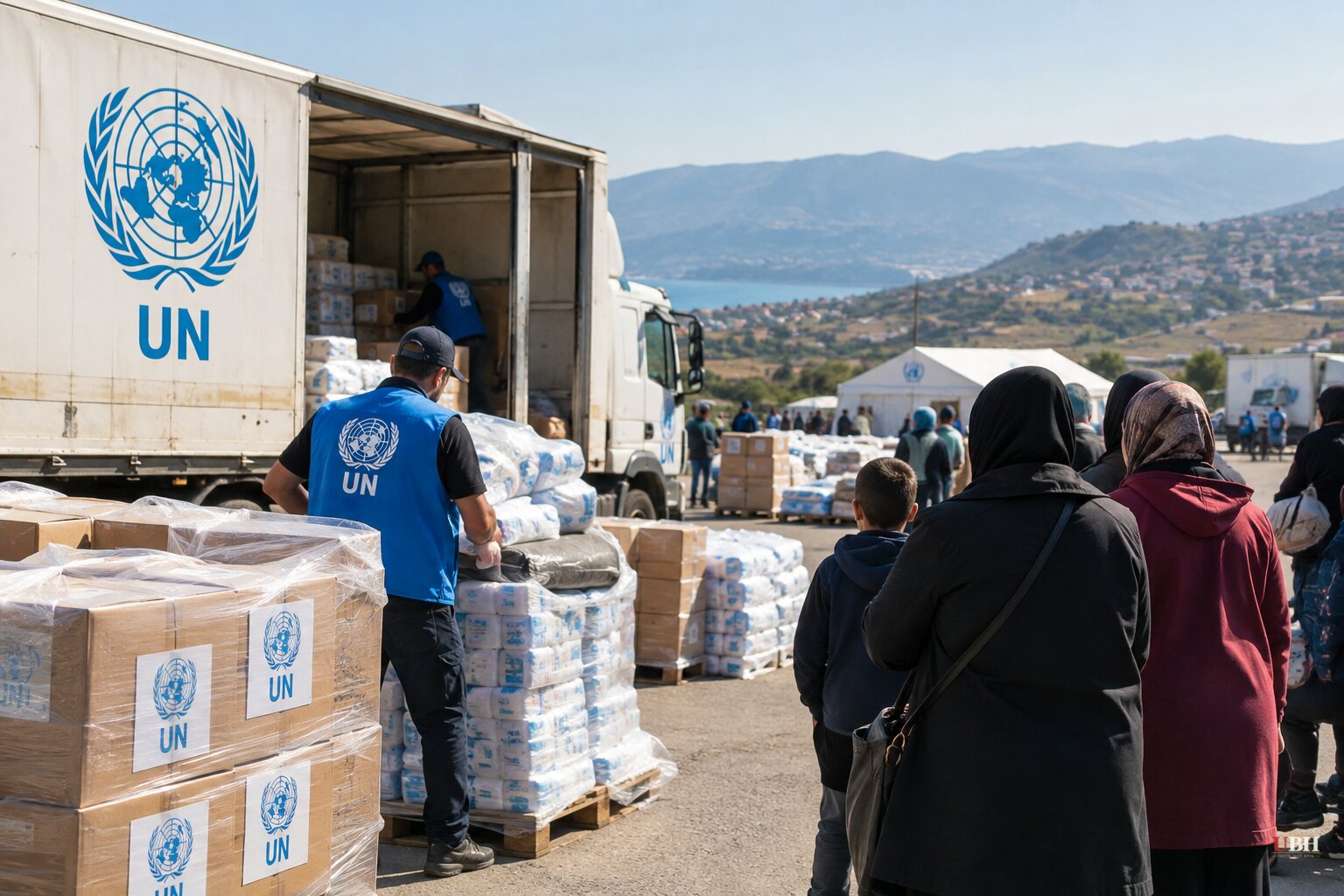
Since Hezbollah struck back at Israel on March 2, 2026 for what it called more than 10,000 ceasefire violations, and after Israel reinvaded southern Lebanon and killed more than 4,380 people in the offensive that followed, the country's displacement crisis has shifted from a peak emergency into something harder to categorize: neither resolved nor over.
Displacement hit a high of more than 1.2 million people in April, according to the International Organization for Migration. Today that figure has fallen to roughly 330,000, IOM estimates show, with more than 810,000 people having returned home or to nearby areas, according to reporting by Al Jazeera.
Nadine Mazloum of the UN Refugee Agency (UNHCR) said the falling numbers should not be read as good news. Displacement patterns remain "highly fluid and often reversible," she said, because renewed Israeli attacks remain possible. The overall drop from the peak does not represent a resolution of the crisis.
Returning to rubble
Many of those who have gone home found little to go home to. Soujoud Ramadan, from the town of Froun along the so-called Yellow Line, a roughly 10km buffer zone Israel has designated north of the Lebanon-Israel border, returned to a village largely reduced to rubble and is now sheltering at the local school, according to Al Jazeera.
Froun was one of the towns supposed to see Israeli withdrawal under the June framework deal negotiated with US sponsorship, under which Lebanese army units were meant to enter and begin disarming Hezbollah in "pilot zones." Israeli ground forces have not physically entered Froun since 2024, but the town's infrastructure has still been destroyed by air attacks, and Israel continues to occupy more than 50 other villages in the south.
A new tremor, a new displacement wave
The fragility Mazloum described played out again the week of September 7, when Israel destroyed the Ali al-Taher heights overlooking Nabatiyeh, an operation the Israeli military says eliminated Hezbollah tunnels and command infrastructure running more than two kilometers underground. The blast, estimated at 1,100 tons of explosives, registered as a magnitude 4.1 seismic event, according to the US Geological Survey, with Israel's own geological survey recording a similar reading tied to what the Israeli newspaper Maariv described as a "controlled explosion."
Arab News reported that the detonation sent rocks and debris across homes and vehicles in Nabatiyeh and surrounding villages in Jezzine, Hasbaya and Marjayoun, blocking the Khardali road and forcing Lebanese army units to reroute through the Bekaa Valley. Residents fled in a new, smaller wave of displacement, and as of Arab News's reporting it remained unclear whether Israel intends to stop at Ali al-Taher or push for more territory ahead of direct negotiations with Lebanon.
Hezbollah has not publicly responded to the loss of the heights, according to Arab News.
Tehran turns on its own negotiators
The fall of Ali al-Taher has also opened a domestic fight inside Iran, according to Iran International. The June 28 agreement reached in Islamabad between Iran and the United States included a clause committing both sides to halt military operations on all fronts, Lebanon included. Language Iranian negotiators, led by parliament speaker Mohammad-Bagher Ghalibaf, presented at home as a diplomatic win protecting Hezbollah's position.
Israel resumed bombing Lebanon less than a day after the deal was signed. Iran briefly suspended follow-on talks in Switzerland and briefly closed the Strait of Hormuz but did not respond militarily inside Lebanon, according to Iran International.
With Ali al-Taher now destroyed, Iranian hardliners are arguing the June agreement tied Tehran's hands and left Hezbollah exposed. The reformist daily Shargh warned the episode was becoming a vehicle for "political score-settling at home" rather than a sober accounting of events on the ground, while social media critics have singled out Ghalibaf directly, accusing him of what one post called a betrayal that a Lebanese, not just Iranian, price is now being paid for.
The competing arguments over strategy
Israel's government has defended the continued military presence in southern Lebanon as necessary to prevent Hezbollah from rebuilding tunnel networks and weapons infrastructure it says were present under Ali al-Taher, a rationale consistent with its stated aim of consolidating a security zone along the border after what it says were more than 10,000 ceasefire violations by Hezbollah before the March 2 escalation.
An opinion piece in Arab American News argued the opposite: that Israel's 18-year occupation of southern Lebanon before its 2000 withdrawal produced intensified resistance rather than lasting security, and that renewed occupation risks the same outcome. Prime Minister Benjamin Netanyahu, who said on September 2 that Israel controlled roughly 60 percent of Gaza and would hold its military line there, applies a similar territorial logic in Lebanon. That argument is a contested strategic judgment, not an established fact, and Israeli officials have not conceded the comparison.
What is not in dispute is the humanitarian arithmetic: roughly 330,000 people still displaced, per IOM, hundreds of thousands more back in damaged or destroyed homes, and a ceasefire framework from June that has not stopped Israeli strikes in the south. Whether the Ali al-Taher operation marks the end of Israel's territorial moves in Lebanon, or the start of another phase, remains the open question Arab News says even residents on the ground cannot yet answer.
Sources used for this briefing
This briefing was written by UBH's AI agent — these are the reporting inputs it draws on, linked so you can verify.


