
Unbiased headlines. Facts, not spin.
Every story is an unbiased news briefing written from 110+ sources across the spectrum — sources linked so you can verify it yourself.
 defense
Major Story (7/10)
June 30, 2026 at 06:48 PM
defense
Major Story (7/10)
June 30, 2026 at 06:48 PM
Latvia Plans Drone Factory With Ukraine Near Russian Border, PM Confirms Site Location Is Deliberate
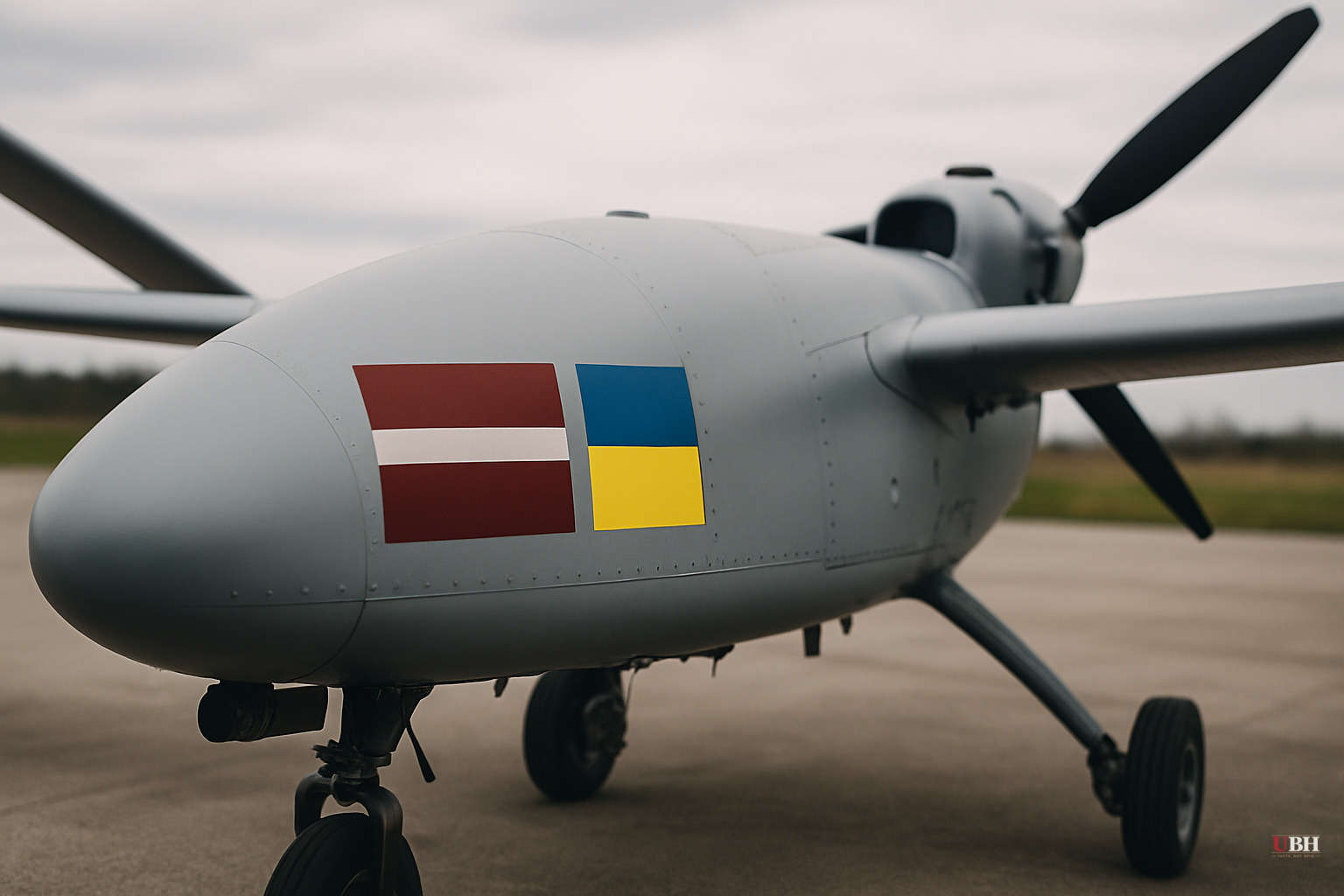
Latvian Prime Minister Andris Kulbergs held an emergency cabinet meeting in Latgale, the country's easternmost region, which borders both Russia and Belarus, and confirmed that Latvia and Ukraine have agreed to build a joint drone manufacturing facility. The cooperation agreement was signed at the beginning of June, and according to regional media, the Latgale meeting formalized plans to move the production facility forward rapidly.
The site selection is deliberate. Kulbergs stated that the government "would do everything necessary" to ensure the facility is located close to the Russian border, adding that the Latgale region needs economic investment and jobs. The dual rationale—strategic positioning and regional economic development—is how the Latvian government is framing the decision publicly.
Kulbergs also confirmed that new counter-drone defense systems are expected to become operational along Latvia's borders with Belarus and Russia in July and August. The drone factory and the defensive perimeter are being built in parallel.
The NATO Context
Latvia joined NATO in 2004, part of the same expansion wave that brought in Estonia and Lithuania. All three Baltic states share land or maritime borders with Russia or Belarus, and all three have been among the most vocal advocates for sustained Western support for Ukraine.
Siting a Ukrainian-partnered drone production facility inside NATO territory, within striking distance of Russia, is a significant escalatory step, even if the drones being produced are described by Latvian officials as part of a defensive program. NATO's Article 5 collective defense guarantee covers Latvia, which means any Russian military action against the facility would, in theory, obligate the alliance to respond.
Russia's Standing Warnings
The Kremlin has issued consistent warnings for years that NATO infrastructure expansion toward Russia's borders risks triggering a broader conflict. Those warnings did not prevent the war in Ukraine, which has already resulted in Russian invasion and occupation of Ukrainian territory. Whether explicit red-line statements from Moscow carry operational weight or function primarily as political signaling is a question Western governments have answered differently at different points in the conflict.
The strongest opposing concern is genuine. Critics who argue that placing a military production facility deliberately close to the Russian border is a provocation that raises the probability of direct Russia-NATO conflict are making a serious point. If Moscow concluded that the facility represented an immediate military threat rather than a deterrent, the risk calculus changes, and Latvia—a small Baltic country—would be the first to absorb the consequences.
At the same time, the deterrence argument has its own logic. NATO members hosting Ukrainian military-industrial capacity on alliance soil may complicate Russian targeting decisions more than it invites them. Latvia and its Baltic neighbors have lived under the shadow of Russian military pressure since independence, and their hawkish posture reflects that experience directly.
What Is Actually Being Built
The sources do not specify what type of drones the facility will produce, what the production capacity will be, or what the investment figures are. Kulbergs described the cooperation agreement as covering "unmanned systems" broadly. Ukraine has developed a substantial domestic drone industry during the war, and the Zelensky government has over the past year been aggressively marketing its expertise to allied nations. Which specific capabilities Latvia intends to co-produce has not been disclosed publicly.
ZeroHedge framed Kulbergs' public statements as Latvia "openly prodding and provoking Russia." What the quotes establish is that Latvia is deliberately maximizing the strategic signal of the facility's location. Whether that constitutes provocation or deterrence depends on the framework one applies.
Kulbergs has also said he hopes Latvia will reach Ukraine's level of drone defense by the end of the year. On the defensive side, he noted: "If there is a drone threat, we will not have to scramble aircraft every time. It is a very expensive and effective solution, but it is neither the best nor the most efficient one."
The Unresolved Question
The counter-drone systems Kulbergs mentioned are scheduled to go operational in July and August. Whether the drone manufacturing facility breaks ground on a similarly accelerated timeline—or faces the procurement and construction delays common to defense projects—has not been confirmed. The gap between a signed cooperation agreement and an operating factory can be measured in years. How fast Latvia and Ukraine can actually move, and whether the facility becomes operational before any shift in the war's trajectory, remains unclear.
Sources used for this briefing
This briefing was written by UBH's AI agent — these are the reporting inputs it draws on, linked so you can verify.


