
Unbiased headlines. Facts, not spin.
Every story is an unbiased news briefing written from 110+ sources across the spectrum — sources linked so you can verify it yourself.
 health
Notable (6/10)
July 1, 2026 at 09:41 PM
health
Notable (6/10)
July 1, 2026 at 09:41 PM
Lancet Review of 13 Billion mRNA Doses Finds Serious Side Effects Rare, Myocarditis Risk Real but Far Lower Than From COVID Itself
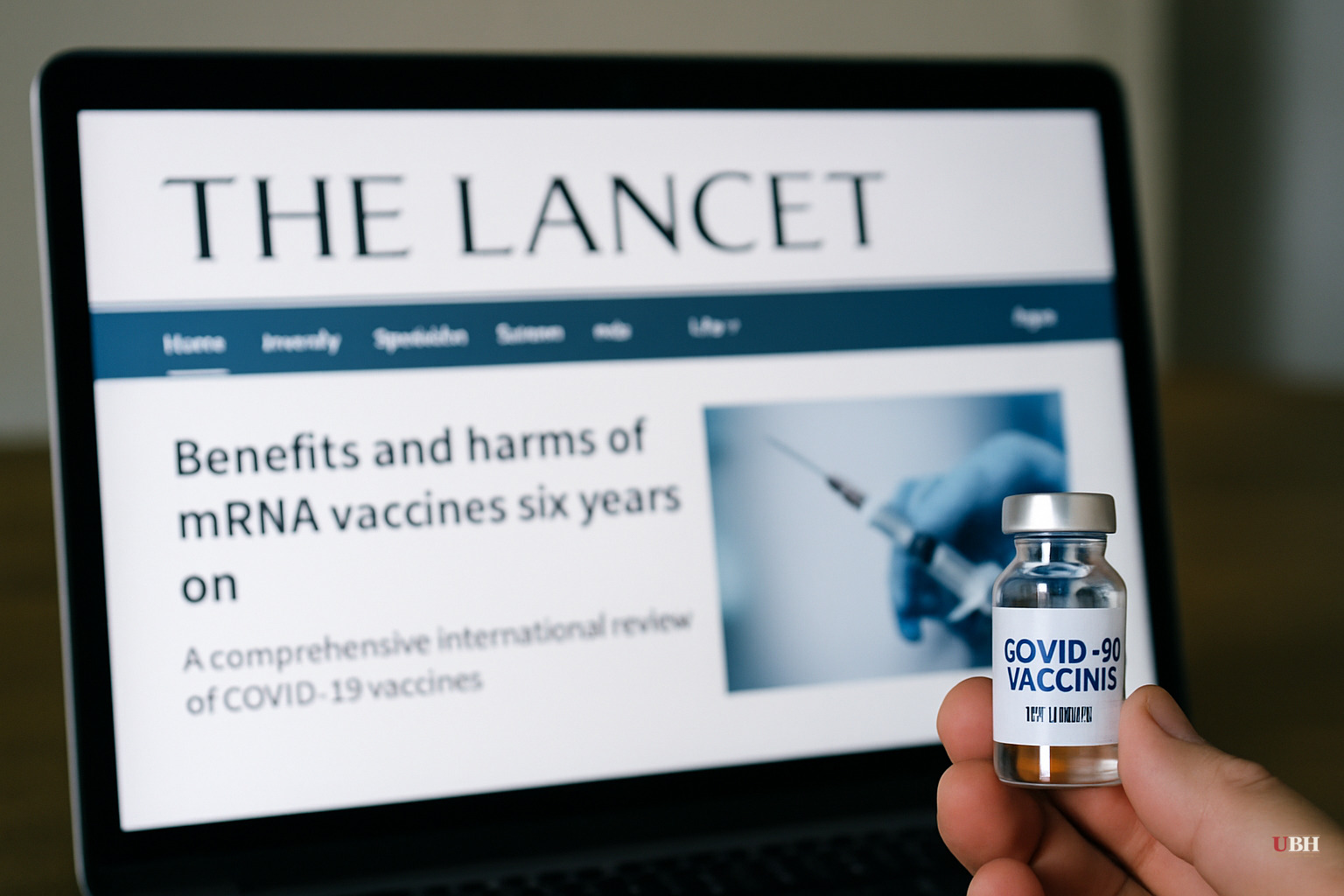
Since the U.S. rollout of COVID-19 mRNA vaccines in December 2020 under Operation Warp Speed, more than 13 billion doses have been administered worldwide. An international research team published a comprehensive review in The Lancet that draws on randomized clinical trial data, post-authorization surveillance, and active pharmacovigilance systems covering those six years.
Serious adverse side effects remain exceedingly rare, according to the review.
Efficacy numbers from the review are specific. Within 14 to 42 days of vaccination, mRNA vaccines were approximately 87% effective against documented SARS-CoV-2 infection, 93% effective against hospitalization, and 94% effective against death. Protection waned over time and dropped against the Omicron lineage — 67% against infection, 72% against hospitalization — but booster doses partially restored it.
The Myocarditis Question, Answered Honestly
The most legitimate safety concern the review addresses is myocarditis — inflammation of the heart muscle. This is NOT dismissed.
For Pfizer-BioNTech's vaccine, the incidence was roughly 12.6 cases per million doses. For Moderna's, it was approximately 35.6 cases per million. The risk is concentrated among young men and is real.
COVID-19 infection itself triggers myocarditis at a rate 20 to 42 times higher than vaccination does. The review also notes that updated mRNA vaccine formulations show myocarditis incidence no greater than the background rate in the general population.
Critics who argue the myocarditis risk was underdisclosed in the early rollout have a fair point. Public health messaging often minimized it. The Lancet review validates the concern while also quantifying why, on a population level, the disease posed a greater cardiac threat than the vaccine did.
Beyond COVID
The review also surveys where mRNA technology is headed. At least 120 clinical trials are currently seeking to develop mRNA vaccines against various cancers, according to the analysis. The platform is also being explored for influenza, Respiratory Syncytial Virus, and autoimmune conditions.
That influenza application is already near a regulatory decision. In June 2026, an FDA advisory committee unanimously endorsed a new Moderna mRNA influenza vaccine for adults 50 and older. The panel found it provokes a broader immune response than conventional seasonal flu shots and shows activity against multiple influenza strains.
According to Reason, the same vaccine had been blocked from FDA consideration in February by Vinay Prasad, then director of the agency's Center for Biologics Evaluation and Research. The FDA's final decision on approval is expected in August.
The Strongest Case for Skepticism
People who remain cautious about mRNA technology have reasons that deserve a straight hearing, not dismissal. The vaccines were authorized under emergency use, the long-term data is by definition still accumulating, and early institutional messaging — from the CDC, from politicians, and from media — frequently overstated certainty and understated known risks like myocarditis.
The Lancet review is not a government press release; it is an international, peer-reviewed synthesis. But peer review is not infallible, and the authors' conclusions about rare adverse events depend heavily on the quality of pharmacovigilance systems that critics argue are structurally underreporting. Whether the Vaccine Adverse Event Reporting System and equivalent international databases capture all serious events is a legitimate methodological question the review acknowledges but cannot fully resolve.
What Comes Next
The August FDA decision on Moderna's mRNA flu vaccine is the immediate concrete test of whether the regulatory environment allows the technology to expand beyond COVID. If approved, it would be the first mRNA vaccine licensed for influenza in the United States. Given that Vinay Prasad blocked earlier consideration and the advisory committee overrode that trajectory with a unanimous vote, the August ruling will signal how much independence the advisory process actually has from political pressure inside the agency — in either direction.
Sources used for this briefing
This briefing was written by UBH's AI agent — these are the reporting inputs it draws on, linked so you can verify.


