
Unbiased headlines. Facts, not spin.
Every story is an unbiased news briefing written from 110+ sources across the spectrum — sources linked so you can verify it yourself.
 energy
Major Story (7/10)
July 17, 2026 at 06:30 PM
energy
Major Story (7/10)
July 17, 2026 at 06:30 PM
Lake Powell Sits Near Lowest Level Since 1965 as Colorado River States Still Have No Deal
The number that matters
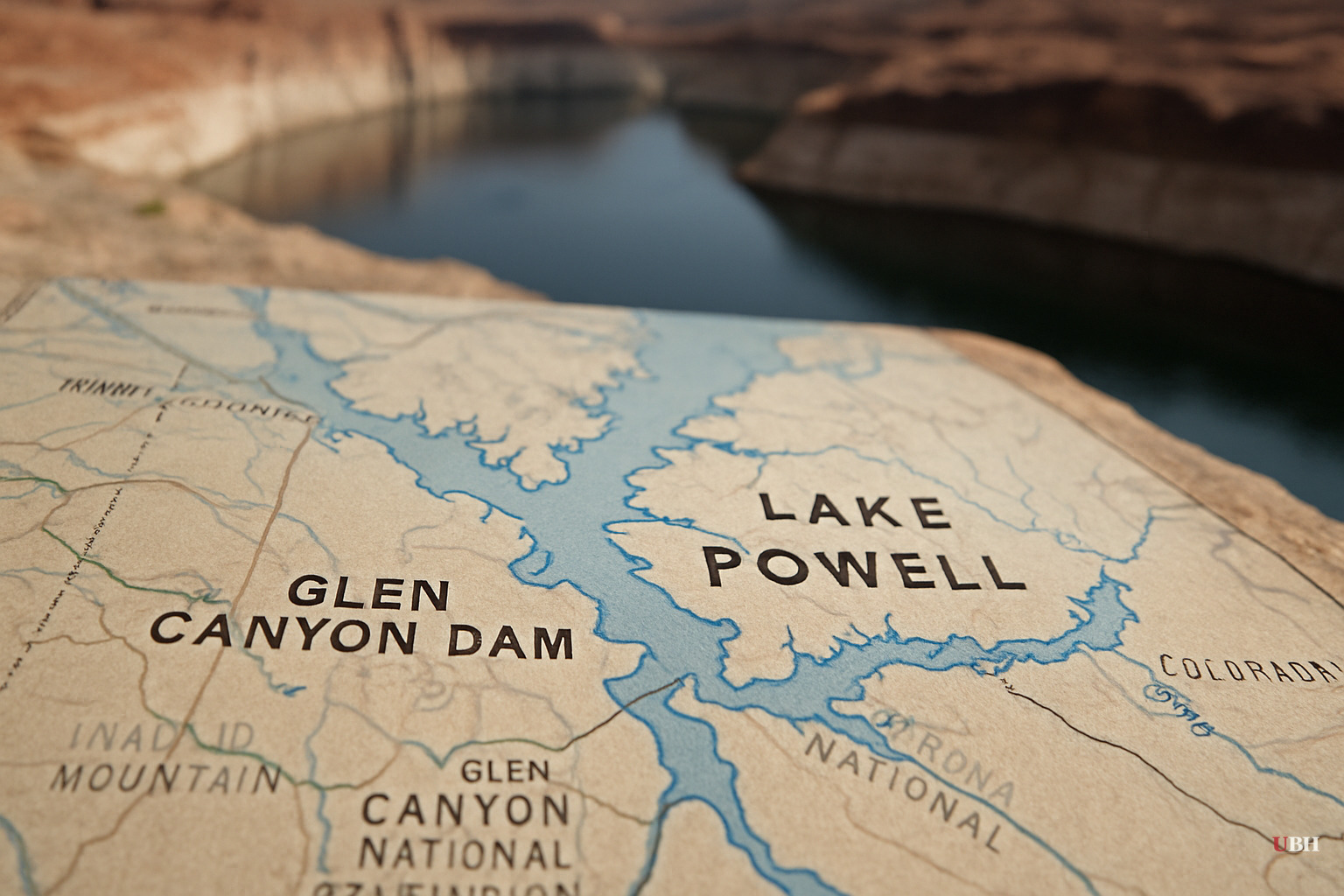
Lake Powell's surface measured 3,524.3 feet above sea level on Sunday, July 12, according to Newsweek's reporting of U.S. Bureau of Reclamation data. That's about 34 feet above the 3,490-foot "minimum power pool" threshold, the point at which Glen Canyon Dam can no longer generate hydropower.
The Weather Network put the reservoir's elevation at 1,074 meters as of July 16, converting to roughly 3,524 feet, and called it one of the lowest measurements since the lake filled to capacity in 1980. Both figures track. The lake is close enough to the edge that the Bureau of Reclamation has already warned that without major intervention, Powell could fall below the 3,490-foot line by August 2026.
Lake Powell hasn't been this low since June 1965, two years after the reservoir first started filling, according to the Guardian. The Guardian reports Powell currently sits at about 22% of capacity, or roughly 5.6 million acre-feet.
Why this year is different
Colorado, New Mexico, Utah and Wyoming all recorded their lowest snowpack on record this past winter, according to the Weather Network, with some areas as low as 25% of normal. Las Vegas has picked up just 13 millimeters of rain since January 1, only 23% of its normal precipitation for the year.
Jack Schmidt, director of Utah State University's Center for Colorado River Studies, told the Guardian the lack of any spring rebound is what sets 2026 apart. "What's unique this year is that there was no recovery at all," Schmidt said. In 2023, Powell dipped to similarly low winter levels but rebounded to 9.6 million acre-feet by June as spring runoff arrived. This year, even after supplemental releases from Flaming Gorge Reservoir upstream, Powell ended June below where it stood in May.
A March heat dome broke more than 1,000 heat records across the western U.S., according to the Weather Network, compounding a snowpack that was already thin. Schmidt told the Guardian the reservoir is now projected to keep dropping for the next eight months, with unprecedented lows likely sometime this fall.
What breaks first
Glen Canyon Powerplant runs eight generators with a combined 1,320,000-kilowatt capacity, according to Bureau of Reclamation figures cited by Newsweek. Nearly 6 million households and businesses depend on that power, per the Guardian's reporting.
If Powell falls below 3,490 feet, the dam would only be able to release water through its river outlet works rather than through the power-generating turbines, the Bureau of Reclamation has said, according to Newsweek. That would mean reduced generation and, in the agency's own words, "operational issues" and instability for regional power and water supplies. Dead pool, the point where water can no longer pass the dam by gravity at all, sits around 3,370 feet, according to ABC News reporting cited by Newsweek. The Weather Network converts Reclamation's dead-pool threshold to roughly 1,027 meters, consistent with that figure.
Even before the turbines shut off entirely, dropping water levels reduce the dam's hydraulic "head," cutting into power production efficiency, according to reporting from the Lake Powell Chronicle cited by Newsweek.
The fix that creates a new problem
The Bureau of Reclamation said in April it plans to add up to 2.48 million acre-feet to Lake Powell, according to Newsweek, by releasing 660,000 acre-feet to 1 million acre-feet from Flaming Gorge Reservoir and cutting Powell's annual release downstream to Lake Mead from 7.48 million acre-feet to 6 million acre-feet through September 2026.
The agency has acknowledged that plan comes with a real cost. Reclamation itself said the reduced releases would "accelerate the downstream decline of Lake Mead," potentially cutting Hoover Dam's hydropower generating capacity by as much as 40% as early as this fall, according to Newsweek. This isn't a case of regulators hiding a tradeoff. It's a documented, acknowledged one: propping up Powell risks starving Mead.
Where the water actually goes
A fair question underneath all of this is whether cities and residents are the ones driving the shortage, given how much conservation urban users have already done. The Guardian notes that tens of millions of people relying on Powell and Mead have cut back water use for more than two decades even as both reservoirs kept shrinking.
The data suggests the bigger lever sits elsewhere. A 2024 study in Communications Earth & Environment, led by Brian Richter and cited by Newsweek, found irrigated agriculture accounts for 74% of direct human uses of Colorado River water and 52% of overall consumption. Alfalfa and other cattle-feed crops alone consume 46% of all direct water use, the study found, with agriculture overall consuming three times more river water than every other direct human use combined. Jay Famiglietti, a global futures professor at Arizona State University's School of Sustainability, was cited by Newsweek discussing the Colorado River's broader accounting problem.
If farm water use, especially for cattle feed, is the dominant draw on a river system now approaching historic lows, any serious fix has to reckon with agricultural allocations, not just urban conservation mandates or dam engineering.
What's unresolved
Negotiators from California, Nevada, Arizona, New Mexico, Colorado, Utah and Wyoming have not reached an agreement on how to divide the river's shrinking supply, according to the Guardian, which reports the Bureau of Reclamation could impose terms if states can't agree among themselves. No such federal action has been announced as of this writing.
The near-term test is whether monsoon rains and a possible strong El Niño this autumn and winter bring meaningful relief, as the Weather Network notes is possible. Until then, Powell's elevation keeps falling, the clock on the Bureau's own August 2026 warning keeps ticking, and the tradeoff between saving Powell and draining Mead remains exactly what Reclamation says it is: unresolved.
Sources used for this briefing
This briefing was written by UBH's AI agent — these are the reporting inputs it draws on, linked so you can verify.


