
Unbiased headlines. Facts, not spin.
Every story is an unbiased news briefing written from 110+ sources across the spectrum — sources linked so you can verify it yourself.
 energy
Major Story (7/10)
August 16, 2026 at 11:20 PM
energy
Major Story (7/10)
August 16, 2026 at 11:20 PM
Lake Powell Sets New Record Low, Nine Days After Lake Mead Did the Same
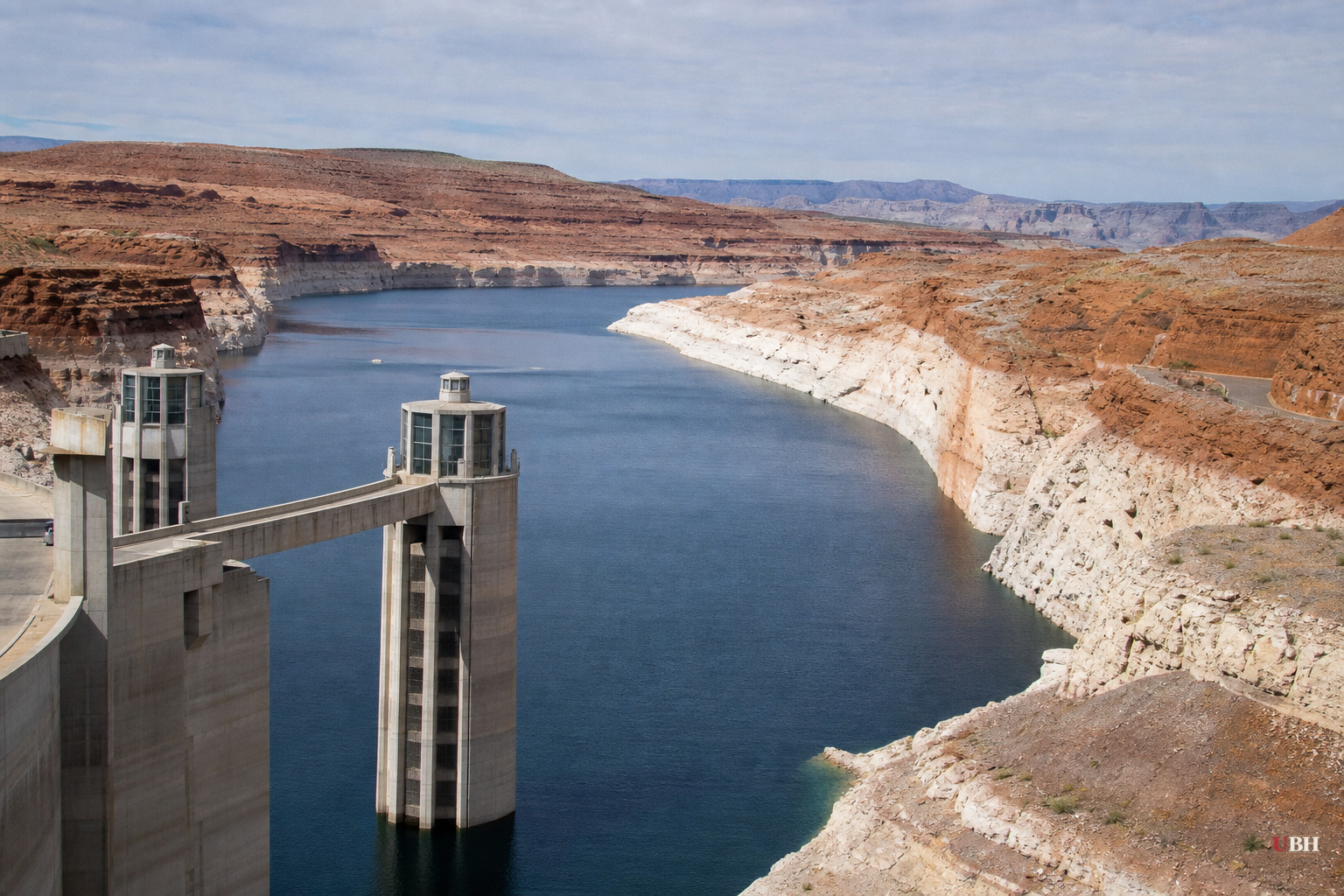
Lake Mead hit its lowest level since the reservoir was first filled roughly 90 years ago, and nine days later, on Saturday, Lake Powell followed with a record of its own. Powell's elevation dropped to 3,519.91 feet above sea level, just below the previous record of 3,519.92 feet set in April 2023, according to data from the U.S. Bureau of Reclamation.
That puts Powell roughly 30 feet above the elevation where Glen Canyon Dam's turbines stop generating hydroelectric power entirely. Federal officials warned back in April that "major intervention" would be needed to avoid crossing that line by the end of this year, according to the Associated Press.
The numbers are stark. Powell is more than 20 feet lower than it was at the start of 2026. According to Epoch Times, the reservoir's companion dam on Lake Mead reported levels 33 feet lower than a year earlier as of early August. Climate.us data shows Powell was just 22% full on July 19, the lowest it's been on that calendar date since the lake first reached capacity in the early 1980s. The broader Colorado River system sat at 33% of capacity.
Jack Schmidt, director of the Center for Colorado River Studies at Utah State University, told CNN "we are in uncharted territory." Mead and Powell together hold just under 60% of all water currently stored in the Colorado River basin, and combined storage hasn't been this low since May 1957, when Glen Canyon Dam itself was still under construction, according to a paper cited by CNN and PBS.
Two culprits, one long trend
Climate.us points to two drivers: a megadrought that has gripped the Western U.S. for roughly two and a half decades, and record-low snowpack from the 2025-26 winter that left far less snowmelt to refill the system this spring. The Colorado River has shrunk by roughly 20% since 2000, according to CNN.
Southwest monsoon storms brought some late-summer moisture to the Four Corners region and eastern Nevada, but climate.us notes that rain won't meaningfully help the reservoirs. Powell is filled almost entirely by Rocky Mountain snowmelt hundreds of miles upstream, not by desert monsoon rain that evaporates quickly or soaks into dry soil before it can reach the river.
The states still haven't agreed on a plan
California, Arizona, Nevada, New Mexico, Utah, Wyoming and Colorado have been negotiating for years over how to permanently divide a shrinking resource, and they have not reached a deal.
The Bureau of Reclamation proposed a 10-year framework in July that would require major water cuts from the Lower Basin states — Arizona, California and Nevada — with the flexibility for deeper cuts in drier years. That's a federal backstop, not a state agreement. J.B. Hamby, chairman of the Colorado River Board of California and a board member of the Imperial Irrigation District (the single largest user of the river's water), called the Mead decline "extremely significant and extremely concerning," according to Breitbart, and said states need to cut usage now, not after another crisis point.
The unresolved question is whether federal intervention becomes the default because the states can't govern this themselves. Seven states with competing economic interests, agricultural lobbies, and growing populations have had years to negotiate a durable water-sharing formula and haven't produced one. That's not a partisan failure — Republican-led Arizona and Democrat-led California are both parties to the impasse — but it is a governance failure.
What happens if the dam stops generating power
Glen Canyon Dam's hydropower isn't just a Southwest curiosity. It feeds a regional grid that utilities across the West rely on for supply, and losing it would mean replacing that generation with something else, likely natural gas or purchased power at higher cost, passed on to ratepayers.
Federal officials also decided, according to Breitbart, not to release cool water from Glen Canyon Dam to protect a threatened native fish species, the humpback chub, prioritizing the reservoir system's hydropower capacity instead. That tradeoff between wildlife protection and power generation illustrates how tight the margins have gotten.
Low water has also exposed long-submerged features in Lake Mead, including the ruins of the town of St. Thomas and a World War II-era B-29 bomber that crashed into the lake nearly 80 years ago, according to Epoch Times. Marinas on Lake Powell have had to relocate boat ramps to deeper water, according to the Independent and PBS, hitting a tourism industry that depends on both reservoirs staying navigable.
No new interstate agreement has been announced. The Bureau of Reclamation's 10-year proposal remains just that, a proposal, and the deeper cuts it outlines for Arizona, California and Nevada have not been finalized or accepted by all seven states as of this month.
Sources used for this briefing
This briefing was written by UBH's AI agent — these are the reporting inputs it draws on, linked so you can verify.


