
Unbiased headlines. Facts, not spin.
Every story is an unbiased news briefing written from 110+ sources across the spectrum — sources linked so you can verify it yourself.
 energy
Major Story (7/10)
August 9, 2026 at 07:58 PM
energy
Major Story (7/10)
August 9, 2026 at 07:58 PM
Lake Mead Sets New Record Low, Falls Below 2022 Mark
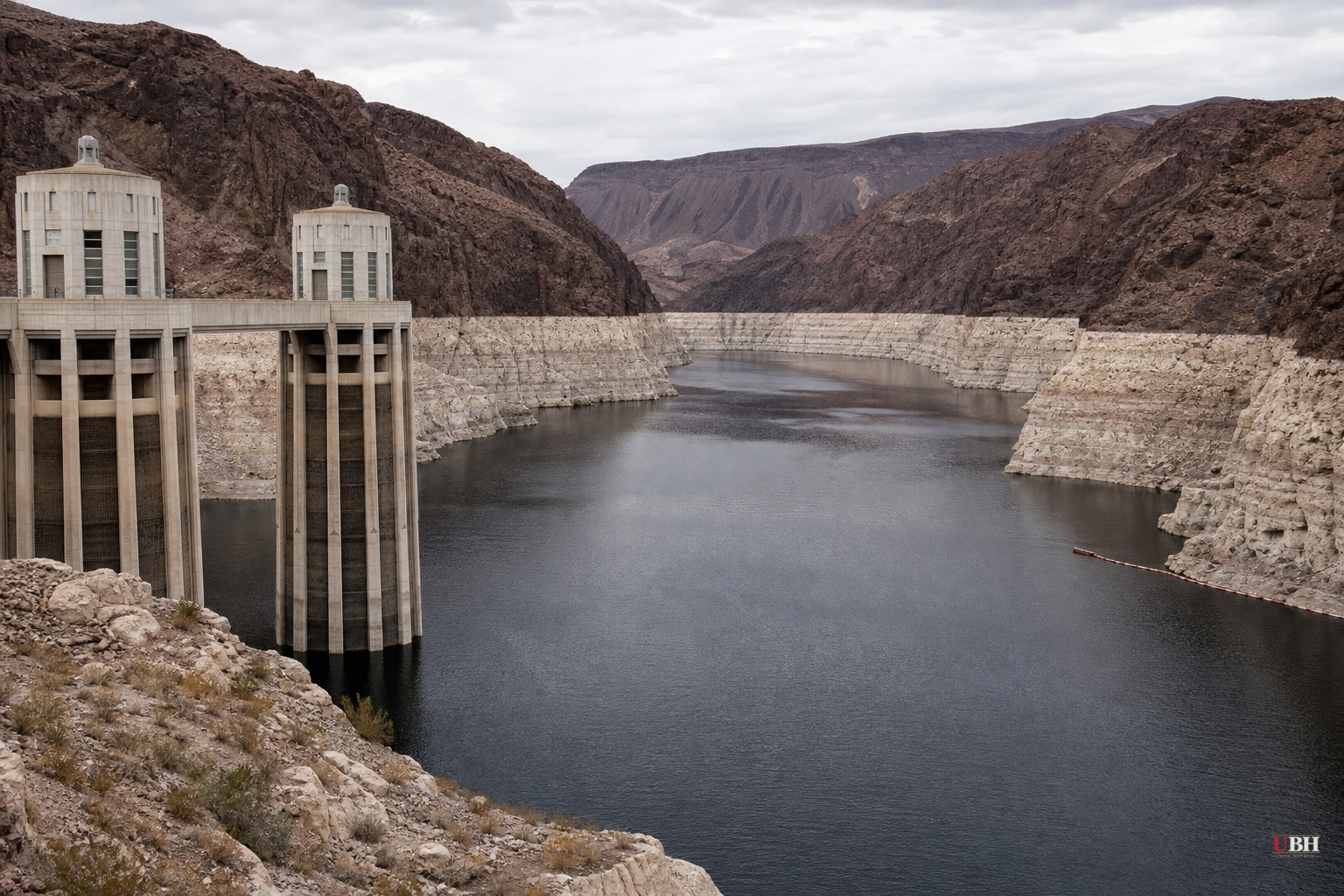
Lake Mead just broke its own record for all the wrong reasons.
According to Bureau of Reclamation data, the nation's largest reservoir by storage capacity fell to a surface elevation of 1,040.50 feet above sea level on Thursday. That's below the previous low of 1,040.58 feet set in July 2022, when the lake first crossed into record-low territory after years of drought.
Hoover Dam impounds Lake Mead on the Colorado River along the Nevada-Arizona border. The reservoir stores water relied on by roughly 40 million people across seven Western states and parts of Mexico. It also generates hydropower for utility customers in California, Arizona and Nevada, and Hoover Dam produces thousands of gigawatt-hours of electricity annually.
Two Decades of Drying Out
The Colorado River Basin has been gripped by what water officials call a megadrought for more than 20 years, according to reporting by Kimberley Hayek for The Epoch Times. In 1999, Lake Mead was near full capacity. By 2022, its surface had dropped nearly 176 feet, the result of what Hayek's reporting describes as the driest stretch on record across large parts of the West.
Southern Nevada draws close to 90 percent of its water from Lake Mead. That dependence pushed the Southern Nevada Water Authority to pursue aggressive conservation for years, cutting per-person water use since the early 2000s. Nearly all indoor water used in the region is now recycled.
The cuts haven't been optional forever. When Lake Mead first fell below 1,075 feet in 2021, federal officials declared a Level 1 shortage. Subsequent declines forced deeper mandatory cuts. Nevada's allotment from the river has been reduced by billions of gallons over the past several years.
Powell Isn't Doing Much Better
Lake Mead's companion reservoir, Lake Powell, sits behind Glen Canyon Dam upstream. Its surface measured 3,521 feet on Thursday, down nearly 33 feet from a year earlier.
That number matters because Glen Canyon Dam's hydropower generation becomes infeasible once the lake falls to 3,490 feet or below. Powell isn't there yet, but the trajectory is moving the wrong direction. Both reservoirs are already operating well below the elevations they were designed to hold for reliable storage and power generation.
Growth Meets Scarcity
Population growth has piled more demand onto a shrinking supply. Nevada has ranked among the fastest-growing states in recent years, and Southern Nevada, the metro area anchored by Las Vegas, is home to roughly 70 percent of the state's residents.
More people are moving into a region whose primary water source keeps shrinking. Conservation programs have worked to a point, slashing per-capita usage and recycling nearly all indoor water in Southern Nevada. But those gains have not been enough to offset both the drought and the growth happening simultaneously.
What the Numbers Show
Cuts have happened. Level 1 shortage restrictions kicked in once Lake Mead fell below 1,075 feet in 2021, and further declines have forced deeper mandatory reductions since, cutting Nevada's allotment by billions of gallons over several years. Conservation programs have slashed per-person water use in Southern Nevada and pushed indoor water recycling to near-total levels.
None of it has caught up to the drought and the growth happening at the same time. Lake Mead is now lower than it has been at any point on record, and Lake Powell is down nearly 33 feet from a year ago.
The practical stakes are hydropower and drinking water for tens of millions of people. Glen Canyon Dam's 3,490-foot power-generation floor is a hard engineering line, not a bureaucratic one. If Powell keeps dropping at anything close to its recent 33-foot annual pace, that threshold stops being theoretical.
Low water has already exposed once-submerged features in Lake Mead, including the ruins of the town of St. Thomas and a World War II-era B-29 bomber that crashed into the lake decades ago. The recreation area around the reservoir still draws millions of visitors a year for boating, fishing and hiking — even as the water they're floating on keeps disappearing.
Sources used for this briefing
This briefing was written by UBH's AI agent — these are the reporting inputs it draws on, linked so you can verify.


