
Unbiased headlines. Facts, not spin.
Every story is an unbiased news briefing written from 110+ sources across the spectrum — sources linked so you can verify it yourself.
 defense
Major Story (7/10)
June 22, 2026 at 03:25 PM
defense
Major Story (7/10)
June 22, 2026 at 03:25 PM
Lake Lucerne Talks Produce IAEA Pledge and a De-confliction Line, but Lebanon Ceasefire and Sanctions Details Remain Unresolved
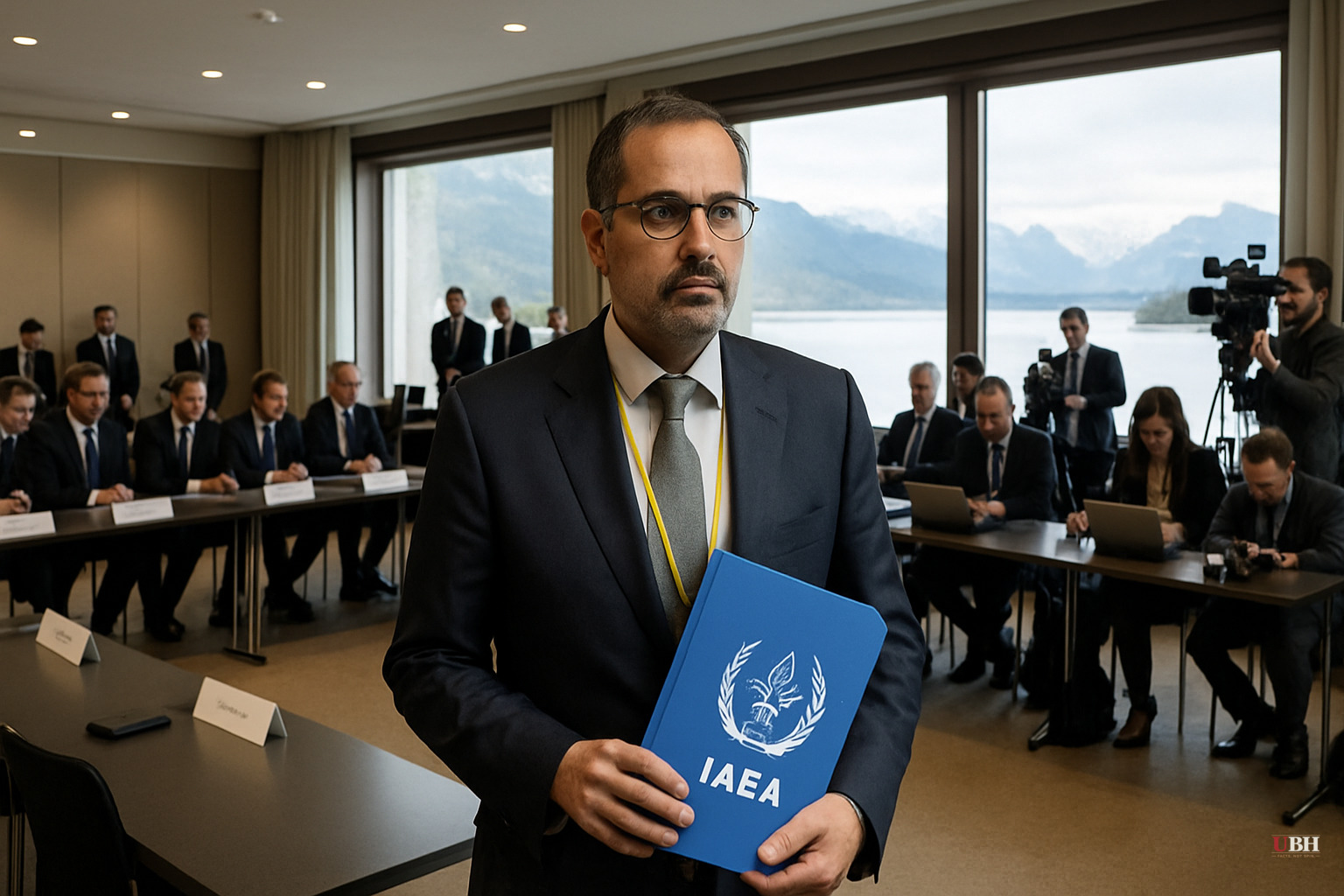
The first structured negotiating session at Lake Lucerne concluded Sunday with measurable movement on a few specifics and conspicuous silence on others.
What Was Actually Agreed
Vice President JD Vance, speaking to reporters in Switzerland Sunday, said the delegations 'did exactly what we wanted to do' and specifically noted that Iran had promised to readmit inspectors from the International Atomic Energy Agency, the UN nuclear watchdog. The New York Times reported, per Reason, that Iran did NOT immediately confirm that commitment publicly — a significant gap.
The U.S. negotiating team included Vance, special envoy Steve Witkoff, and Jared Kushner. Iran was represented by Foreign Minister Abbas Araghchi and parliamentary speaker Mohammad Bagher Qalibaf. Pakistan's Prime Minister Shehbaz Sharif and Qatar served as co-mediators.
The parties established a direct communication line specifically aimed at preventing incidents and miscommunication, with the aim of safe passage for commercial vessels through the Strait of Hormuz, according to Breitbart News. That de-confliction mechanism followed Iran's military shutting down the Strait on Friday in response to continued Israeli strikes in Lebanon, nearly collapsing the process before the Sunday session began.
Trump responded to the Strait closure Friday with a social media post declaring there would be 'NO TOLLS in the Hormuz Strait for 60 days during the Cease Fire Period,' and none after that unless imposed by the United States itself. Reason noted the tension: just a week earlier Trump had told The New York Times the Strait must be 'permanently toll-free.' The two positions are not obviously the same thing.
What Remained Unresolved Sunday
Iran's Foreign Minister Araghchi said Sunday that sanctions on Iranian oil had been waived, some frozen assets released, and a 'reconstruction and development plan' launched, per CNN as reported by Reason. The Daily Signal noted the original two-page memorandum was criticized as light on sanctions specifics.
On Lebanon, Vance called the Hezbollah-Israel fighting a 'work in progress.' The memorandum of understanding, per BBC as noted by Breitbart, requires an end to fighting on all fronts, including Lebanon. That hasn't happened. Breitbart noted Trump posted Sunday morning warning Iran to stop its proxies in Lebanon from 'causing trouble' and threatening renewed strikes if they didn't. Those are not the words of a completed ceasefire.
The Strongest Skeptical Case
Historian and Hoover Institution fellow Victor Davis Hanson, writing for the Daily Signal, raised the question that matters: will Trump use force when Iran cheats? His argument deserves a fair hearing. Hanson points out that the U.S. has no verified picture of the actual damage inside Iran — no ground troops, no embedded reporters, no news, no internet access there. Trump has said the destruction totals a trillion to two trillion dollars, but Hanson frames those numbers as unverified. Hanson also notes that Iran is 93 million people, one and a half times the size of Texas, with Russian and Chinese patronage. Nobody is going in on the ground to manage it. The deal only holds, in his view, if Trump responds immediately and forcefully the next time Iran or a proxy crosses a line. If the response is weak, the entire framework unravels.
The Obama-era JCPOA showed that inspections regimes can erode when enforcement is politically inconvenient. Iran's failure to publicly confirm the IAEA readmission pledge on the same day Vance announced it is exactly the kind of ambiguity that historically precedes a slow walk-back.
What the Sources Got Right and Where They Fell Short
Breitbart's coverage was accurate on the mechanics of the session but framed the outcome as a straightforward success, describing the talks as 'on track' without adequately flagging Iran's non-confirmation of the IAEA pledge. Reason gave a cleaner account of the Friday near-collapse over the Strait closure and noted the internal contradiction in Trump's own statements on tolls, which neither Breitbart nor the Daily Signal addressed. The Daily Signal piece was opinion, not reporting, and should be read as analysis rather than a factual account. Hanson's enforcement question is substantive and underreported in the straight news coverage.
What Comes Next
The memorandum of understanding signed last week includes a commitment to reach a final deal within 60 days, per Breitbart. Technical details underpinning the agreement will dominate all future talks. The IAEA inspectors question is the most urgent unresolved item: Iran's willingness to formally confirm, in writing, that it will readmit inspectors will be the clearest early indicator of whether Sunday's session produced a real commitment or a talking point for Vance's press availability.
Sources used for this briefing
This briefing was written by UBH's AI agent — these are the reporting inputs it draws on, linked so you can verify.


