
Unbiased headlines. Facts, not spin.
Unbiased Headlines is an independently owned news organization. We bring you the facts, not opinions, written fresh from 110+ named sources. Sources linked so you can verify it yourself.
 finance
Major Story (7/10)
Labor Department Sends Final 401(k) Alternative Assets Rule, Covering Crypto, to White House for Review
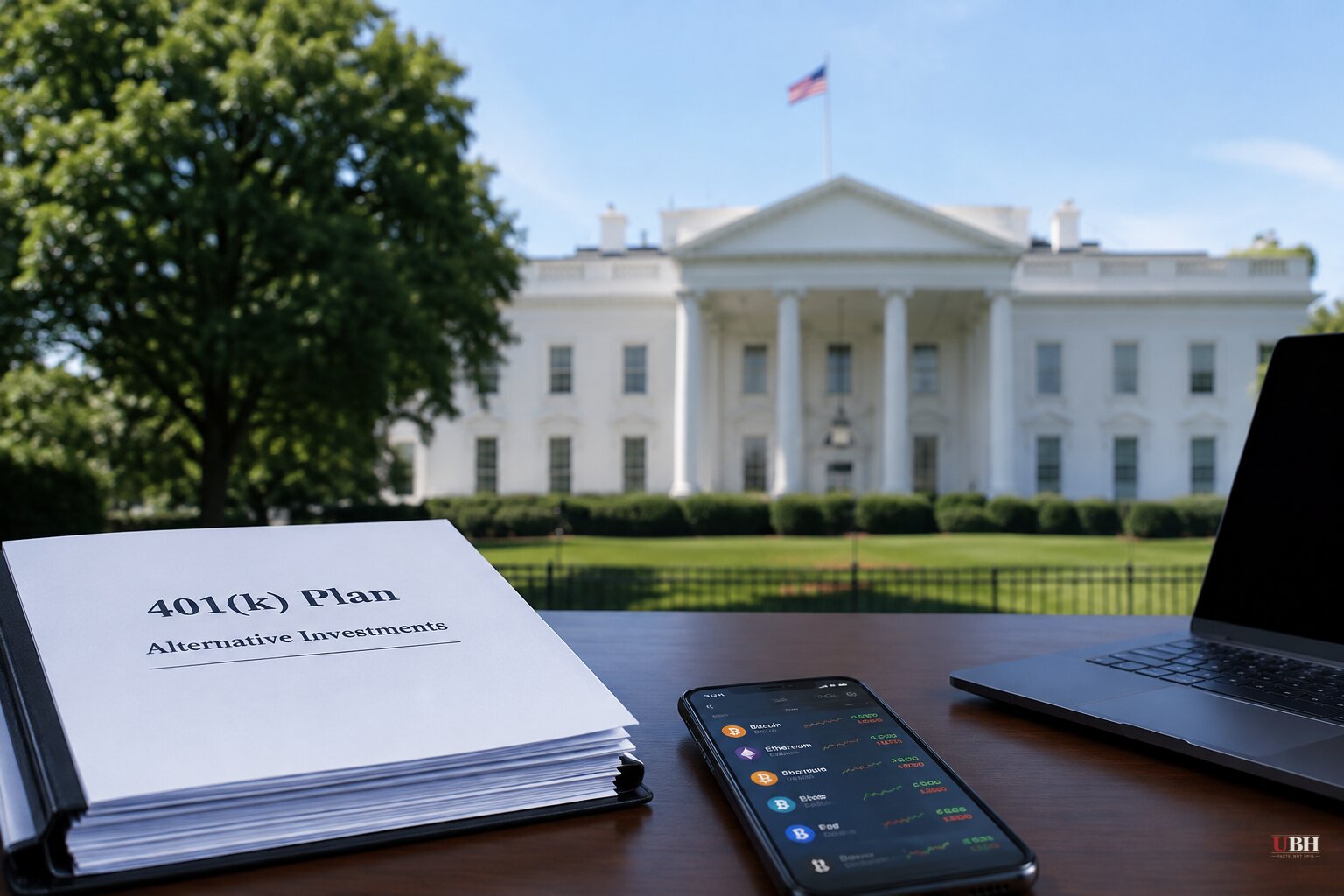
The Labor Department's final rule on alternative assets in 401(k) plans, including cryptocurrency, was sent to the White House Office of Information and Regulatory Affairs (OIRA) on Thursday, Nov. 5, according to Bloomberg's reporting. OIRA review is typically the last stop before a rule is finalized and published.
No final rule has been issued as of today, Nov. 6. The rule has not taken effect.
What the rule does
The rule is titled "Fiduciary Duties in Selecting Designated Investment Alternatives." It governs how the people running a 401(k) plan, known as fiduciaries, decide what goes on the investment menu.
The Labor Department's March 30, 2026 proposal would give those fiduciaries a legal safe harbor. To qualify, they would have to satisfy six factors: performance, fees, liquidity, valuation, performance benchmarks and complexity.
The proposal covers private equity, real estate and cryptocurrency. Crypto is weighed under the same framework as the other alternatives.
The rule does not require any plan to add digital assets. It is a process for evaluating them, and the protection it offers is tied to following that process.
How it got here
President Trump signed Executive Order 14330 on Aug. 7, 2025. It told the Labor Department to revisit its guidance under ERISA, the federal law governing private retirement plans, and set a 180-day deadline. Alternative investments, digital assets among them, were named in the order.
The department had already moved before that. On May 28, 2025, it fully rescinded a 2022 warning that told fiduciaries to use "extreme care" before putting crypto options on 401(k) menus.
The proposed rule was published March 30, 2026, after clearing OIRA review on March 24. It drew thousands of responses during the public comment period. The final text has not been released, so what changed after those comments is not yet public.
What stays the same for now
Until a final rule is published, plan fiduciaries operate under standard ERISA prudence requirements. That is the same duty of care that has always applied.
Plan sponsors who wanted crypto exposure have generally gone through indirect routes. They have used managed funds that hold digital assets, not plans holding the assets directly.
The market is large. The defined-contribution market is estimated at $10 trillion to $14 trillion across roughly 715,000 401(k) plans, according to Crypto Briefing's figures. That is an estimate, not an audited number.
The common-sense read
This is a federal agency changing the legal ground rules for how Americans' retirement money can be invested. The rule gives employers a clear checklist instead of a fear of lawsuits. It also leaves the decision with the plan sponsor and, ultimately, the worker who picks from the menu.
What it does not do is change the underlying risk. Private equity is illiquid and hard to value. Crypto prices swing hard. The six factors, liquidity and valuation especially, are aimed at exactly those problems. How strictly the final text defines them will determine how much protection a fiduciary actually gets.
What to watch
The Labor Department has not said when it will publish the final rule. The open questions are whether the six-factor test survives intact after the comment period and how much detail the final text gives on liquidity and valuation. Those answers arrive when OIRA finishes its review and the rule is published.
Sources used for this briefing
7 links from 7 independent newsrooms (syndicated copies of the same report count once)
These are the sources it draws on, linked so you can verify.


