
Unbiased headlines. Facts, not spin.
Unbiased Headlines is an independently owned news organization. We bring you the facts, not opinions, written fresh from 110+ named sources. Sources linked so you can verify it yourself.
 finance
Notable (6/10)
Treasury Sanctions 4 People and 41 Companies Tied to Prince Group in Third Round, Plus a Malaysian Accused of Madagascar Scam Network
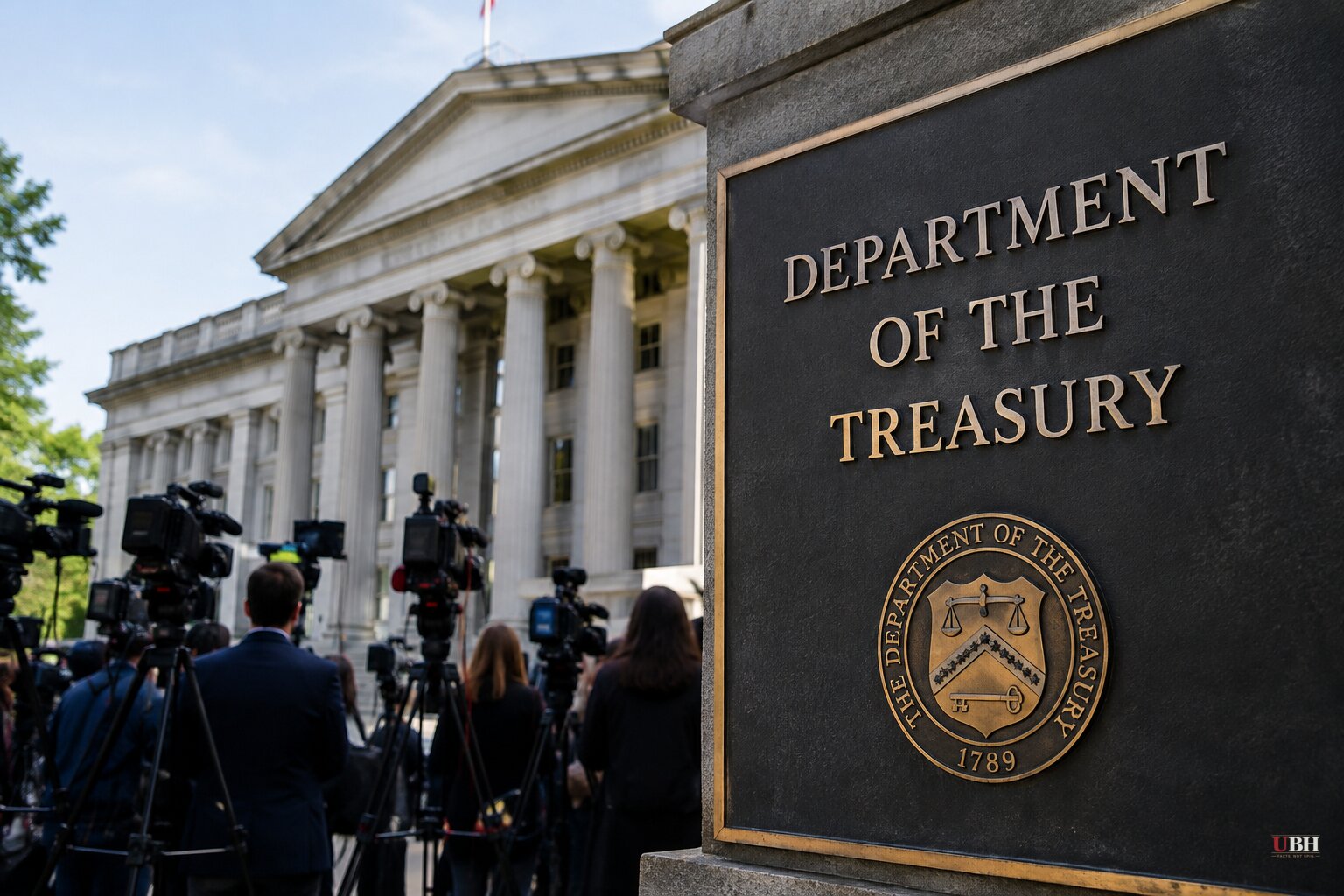
Since OFAC first sanctioned Prince Group leadership on Oct. 14, 2025, and added more targets on June 23, 2026, Treasury says the network kept moving money. Today, Nov. 5, it came back for a third round.
OFAC designated four individuals and 41 entities it says support the business network of the Prince Group Transnational Criminal Organization. It also designated one Malaysian man in a separate action, bringing the total to 46 targets.
Who got hit
Treasury named four individuals: Qiu Yong, Zhao Mengyao, He Yujing and Visal Pang.
Qiu, according to Treasury, controlled companies in the British Virgin Islands and Hong Kong on the network's behalf. Treasury says he ultimately owned the Hong Kong money lenders Premium Financial Limited and Solar Scape Financial Limited through BVI companies, and that companies he owned were tied to the wine business.
Zhao, also known as Amy Zhao, was his personal assistant, company secretary and co-director of several companies he controlled, Treasury said.
He Yujing is the wife of Chen Bo, a Prince Group executive sanctioned on June 23. Treasury says Chen transferred ownership of his Tokyo mansion to her after the first sanctions in October 2025. It also says she owns Cambodia's Super Light Speed Kh Technology Co., Ltd.
Visal Pang, a Cambodian national, controls 11 Cambodian companies, several of which he co-directs with Chen Bo, Treasury said.
The entity list reaches beyond shell companies. It includes CB General Insurance PLC and Prince International Airlines Co., Ltd., both of which Treasury says are controlled by Chen Bo. The designations touch insurance, aviation, property and lending.
The evasion allegation
The core of Treasury's case is that sanctions on the top people were not enough. In its statement, the department said senior Prince Group executives "have relied on layers of offshore holding companies, foreign entities, nominee directors, and corporate service providers to maintain control over assets while obscuring beneficial ownership."
Treasury says the newly designated people and companies managed offshore structures, concealed ownership, and provided administrative and financial services to senior executives after the earlier sanctions. Some, it says, took part in transferring property or holding companies on behalf of already-designated leaders.
The department alleges Prince Group affiliates generated billions of dollars through crypto investment scams, romance scams and other online fraud aimed at Americans and others worldwide. It links many of those operations to Southeast Asian compounds staffed by trafficked and coerced workers.
Prince Holding Group has previously rejected the allegations against the company and its chairman, Chen Zhi. Nothing in Treasury's announcement changes that denial; these remain Treasury's allegations, not court findings against the newly named parties.
The Record reported that Chen Zhi was arrested and extradited to China earlier this year, and that the U.S. had confiscated more than $15 billion in cryptocurrency tied to him and the company.
The Madagascar case
Separately, OFAC sanctioned Malaysian national Chui Kok Wa. Treasury accuses him of managing a Madagascar-based network of scammers that defrauded U.S. victims of more than $400,000. Treasury did not identify him as part of the Prince Group network.
He also faces a criminal case. The Justice Department announced a wire fraud conspiracy charge against him on Oct. 27, describing him as the alleged leader of a fraudulent investment scheme involving non-fungible tokens.
Prosecutors say evidence recovered from his phones included employment contracts, work schedules and bonus arrangements tied to stolen money. They say overnight shifts in Madagascar lined up with daytime and evening hours in the United States. They also say they found scripts telling workers how to manipulate victims' emotions, plus employee records and crypto wallet addresses.
A charge is an accusation. Chui has not been convicted.
What the sanctions do
The designations block assets and property interests in the United States or in the possession or control of U.S. persons. Transactions involving blocked property are generally prohibited for U.S. persons, subject to licenses and exemptions. The restrictions also extend to entities that blocked persons own, directly or indirectly, 50% or more.
Blocking is not forfeiture. The owner keeps title but cannot freely transfer, withdraw or otherwise deal with the property without authorization.
The action advances President Trump's March 6, 2026, Executive Order 14390, which directs federal agencies to use available tools against foreign-backed criminal networks that target Americans with cybercrime, fraud and extortion. Treasury said it coordinated the action with the FBI.
"Cyber scam syndicates continue to steal billions of dollars from American victims," Treasury Secretary Scott Bessent said. He added that Treasury is committed to dismantling the organizations "from their leadership to the corporate structures and financial facilitators."
What remains open
A U.S. sanction only bites where the dollar system or U.S. persons are involved. A Tokyo mansion, Cambodian companies and Hong Kong lenders are largely outside Washington's direct reach, and Treasury itself says earlier rounds were circumvented through relatives and assistants. Whether a third round closes that gap depends on whether banks and counterparties outside the U.S. act on the designations.
Chui's wire fraud conspiracy case, unsealed Oct. 27, is the one piece of this action that runs through a courtroom, where the Justice Department will have to prove what Treasury has asserted.
Sources used for this briefing
7 links from 7 independent newsrooms (syndicated copies of the same report count once)
These are the sources it draws on, linked so you can verify.


