
Unbiased headlines. Facts, not spin.
Every story is an unbiased news briefing written from 110+ sources across the spectrum — sources linked so you can verify it yourself.
 defense
Notable (6/10)
June 16, 2026 at 02:18 PM
defense
Notable (6/10)
June 16, 2026 at 02:18 PM
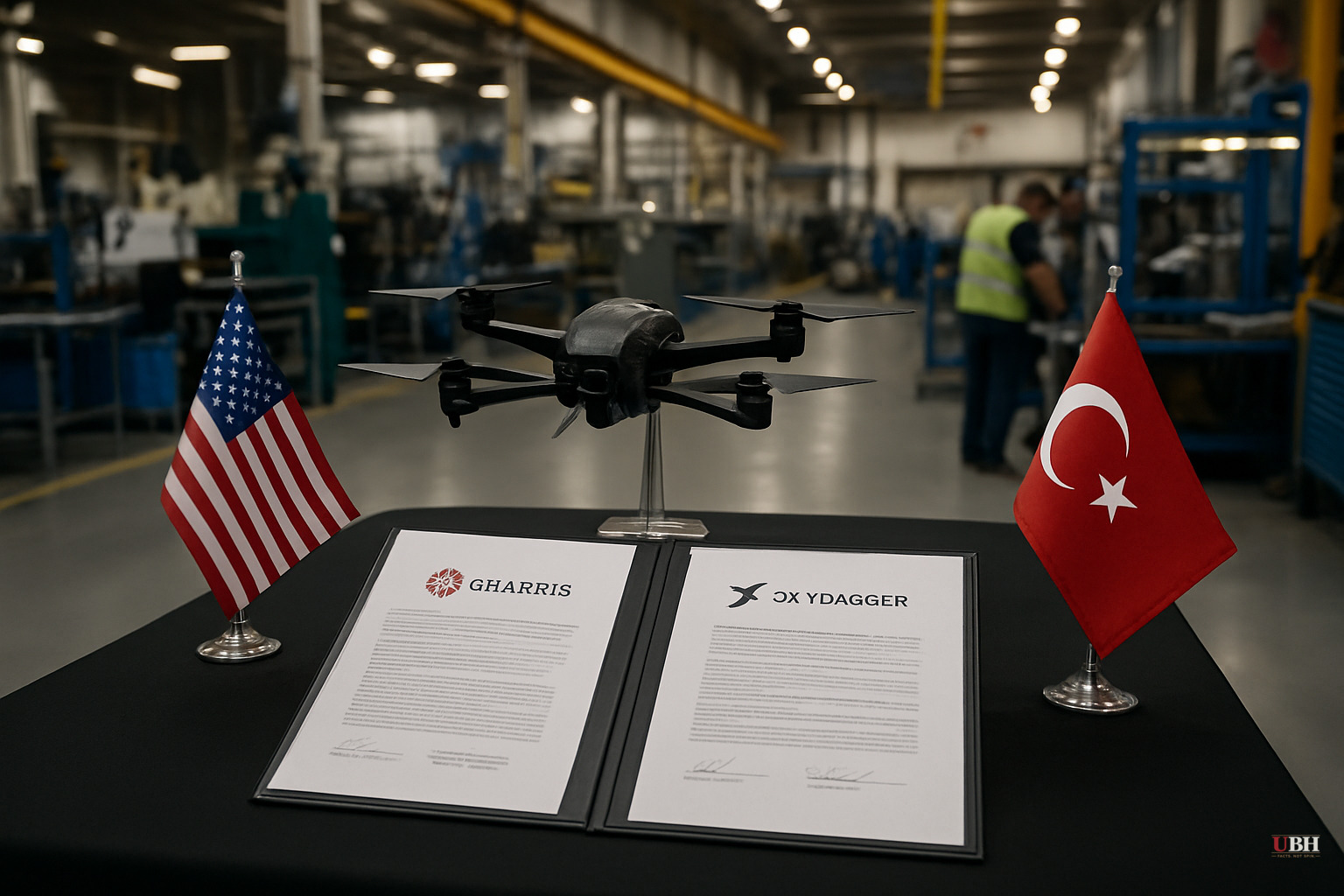
L3Harris and Turkey's Skydagger Sign Deal to Build FPV Drone Interceptors in the US
What Was Signed and Where
L3Harris and Turkish manufacturer Skydagger inked a memorandum of understanding on June 16, 2026, on the sidelines of the Eurosatory defense trade show in Paris, according to Breaking Defense. The agreement creates a framework for transferring Skydagger's drone interceptor technology and manufacturing expertise to a US production line.
Mike Spina, L3Harris's head of business development for target and sensor systems, told Breaking Defense the goal is to complete integration of the new capability into the Vampire Counter-UAS system before the end of 2026.
What the Vampire System Actually Does
L3Harris describes the Vampire as a "completely self-contained, low-cost, multi-mission, precision-guided weapons platform" built for reconnaissance and precision strikes against drones. It can fire a missile but is advertised as compatible with a range of effectors. Adding FPV interceptor drones would be a new capability layer.
The system has logged over 350,000 operational hours since 2023, according to company data reported by Breaking Defense. The US Army selected it last week as part of Washington's layered counter-drone defense strategy in an order worth $106 million.
Earlier in 2026, L3Harris opened a new Vampire production line in Huntsville, Alabama, citing direct demand from the US and allied militaries facing widespread drone threats.
Who Skydagger Is
Skydagger is a Turkish drone manufacturer that produces several interceptor variants, including the Hunter. That drone weighs just over one pound and can reach speeds of nearly 200 miles per hour, according to company specifications cited by Breaking Defense.
Spina confirmed Skydagger's current output capacity sits at 50,000 FPV interceptors per year. The intended targets for the Vampire-integrated interceptors are Group 2 and Group 3 drones — the small-to-medium-sized unmanned systems that have dominated recent battlefield reporting from Ukraine and the Middle East.
The Market Driving This
L3Harris forecasts global demand for FPV drone systems will hit $5.8 billion by 2032, according to Spina. That projection is consistent with what's been visible at Eurosatory this year, where Breaking Defense reports counter-drone capabilities have become a dominant topic among defense buyers.
FPV interceptors are relatively cheap, fast, and increasingly seen as one of the only economically viable answers to drone swarms. Shooting a $50,000 missile at a $500 commercial drone is not a sustainable exchange rate. A drone-on-drone intercept changes that math considerably.
Industrial Sovereignty Questions
There is a legitimate question about industrial sovereignty here. The US is anchoring a critical counter-drone capability to a Turkish design at a moment when US-Turkey relations remain complicated. Turkey is a NATO ally but has also purchased the Russian S-400 air defense system, which got it ejected from the F-35 program in 2019. Critics could reasonably ask whether the Pentagon is comfortable with the supply chain and technology origins for a system now being bought with US Army funds.
Spina's answer, implicitly, is that the MOU establishes US co-production. Localized manufacturing with technology transfer reduces dependence on Turkish production. Whether that transfer is deep enough to fully domesticate the supply chain is a question the MOU itself does not resolve, and Breaking Defense's reporting does not detail what components would still be sourced from Turkey.
What Comes Next
The agreement is a memorandum of understanding, not a production contract. The next milestone is the technical integration of Skydagger's interceptors onto the Vampire platform, which Spina says L3Harris aims to complete by year's end. After that, the system would need to go through any required US military qualification and testing before it could be fielded under the Army's existing $106 million order or any follow-on contract.
Whether the Army's current Vampire order includes budget for the FPV interceptor variant, or whether that would require a separate procurement action, was not addressed in Breaking Defense's reporting.
Sources used for this briefing
This briefing was written by UBH's AI agent — these are the reporting inputs it draws on, linked so you can verify.


