
Unbiased headlines. Facts, not spin.
Every story is an unbiased news briefing written from 110+ sources across the spectrum — sources linked so you can verify it yourself.
 energy
Major Story (7/10)
July 25, 2026 at 02:35 PM
energy
Major Story (7/10)
July 25, 2026 at 02:35 PM
Kuwait Signs $16 Billion Pipeline Deal With Blackstone, Brookfield and KKR While Iran Strikes Continue Nearby
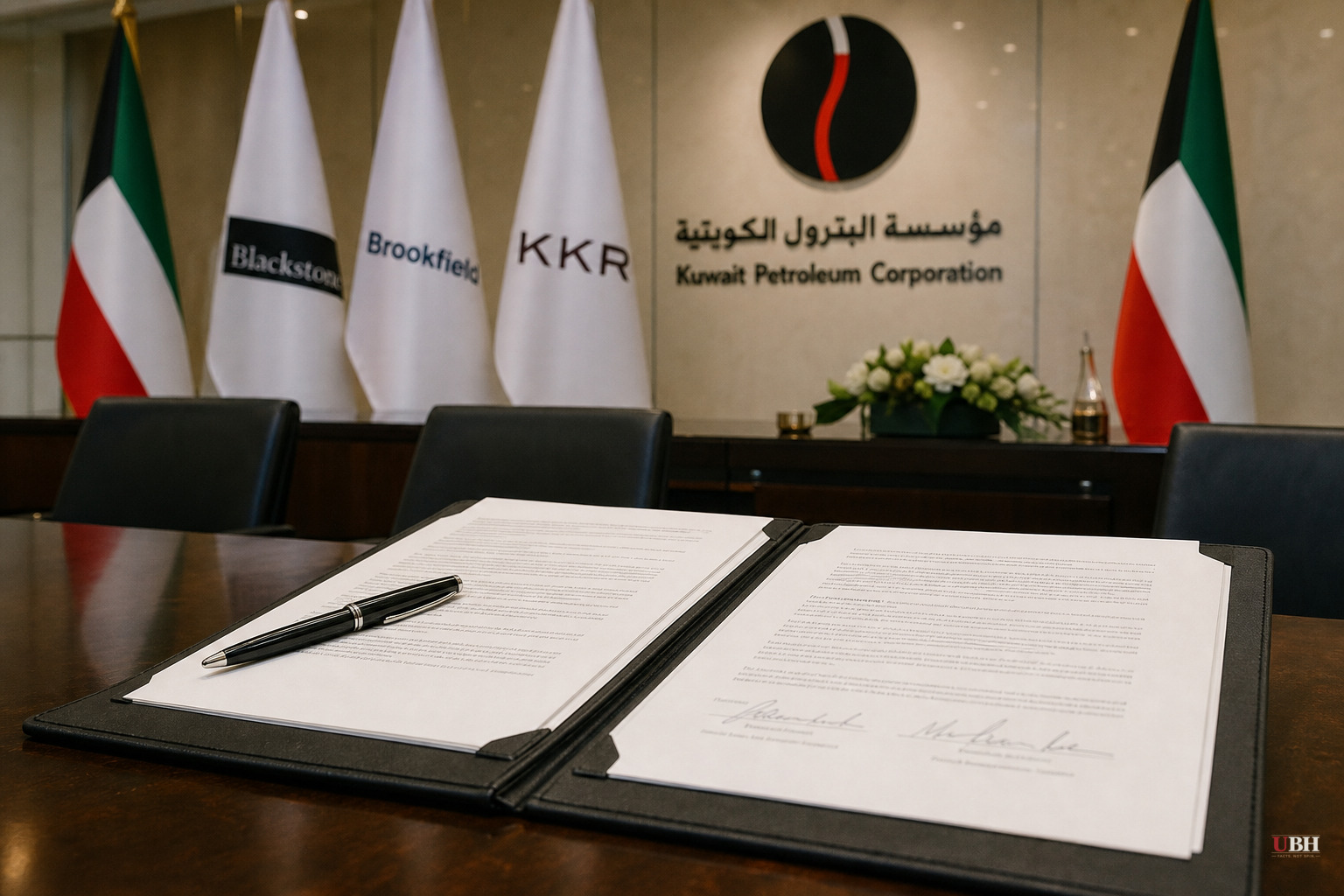
Kuwait Bets on Wall Street While Missiles Fly Nearby
Kuwait Petroleum Corporation signed a $16 billion lease-and-leaseback deal with Blackstone, Brookfield Asset Management and KKR on Saturday, July 25, according to CNBC. KPC called it the largest foreign direct investment in the country's history.
The agreement, named Project Peregrine, hands the three firms a combined 49% stake in a new joint venture covering Kuwait Oil Company's entire crude pipeline network, according to CNBC and ndtvprofit. That's 13 pipelines stretching roughly 320 kilometers, linking oilfields to export terminals on the Arabian Gulf.
Kuwait Oil Company keeps 51% and full operational control. The state runs the pipes. The consortium gets paid.
The Money and the Mechanics
The deal runs 20.5 years and includes a volume-based tariff, meaning the three firms get paid based on how much oil actually moves through the network, according to CNBC. KPC said the transaction generates $7.85 billion in upfront proceeds at closing, money it says will fund the company's capital expenditure plans.
Shaikh Nawaf Saud Al-Sabah, KPC's Deputy Chairman and CEO, framed the deal as a vote of confidence in Kuwait despite regional chaos. "This transaction sends a powerful signal that Kuwait continues to rise as an attractive destination for global capital, even amid a challenging regional environment," he said in a statement carried by both CNBC and ndtvprofit.
Centerview Partners, HSBC and JP Morgan advised KPC on the transaction.
This Isn't Kuwait's Idea
Kuwait didn't invent this playbook. It's copying a formula the Gulf's biggest oil producers have run for years, according to reporting from Startup Fortune. Abu Dhabi National Oil Company raised $10 billion leasing its oil pipelines in 2019, then $20.7 billion on a gas pipeline network in 2020. Always the same 49/51 split, always a volume tariff floor, always full state control retained. Saudi Aramco followed with a $12.4 billion oil pipeline deal led by EIG in 2021, then a $15.5 billion gas pipeline deal with BlackRock and Hassana.
Bahrain's Bapco Energies has run similar deals too, according to CNBC. Kuwait is just the newest and, so far, the biggest name on that list.
The appeal for Blackstone, Brookfield and KKR is straightforward: predictable, contracted cash flow from a commodity that isn't going away anytime soon, sitting apart from the volatility hammering tech valuations and rate-sensitive assets elsewhere. Brookfield crossed $1 trillion in assets under management in 2025 partly by chasing exactly this kind of long-duration real asset yield, according to Startup Fortune's reporting. When three firms this large—collectively managing more than $2.6 trillion—show up together on one deal, it signals the risk-adjusted math checked out for all of them.
The Part That Should Give Anyone Pause
This agreement was signed the same week Iran was actively hitting targets in Kuwait.
Iran said Friday it struck U.S. military equipment depots in northern Kuwait, along with U.S. troop positions at Camp Arifjan and Camp Doha near Kuwait City, according to CNBC. That's not a hypothetical regional risk analysts are modeling. That's an attack that already happened, in the same country, days before ink hit paper on a $16 billion infrastructure deal.
The interim truce between the U.S. and Iran that was supposed to end their war collapsed last month, and Iran has continued targeting infrastructure across the region since, CNBC reported. ndtvprofit's coverage referenced separate reporting that Iran was "considering" a ground incursion into Kuwait to seize U.S. bases, underscoring just how live this threat is.
A reasonable skeptic would ask why three of the world's largest private equity firms are pouring billions into fixed infrastructure in a country actively being struck by a hostile foreign power. That's a fair question, and neither KPC's statement nor the consortium has publicly addressed it head-on in these reports.
Gulf infrastructure deals like this one are structured to insulate investors from exactly this kind of instability. Fixed tariffs, sovereign backing, and a 20.5-year contract term can outlast any single geopolitical flare-up. Whether that insulation actually holds if the conflict escalates further is untested and unresolved.
What Happens Next
The stake-sale process for this deal was launched before the joint U.S.-Israeli strikes on Iran back on February 28, according to Reuters reporting cited by CNBC. That means Blackstone, Brookfield and KKR were negotiating this transaction throughout the entire period of rising regional tension, and closed it anyway.
The immediate financial mechanics are set. The open question is what happens to a 20-year tariff stream on Kuwaiti pipeline infrastructure if Iran's stated consideration of a ground incursion into Kuwait moves from rhetoric to reality. Neither KPC nor the consortium has issued a public contingency statement addressing that scenario.
Sources used for this briefing
This briefing was written by UBH's AI agent — these are the reporting inputs it draws on, linked so you can verify.


