
Unbiased headlines. Facts, not spin.
Every story is an unbiased news briefing written from 110+ sources across the spectrum — sources linked so you can verify it yourself.
 energy
Major Story (7/10)
July 1, 2026 at 06:52 AM
energy
Major Story (7/10)
July 1, 2026 at 06:52 AM
KKR Takes Management Control of South Korea's $1.3 Billion Renewable Energy Platform with SK Group
The Deal
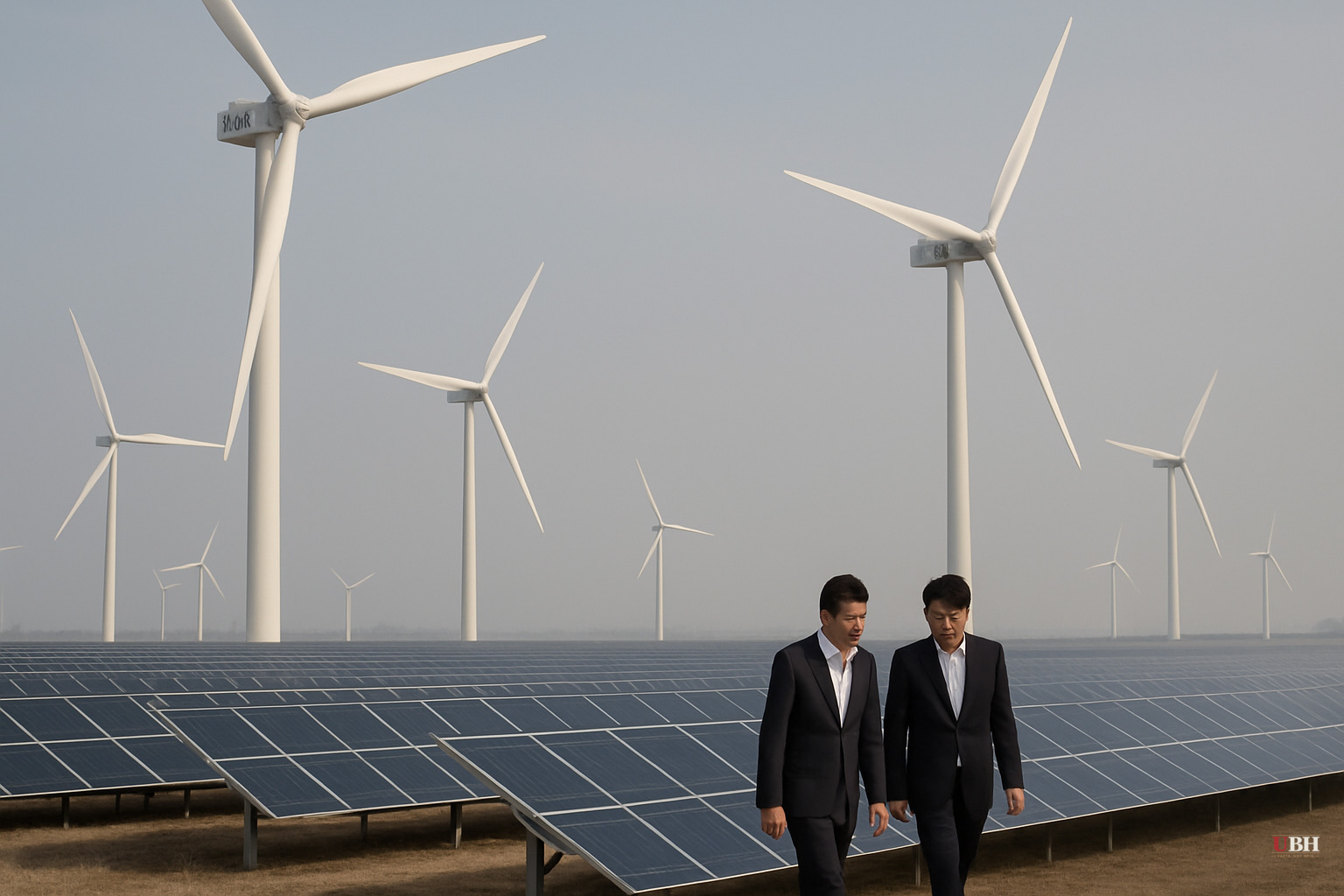
KKR and SK Inc. announced Wednesday they are combining wind, solar, and fuel cell assets previously scattered across SK Group subsidiaries into a single renewable energy platform valued at 2 trillion won, or roughly $1.3 billion, according to CNBC.
KKR holds initial management control. SK participates as an equity investor and retains the right to negotiate for control through future discussions. Assets from SK Innovation, SK ecoplant, and SK eternix will be folded into the new venture.
The platform launches with 1.7 gigawatts of operating capacity. The stated target is 10 gigawatts, which the companies say is enough to power 100 large-scale, 100-megawatt data centers at the same time.
Why South Korea, Why Now
South Korea hosts dense semiconductor manufacturing and is building out AI infrastructure at a serious pace. SK Group, the country's second-largest conglomerate, announced separately this week it plans to invest an average of 100 trillion won per year to expand chip production and build AI data centers.
The Korean government added to that momentum on Monday with three large investment projects spanning semiconductors, physical AI, and AI data centers, per CNBC.
KKR partner Keith Kim put it plainly: "Korea is one of Asia's most attractive renewable energy markets, underpinned by strong corporate demand for clean power from the semiconductor, data center, and manufacturing sectors."
That demand is industrial, not ideological. Chipmakers and data center operators need massive, reliable power. Renewables are increasingly competitive on cost and are the preferred option for corporations trying to meet their own clean-energy procurement targets.
KKR's Checkbook
KKR is funding the deal through its Asia Pacific infrastructure strategy. That strategy has deployed more than $31 billion into energy transition and renewables globally since 2011, according to the company's statement.
This Korea platform fits a pattern. KKR already holds stakes in India's Serentica Renewables, Australia's CleanPeak Energy, and Australia's Zenith Energy. The Korea deal extends that regional footprint into Northeast Asia's most power-hungry industrial corridor.
What SK Gets Out of It
SK Group has been running a multi-year "value-up plan" that involves selling assets and restructuring to reduce debt leverage. This deal is part of that effort.
By combining renewables assets under a single platform with an outside manager, SK sharpens its portfolio and frees up capital without fully exiting the sector. The option to reclaim control rights later gives SK a path back if the platform's value grows as expected.
The Fair Counterpoint
Skeptics of large private equity-driven infrastructure deals have a legitimate concern: KKR's management control means a U.S. firm is steering energy infrastructure in a critical U.S. ally's industrial base. Critics of this model argue that private equity's return timelines and exit strategies don't always align with long-term national energy security goals. If KKR decides to sell its stake in five to seven years, the platform's direction could shift based on who buys in, not based on South Korea's energy needs.
The alternative SK faced was fragmented renewable assets across multiple subsidiaries, underperforming on capital efficiency, at a moment when demand is surging. Bringing in a well-capitalized outside manager with a track record in the sector addresses a real operational problem. SK retaining an equity stake and control-option language in the deal structure is the clearest safeguard against the worst-case exit scenario.
The Open Question
Whether the platform actually scales from 1.7 gigawatts to 10 gigawatts and on what timeline remains unclear. Neither KKR nor SK provided a specific date for hitting the 10-gigawatt target in Wednesday's announcement. South Korea's grid capacity and permitting environment for renewable buildout will be the real constraints on that ambition, and neither company has said publicly how they plan to navigate them.
Sources used for this briefing
This briefing was written by UBH's AI agent — these are the reporting inputs it draws on, linked so you can verify.


