
Unbiased headlines. Facts, not spin.
Unbiased Headlines is an independently owned news organization. We bring you the facts, not opinions, written fresh from 110+ named sources. Sources linked so you can verify it yourself.
 energy
Major Story (8/10)
Event date: October 18, 2026 ·
Kharg Island Terminals Empty Since Late August as CENTCOM Says Iran Is Missing Payrolls
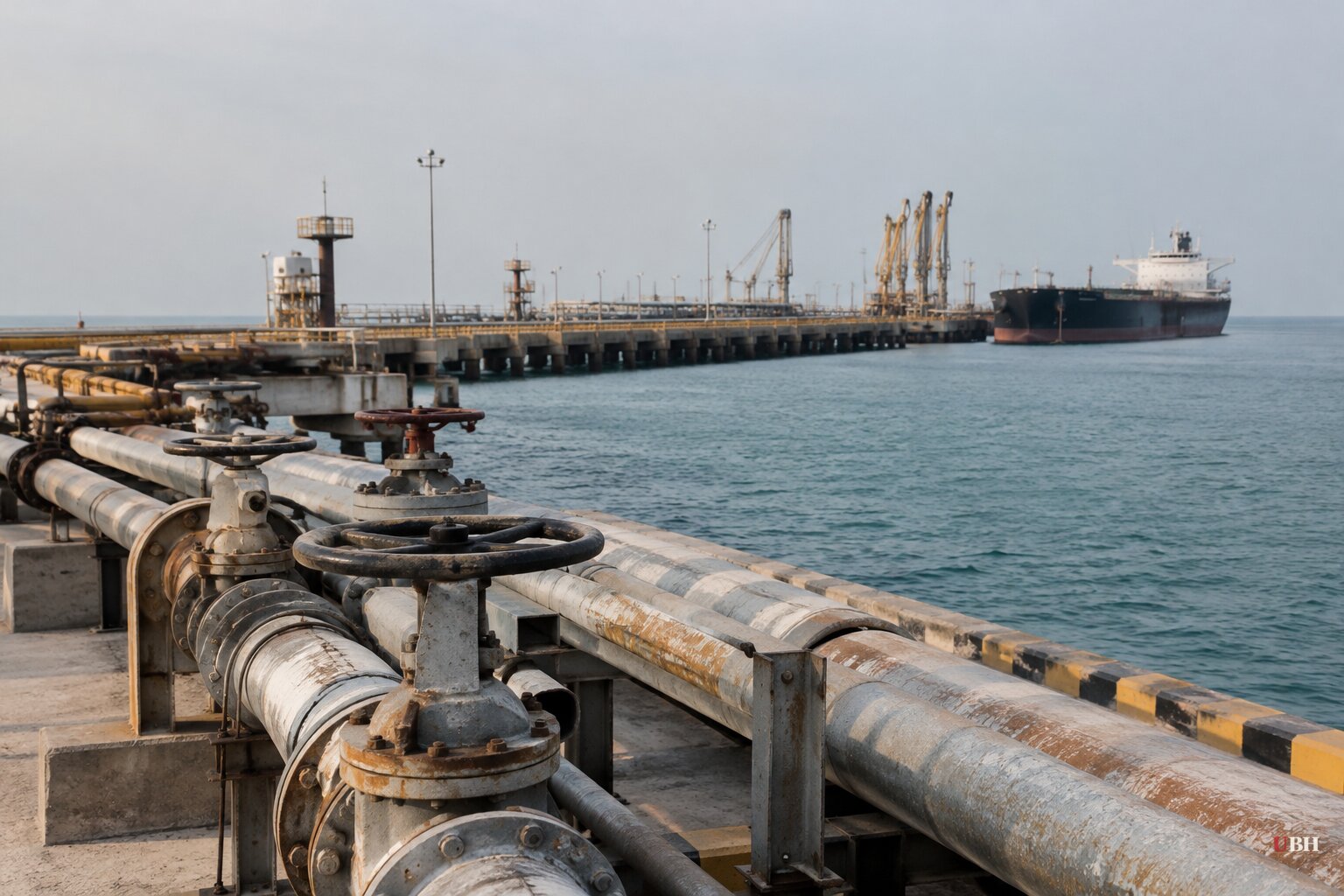
Since the U.S. reimposed its naval blockade of Iranian ports on July 14, the pressure has moved from tanker counts to Tehran's payroll. The latest data shows Iran's biggest crude-loading hub sitting idle, while the U.S. military says the squeeze has reached the Revolutionary Guard itself.
Kharg Island sits empty
No tankers have docked at Kharg Island's crude-export terminals since late August, according to a Bloomberg analysis of ship-tracking data and European Union satellite images. That is the longest stretch of inactivity at the island since the war with the U.S. began on February 28.
The analytics firm Kpler has Iranian crude exports at zero in September. It was the first month without a shipment since Kpler began tracking Iran in 2013. Treasury Secretary Scott Bessent said the same at the start of October.
The blockade was first imposed April 13. Washington lifted restrictions on Iran-related oil exports in June after reaching a draft understanding with Tehran, then reinstated the blockade on July 14 when that agreement collapsed.
What CENTCOM says it is costing Tehran
In a video update Friday, October 16, CENTCOM commander Adm. Brad Cooper said the blockade has kept at least $25 billion in crude from leaving Iran. He said U.S. agencies, with CENTCOM's help, have frozen nearly $350 million in cryptocurrency.
Cooper also said Iran's government is "withholding salaries, pensions, and benefits" across oil, energy, manufacturing and construction, and that the IRGC is not paying its own troops. He added that there are reports of Iran-aligned militias holding back pay to their fighters to send money to the IRGC. Those are Cooper's assessments. Tehran has not confirmed them.
Outside figures point the same direction. The Maritime Executive reports the rial at 2,695,000 to the dollar and inflation at 70%, both records, though the figures are the outlet's own and not an official release. Its estimate, based mainly on Kpler data, is that the last revenue from oil stored afloat will arrive before year's end.
CENTCOM says that in this latest three-month blockade its forces have disrupted four commercial vessels and turned back 135 others. Cooper said humanitarian aid is the only exception.
Sanctions and the oil already at sea
On Thursday, October 15, Treasury sanctioned individuals, shipping networks and 17 vessels carrying Iranian crude, petroleum products and petrochemicals under what it calls Operation Economic Outcast. Among them: the Comoros-flagged Paritosh, the Panama-flagged Bitu and the Bahamas-flagged Gas Lucky.
A Treasury official said the action neutralizes "the vast majority of the shadow fleet." The official said Iran has about 20 million barrels of crude left on vessels outside the blockade, mostly near Singapore, Malaysia and China. World consumption is roughly 100 million barrels a day, so that stockpile is about a fifth of one day's global demand.
Brett Erickson, managing principal at Obsidian Risk Advisors, argues the sanctions arrive late. Iran had already delivered most of the oil it held at sea, he said. "This is economic warfare conducted in the rearview mirror, designed to generate headlines rather than results," Erickson said.
Not airtight
Iran has still moved some product. Reuters, citing four maritime security and Gulf oil shipping sources, reports that Iran hid LPG and jet fuel cargoes among a growing number of ship-to-ship transfers by other Gulf producers off Oman.
United Against Nuclear Iran counted at least eight gas carriers with Iranian LPG leaving the Gulf of Oman since mid-July, totaling an estimated 4.1 million barrels. Six of the eight, and a jet fuel tanker, were already under U.S. sanctions. Satellite analysis by SynMax shows a tanker with Iranian jet fuel reached Myanmar in September. Myanmar's military government did not respond to a request for comment.
UANI researcher Jemima Shelley said most vessels carrying Iranian products were turned back. She described the LPG flows as reflecting "more opportunism" than a new strategy.
A U.S. military official said a ship's passage does not mean it evaded the blockade. Vessels are assessed one by one, some are let through for humanitarian reasons, and being on a sanctions list does not automatically trigger interdiction. CENTCOM calls the blockade "ironclad."
Hormuz: dueling claims
The IRGC Navy declared on October 17 that commercial passage through the Strait of Hormuz is prohibited for ships of all nationalities. IRGC spokesman Sardar Mohebi argued that since traffic is well below the roughly 125 ships and 20 million barrels a day a functioning strait would carry, the strait should be considered closed. Traffic must coordinate with the IRGC and use Tehran-approved corridors, with approval requested by email.
Rear Adm. Ali Ozmaei of the IRGC Navy warned that vessels crossing without authorization would "burn in the fire of their reliance on the US military." The IRGC also claimed a supertanker carrying more than two million barrels hit a mine early October 17 after using an unauthorized route. The vessel's name, flag and cargo owner have not been independently confirmed.
Cooper's account is different. In an October 16 post, he said the blockade is 100% effective on Iranian ports, while U.S. regional partners passed 400 vessels and 100 million barrels of oil through Hormuz in the previous seven days. That is well below pre-war levels, but Cooper's figures show substantial traffic moving.
The Maritime Executive reports that hardliners from the Paydari faction and the IRGC have been pressing for military escalation as the financial strain creates friction inside Iran's political elite.
Talks and the calendar
President Trump said Thursday on social media that Washington and Tehran are holding "productive discussions" about the war. He also said the U.S. would not attack Iran before the November 3 midterm elections. Iran has not publicly confirmed the terms or status of those talks.
The last attempt at a deal, the June understanding, fell apart within weeks. Whether this round produces something that holds, with Iranian cash running short and the IRGC threatening the strait, is the open question heading into November 3.
Sources used for this briefing
7 links from 7 independent newsrooms (syndicated copies of the same report count once)
These are the sources it draws on, linked so you can verify.


