
Unbiased headlines. Facts, not spin.
Unbiased Headlines is an independently owned news organization. We bring you the facts, not opinions, written fresh from 110+ named sources. Sources linked so you can verify it yourself.
 energy
Notable (5/10)
Event date: October 15, 2026 ·
Central Asia's $5 Billion 'Gas Ring' Pitched in Tashkent as Rubio Is Set to Meet Regional Ministers in Samarkand
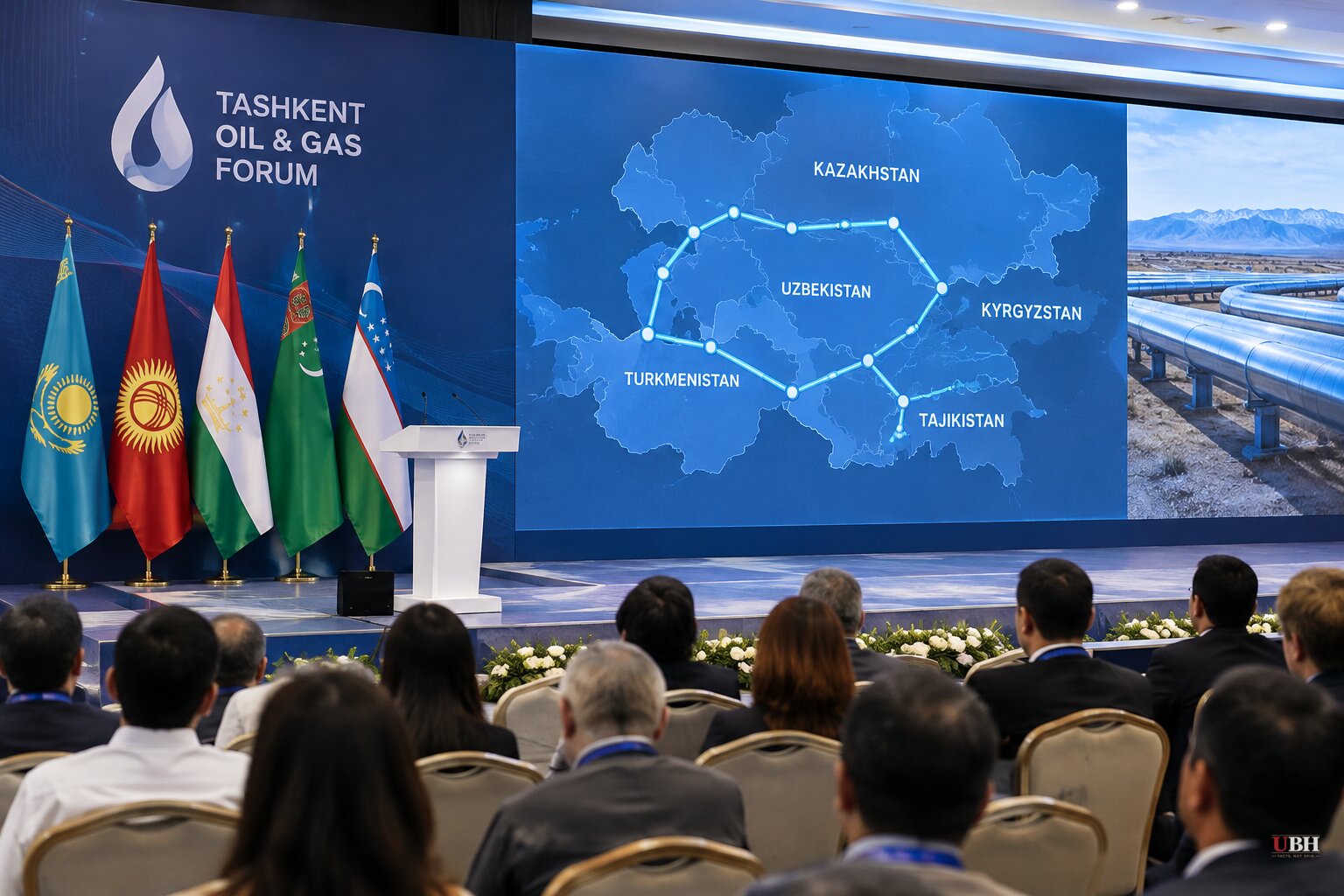
A $5 billion plan to wire the gas systems of Kazakhstan, Kyrgyzstan, Tajikistan, Turkmenistan and Uzbekistan into one network was on the table at the second Central Asia Oil and Gas Forum in Tashkent, held Oct. 15-16.
The pitch is called the Central Asia Gas Ring. It would add more than 3,000 kilometers of new and upgraded pipelines. It is a proposal. Funding and agreements between governments remain to be finalized.
What the Gas Ring would do
Kazakh energy expert Askar Ismailov first presented the idea at the forum's inaugural edition in 2025. He estimates the core infrastructure at $5 billion: $2 billion for new construction and $3 billion for modernization and digitalization. He says the network could carry about 20 billion cubic metres of gas a year.
The logic follows the region's mismatched geography. Uzbekistan is both a major producer and consumer, and its demand climbs in winter. Kazakhstan produces gas, but much of its resource base sits in the west, far from its population centers. Kyrgyzstan depends on imports. Tajikistan generates most of its electricity from hydropower but still buys gas; its energy ministry says it imported 126.4 million cubic metres from Uzbekistan in the first half of 2026.
Turkmenistan, with large reserves, would gain regional customers.
The five countries already trade gas across borders. The ring would build on those links and allow more flexible flows. "When Uzbekistan or some other Central Asian countries like Kyrgyzstan or Tajikistan demand more gas during winter time, we can do it in reverse mode," said Assylbek Jakiyev, chairman of the industry association PetroCouncil Kazakhstan. He was describing a technical possibility, not an agreed operating arrangement.
Ismailov now advises the Geneva-based Global Gas Centre, a non-profit of gas industry executives and experts that is working to advance the proposal. "The Gas Ring project is a very interesting one because it will enhance the security of supply of all these countries," the centre's executive director, Valérie Ducrot, told Euronews.
The price tag is moving
The $5 billion figure is not the only number in circulation. Materials previewing the Tashkent forum said the initial estimate of $4 billion to $5 billion had been revised to $10 billion, including related social initiatives. That is double the figure Ismailov gives for the core infrastructure. No source in this reporting explains how the two totals reconcile, and no financier has been named.
Washington arrives with its own agenda
Secretary of State Marco Rubio is scheduled to meet the foreign ministers of all five countries in Samarkand today, Oct. 19. The agenda covers economic connectivity, energy security and critical minerals development, with water scarcity also on the list. The stated U.S. aim is to convert political commitments into financed projects, in a region where Russia and China both hold influence.
No one has announced a link between the Gas Ring and the Samarkand talks. They are separate events on the same calendar.
Other money is already moving
At the first South Korea-Central Asia summit in Seoul on Sept. 16, the five presidents and South Korean President Lee Jae Myung signed the Seoul Declaration, which commits to 30 years of cooperation and puts critical minerals at the center. Korea's geoscience institute, KIGAM, signed an agreement with Kazakhstan's Tau-Ken Samruk and GRK Ognevsky GOK on drilling at the Bakennoye lithium deposit, estimated at 25,000 tons. Drilling is expected to begin in 2027. KIGAM also signed a deal with Uzbekistan's geology committee on nickel and cobalt exploration.
In Kazakhstan, power is being put to a different use. Deputy Prime Minister Zhaslan Madiyev and Kazakhtelecom Chairman Bagdat Mussin toured the Data Center Valley construction site in Ekibastuz, a project with expected total investment of about $5 billion and planned capacity of 1 GW. The ministry says all 215 MW of the first phase is reserved and the first 50 MW data center is expected to begin operating in the second quarter of 2027. Partners include NVIDIA and Firebird AI.
Mussin framed it as a shift from raw materials to computing. "Today, we have an opportunity to turn affordable energy into a new export product: computing power," he said.
The Gas Ring still needs what every pipeline needs: signed government agreements, a route, a financing plan and a buyer-and-seller framework. The outcome of today's Samarkand meeting, and whether any U.S. financing commitments for regional energy infrastructure follow, will show whether the ring moves past the forum stage.
Sources used for this briefing
7 links from 7 independent newsrooms (syndicated copies of the same report count once)
These are the sources it draws on, linked so you can verify.


