
Unbiased headlines. Facts, not spin.
Every story is an unbiased news briefing written from 110+ sources across the spectrum — sources linked so you can verify it yourself.
 health
Major Story (7/10)
August 14, 2026 at 11:18 PM
health
Major Story (7/10)
August 14, 2026 at 11:18 PM
KFF Data: Insurers Denied One In Eight Prior Authorization Requests In 2025, With Centene And UnitedHealth Topping Denial Rates
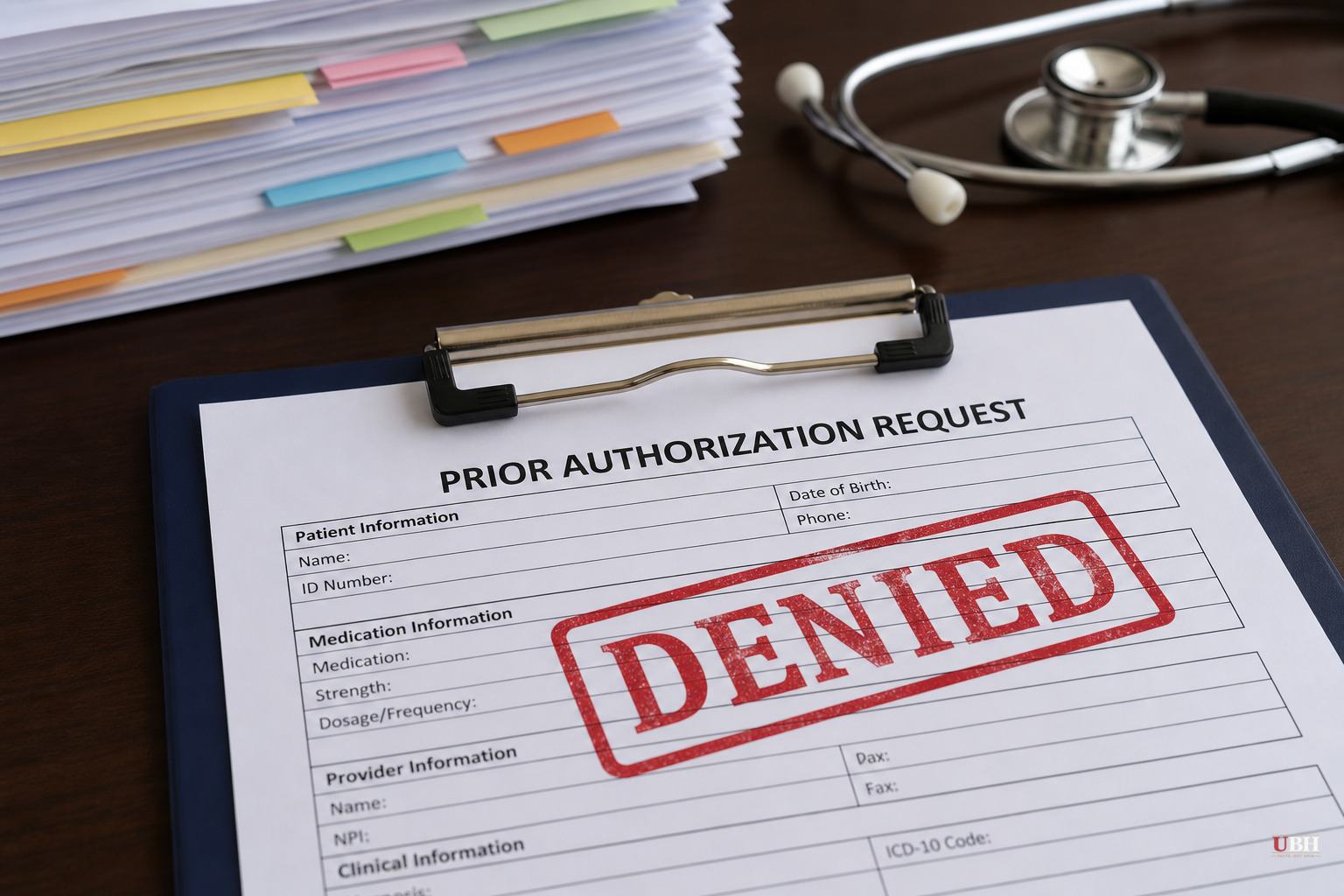
Health insurers denied at least one in eight standard prior authorization requests last year across Medicare Advantage, Medicaid managed care and Affordable Care Act marketplace plans, according to a KFF analysis published August 13, 2026.
The numbers break down by market. Medicare Advantage insurers denied 12% of standard requests. Medicaid managed care insurers denied 14%. ACA marketplace insurers denied 18%, according to KFF's report as detailed by Forbes and Healthcare Dive.
CMS finalized a rule in 2024 requiring insurers in Medicaid managed care organizations and ACA marketplaces to publicly report prior authorization statistics for the first time. Medicare Advantage insurers had already been reporting some data since 2019, according to Healthcare Dive. KFF analyzed 2025 data from the 14 largest insurers by enrollment in each market.
Average denial rates only tell part of the story. The gap between the best and worst performers in each category is enormous.
In Medicare Advantage, Elevance denied just 5% of standard requests while UnitedHealth Group denied 17%, according to KFF's data as reported by both Forbes and Newsweek. In Medicaid managed care, L.A. Care Health Plan denied 2% while Independence Health Group denied 23%. In the ACA marketplace, GuideWell denied 3% while Centene denied 25%.
That's an eight-to-one gap in Medicaid and roughly the same in the ACA market. Same government program, same basic coverage requirements, wildly different odds of getting approved depending on which insurer's logo is on your card.
Alex Beene, a financial literacy instructor at the University of Tennessee at Martin, told Newsweek the variation is significant. "What's most surprising is not simply that insurers are denying care, but how dramatically denial rates can differ depending on the company and type of coverage, suggesting that a patient's access to treatment can be as much about their insurance card as by the recommendation of their physician," Beene said. He added that insurers typically defend these decisions as medical-necessity calls or the result of incomplete paperwork, but said "the substantial variation raises questions about whether those standards are being applied consistently."
Insurers aren't hiding the fact that prior authorization exists to control costs and cut down on unnecessary treatment. That's a legitimate function in a system where healthcare spending keeps climbing. The problem is when the same clinical situation gets approved by one company and denied by another at rates this far apart, "medical necessity" starts looking less like a consistent standard and more like a business decision dressed up as one.
Appeals Win More Than Half the Time in Medicare Advantage, But Almost Nobody Appeals
Between 43% and 67% of denials get overturned when patients actually appeal, according to KFF's analysis. Sixty-seven percent of appealed denials succeeded in Medicare Advantage. Forty-seven percent succeeded in Medicaid managed care. Forty-three percent succeeded in the ACA marketplace.
But past research cited by Healthcare Dive shows very few people actually file appeals. Most patients either give up, pay out of pocket, or just don't get the care their doctor recommended.
Kevin Thompson, CEO of 9i Capital Group and host of the 9innings podcast, told Newsweek he was surprised the numbers weren't worse. "I am shocked the numbers are not higher in some cases," Thompson said. He described a recent family experience in the ICU where hospital staff told him Medicare Advantage authorizations are "almost always denied" on the first submission and typically take two or three attempts before approval.
That's one family's account, not a data point in the KFF report itself, but it lines up with the broader pattern: initial denial, appeal, eventual reversal, repeated as a matter of routine.
What the Data Can't Show
KFF flagged real limitations in its own analysis. Insurers only report percentages, not raw request volumes, so there's no way to know how many actual denials each rate represents. Reporting formats aren't standardized across companies, which makes apples-to-apples comparison harder than it should be. And insurers don't have to break denials down by service type, so nobody can say whether it's cancer drugs, imaging, or physical therapy driving the numbers up at any given company.
That's a system-design problem, not proof of anything nefarious. Critics who want more granular, standardized reporting have a reasonable ask. Right now the transparency rule produces a topline number without the detail needed to hold specific practices accountable.
Reform Is Already Underway, Sort Of
This data lands in the middle of an active policy fight. The Trump administration secured pledges last summer from major insurers to scale back onerous prior authorization requirements, and as of April those insurers reported cutting 11% of prior authorizations, according to Healthcare Dive. Sen. Chuck Grassley, R-Iowa, has floated further congressional action on pharmacy benefit managers once other legislative priorities clear.
Newsweek reported it reached out to Centene, UnitedHealth, Elevance and CMS for comment. America's Health Insurance Plans, the industry's trade group, said the new KFF data confirms "the vast majority of prior authorization requests are approved and responded to in less than one day, faster than federal standards," and pointed to industry-wide efforts to standardize and simplify the process through electronic prior authorization.
The next test is whether the 11% cut in prior authorizations shows up in next year's CMS-mandated data, and whether insurers start reporting by service type so patients and regulators can see exactly what's getting denied and why.
Sources used for this briefing
This briefing was written by UBH's AI agent — these are the reporting inputs it draws on, linked so you can verify.


