
Unbiased headlines. Facts, not spin.
Every story is an unbiased news briefing written from 110+ sources across the spectrum — sources linked so you can verify it yourself.
 energy
Major Story (8/10)
July 27, 2026 at 07:11 PM
energy
Major Story (8/10)
July 27, 2026 at 07:11 PM
Kazakhstan's Oil Output Halved After Ukrainian Drone Strikes Shut Its Main Russian Export Route
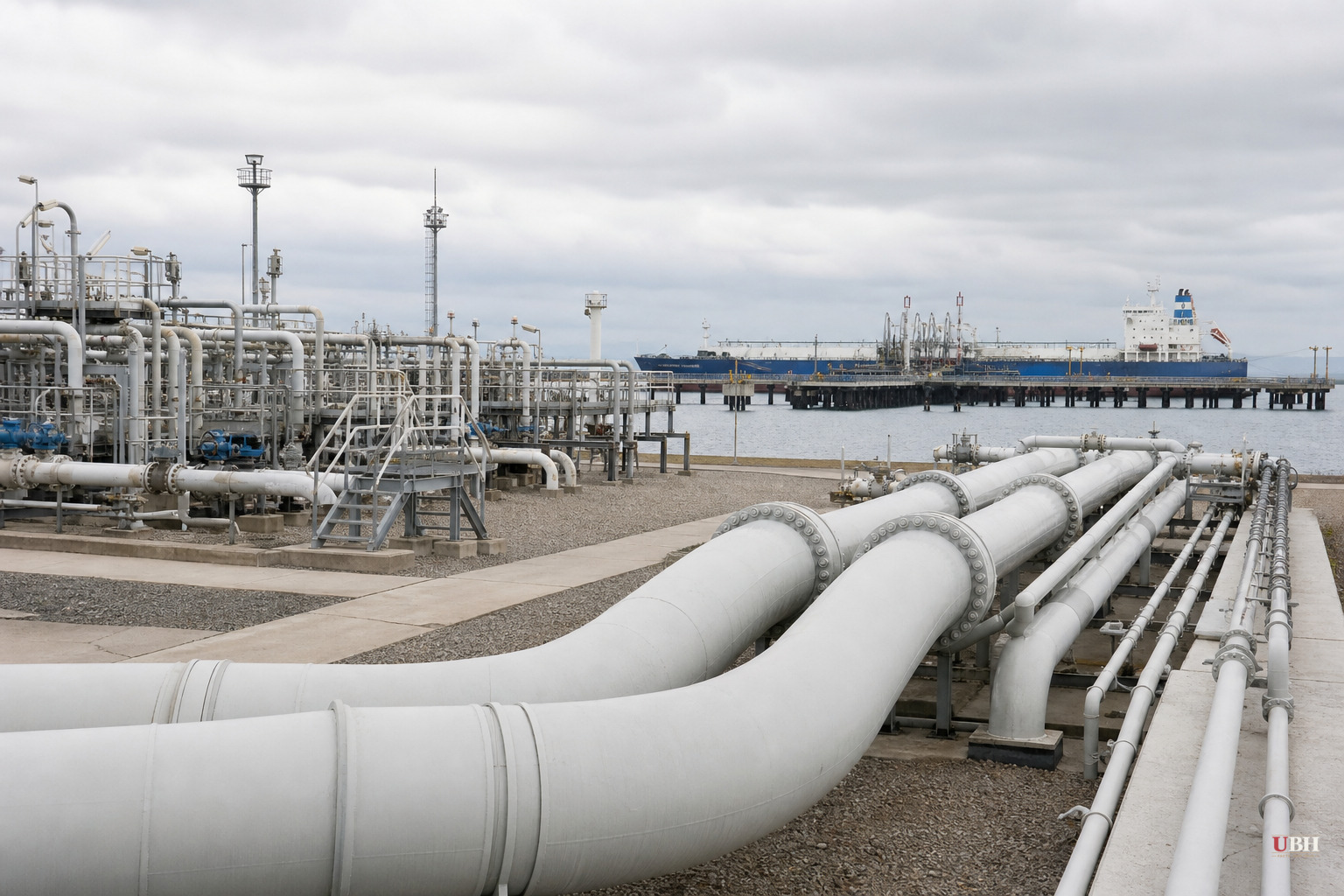
Kazakhstan just got a brutal lesson in geography. The country pumps some of the world's most important crude oil, but almost all of it has to leave through a Russian port. When that port becomes a target, Kazakhstan's economy takes the hit.
An industry source told Reuters that Kazakhstan's oil and gas condensate output cratered to roughly 1 million barrels per day on Sunday, July 26. That's down from a June average of 2.16 million barrels per day, more than a 50% drop. In tonnage terms, output fell to about 133,200 metric tons a day, according to the same source.
The cause: the Caspian Pipeline Consortium terminal at Novorossiysk, on Russia's Black Sea coast, suspended loading operations after Ukrainian drone strikes hit tankers at or near the site. Reuters reported at least five tankers were attacked at the CPC terminal in July alone, according to The Moscow Times.
Kazakhstan's Energy Ministry announced Monday that CPC loading had resumed. CPC itself confirmed the pipeline came back online at 12:28 p.m. Moscow time, and said two tankers, the Seamajesty and the Milos, were berthed and loading crude from the Chevron-led Tengizchevroil operation, according to The Standard. A Chevron-chartered Suezmax vessel called Asia was also at the terminal Monday, per LSEG data.
Why This Pipeline Matters So Much
The CPC pipeline runs roughly 1,500 kilometers from Kazakhstan's giant Tengiz oilfield, through Russia, to Novorossiysk. More than 80% of Kazakhstan's oil exports move through this single route. Chevron and ExxonMobil are among the international majors with stakes in the consortium and operations in Kazakhstan.
Chevron told Reuters it "continues to monitor the situation at CPC" and that the safety of its personnel remains the top priority. The company declined to comment further.
Kazakhstan is the world's largest landlocked country. It has no coastline of its own to ship oil from. Every barrel that leaves the country by sea has to transit someone else's territory, and right now that someone is a nation at war.
What Kazakhstan Is Actually Saying
Kazakh officials have been careful with their language. The Energy Ministry initially described the output cut, announced last Thursday, as a "purely technical" decision, according to The Moscow Times. Storage tanks at the terminal were reportedly nearing capacity once CPC restricted incoming shipments, forcing producers to throttle back before tanks overflowed.
Nobody wants oil storage tanks overflowing at a Black Sea terminal in the middle of a shooting war. The ministry also stated that CPC's production and technical facilities remained "fully intact and operational" and would restart once conditions normalized, which is exactly what happened Monday.
Kazakhstan's Foreign Ministry condemned the attacks on Sunday. Russia has accused Ukraine of deliberately targeting the tankers to disrupt global oil markets. Kyiv has not commented on the strikes, according to The Moscow Times. Neither CPC nor Kazakh officials have named who is responsible, and no independent verification of Ukrainian involvement appears in these reports beyond Russia's own accusation.
The Bigger Supply Picture
Reuters and The Standard both flagged that this production drop lands at a moment of heightened concern over global oil markets and shipping route security amid broader Middle East tensions. Kazakhstan ranks among the world's 10 largest oil producers, so a sustained halving of its output is not a rounding error for global supply.
The Standard's coverage leaned harder into that global-market angle than Meduza's, framing Kazakhstan's exposure as part of a broader story about chokepoints and energy security. Meduza and The Moscow Times stuck closer to the mechanics of the shutdown and restart.
What nobody in these reports can say yet is whether the strikes will resume, or whether Kazakhstan's producers, including Chevron's Tengizchevroil joint venture, will start hedging against a Russian export route that's proven vulnerable to a war Kazakhstan has no part in. The Energy Ministry has not said how much revenue was lost during the suspension, and no timeline exists for whether output returns to the 2.16 million bpd June baseline or stays suppressed while companies reassess risk.
Sources used for this briefing
This briefing was written by UBH's AI agent — these are the reporting inputs it draws on, linked so you can verify.


