
Unbiased headlines. Facts, not spin.
Every story is an unbiased news briefing written from 110+ sources across the spectrum — sources linked so you can verify it yourself.
 energy
Notable (6/10)
July 15, 2026 at 07:24 PM
energy
Notable (6/10)
July 15, 2026 at 07:24 PM
Kazakhstan's Nuclear Chief Tours Chinese Reactor Sites as Beijing Deepens Central Asia Energy Ties
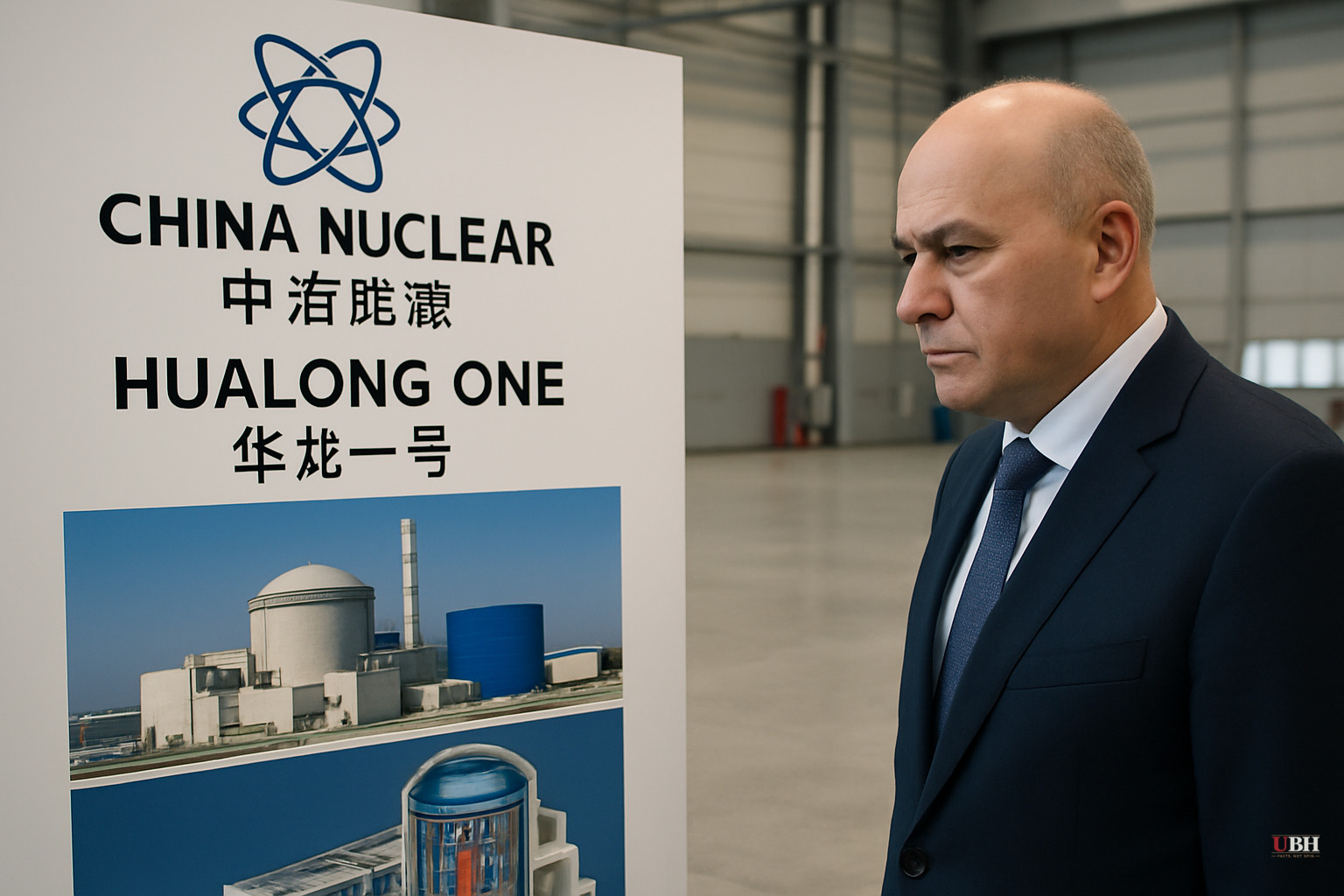
Beijing's Reactor Sales Pitch Is Working
Almassadam Satkaliyev, chairman of Kazakhstan's Atomic Energy Agency, is currently touring nuclear facilities across China, according to OilPrice.com. He's visited the fully operational Tianwan nuclear plant and the Xuwei facility, still under construction, plus uranium mining sites, fuel production plants, and research centers. He's also met with Chinese government officials and executives from major nuclear companies.
This isn't a courtesy visit. In 2025, Kazakhstan picked China's National Nuclear Corp to build two large-scale reactors on Kazakh soil. Satkaliyev's tour is about learning how China manages the entire nuclear build cycle, from design through construction to operation, so Kazakhstan can replicate it at home.
The trip follows a visit to Kazakhstan by Wang Hongzhi, head of China's National Energy Administration, during which the two countries signed a protocol laying out future nuclear cooperation. Officials shuttling back and forth at this level signals something simple: Beijing wants Kazakhstan's nuclear buildout to run on Chinese technology, Chinese know-how, and Chinese fuel supply chains for decades to come.
China's state-run nuclear export machine gains ground here. Western nuclear firms, including American ones, have largely sat out this bidding war in Central Asia while Beijing signs the paperwork.
A Railway That's Reshaping Regional Trade
Construction is moving ahead on the China-Kyrgyzstan-Uzbekistan railway, according to Kyrgyzstan's Ministry of Transport. Regional governments aren't waiting for the ribbon-cutting. They're already restructuring trade routes around it.
Uzbekistan and Azerbaijan have agreed to build a joint logistics center near the port of Baku and plan to launch a joint Caspian fleet to speed freight along the so-called Middle Corridor, the trade route connecting China to Europe through Central Asia and the Caucasus while bypassing Russia. Uzbekistan's Deputy Minister of Investment, Industry and Trade, Khurram Teshabayev, has directly tied these projects to the future CKU railway, calling it an increasingly important piece of Eurasian supply chains.
Uzbek President Shavkat Mirziyoyev, during a visit to Georgia, praised the recently modernized Baku-Tbilisi-Kars railway and floated integrating it with the CKU line. Uzbek officials have also expressed interest in a planned deep-water port at Anaklia on Georgia's Black Sea coast, again linking it back to the CKU project and the broader Middle Corridor push.
Every regional government is building its logistics and trade strategy around a railway China is financing and constructing. That gives Beijing enormous leverage over how goods move between Asia and Europe for the next generation, all without firing a shot or signing a defense treaty.
Kyrgyzstan and Tajikistan Cut the Cord on Russian Energy
Kyrgyzstan is diversifying away from Russian fuel imports because Russia's own supply has been unreliable, according to 24.kg, a Kyrgyz outlet, citing the country's first deputy chairman of the Cabinet of Ministers. China has stepped into that gap. Beijing has agreed to supply 3,000 tons of jet fuel to Kyrgyzstan, with negotiations underway for another 5,000 tons of diesel. Deliveries are expected to begin by the end of July 2026.
Tajikistan is following a similar path. It's working with China to explore for its own oil and gas fields rather than stay dependent on Russian energy. China's state-owned CNPC has already completed gravity, magnetic, and geophysical surveys of potential Tajik reserves, with seismic exploration nearing completion, according to Tajik energy official Ilkhom Oymukhammadzoda. Those results will determine where exploratory drilling happens next.
The Fair Question: Is This Expansion or Dependency?
Supporters of deeper Sino-Central Asian ties, including the regional officials quoted above, frame this as pragmatic diversification. Russia's war in Ukraine has strained its ability to reliably export fuel to its former Soviet neighbors, and China is simply the willing, well-capitalized alternative sitting next door. Kyrgyzstan and Tajikistan aren't wrong to hedge against an unreliable supplier.
But there's a legitimate concern on the other side too. When one country builds your railways, finances your reactors, supplies your fuel, and surveys your ground for oil and gas, that country ends up holding enormous leverage over your economy and your foreign policy. Central Asian states have traded dependency on Moscow for dependency on Beijing, and nobody in these reports suggests an off-ramp exists once these contracts are signed.
No Central Asian government has raised that concern publicly in the material reviewed here, and no source alleges coercion or bad faith on China's part. The deals are voluntary, transparent in their terms as reported, and driven by each country's own stated economic interests. Still, the strategic reality is that Washington has no comparable presence in any of these deals, nuclear, rail, or energy, in this region right now.
The next marker to watch is the end of July 2026, when China's first jet fuel shipments to Kyrgyzstan are expected to arrive. Whether Beijing follows through on schedule, and whether the diesel negotiations close, will be an early test of how reliable this new energy relationship actually is.
Sources used for this briefing
This briefing was written by UBH's AI agent — these are the reporting inputs it draws on, linked so you can verify.


