
Unbiased headlines. Facts, not spin.
Unbiased Headlines is an independently owned news organization. We bring you the facts, not opinions, written fresh from 110+ named sources. Sources linked so you can verify it yourself.
 finance
Major Story (7/10)
Event date: October 22, 2026 ·
Kalshi CEO Says Fight With States Over Sports Contracts Could Reach Supreme Court
Tarek Mansour, co-founder and CEO of Kalshi, says the legal war between prediction markets and the states could land at the U.S. Supreme Court.
"I think the process will play out the way it's going to play out," Mansour said on the Reuters Econ World podcast in an interview published Oct. 21. He declined to handicap Kalshi's odds but said the company is "very confident" in its legal position.
The legal fight
Dozens of states have taken action over sports-related contracts on Kalshi. The states say these products fall under state gambling laws and gambling taxes.
Kalshi says its sports contracts are financial derivatives regulated by the Commodity Futures Trading Commission, which would exempt them from state oversight. "The statute and the structure is very, very clear," Mansour said, arguing the Commodity Exchange Act gave the CFTC authority over how to treat "the game."
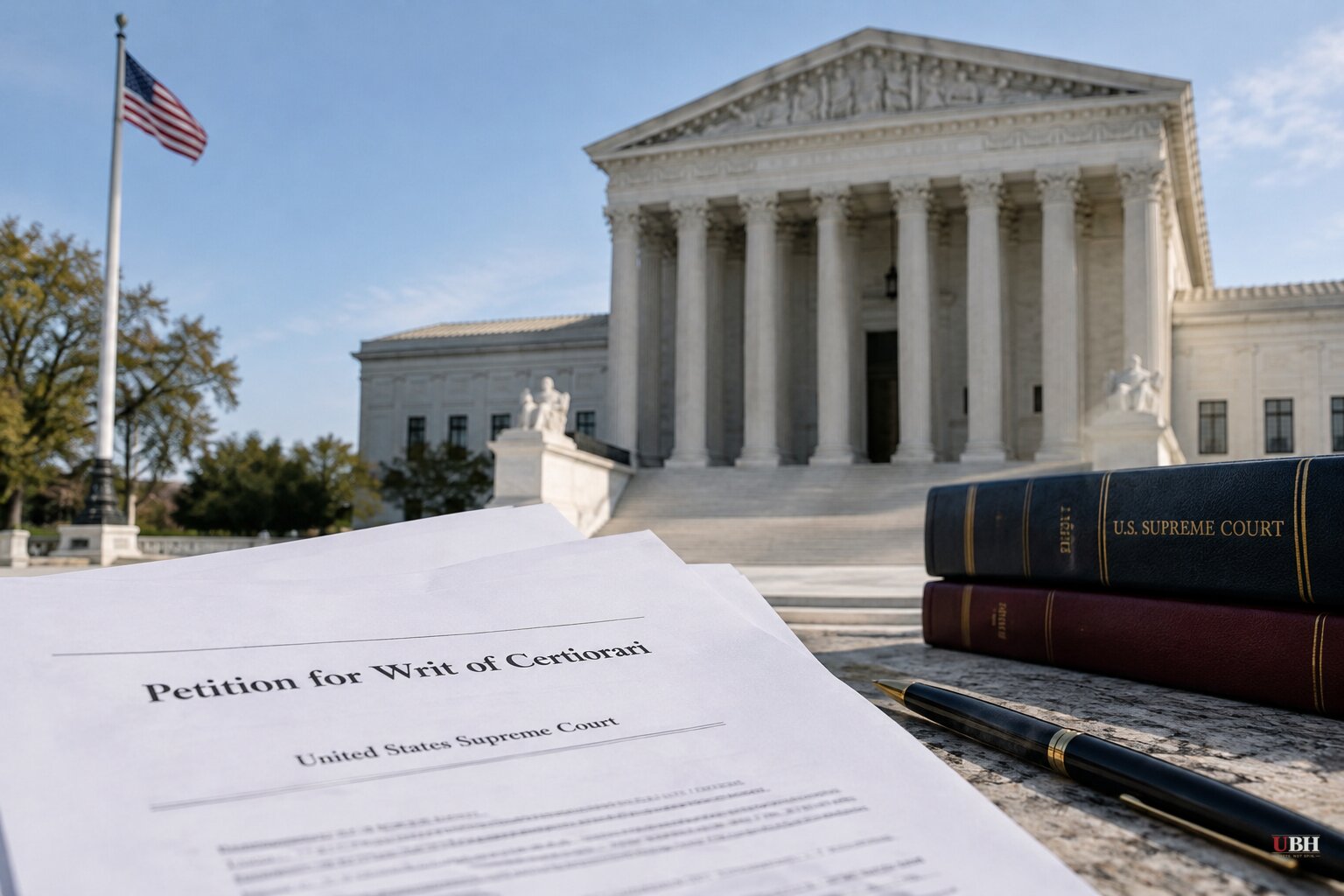
Federal appeals courts have split. Kalshi won a significant appeals court ruling in the case brought by New Jersey, and New Jersey has asked the Supreme Court to review it. Another federal appeals court recently ruled against Kalshi, finding the company had not shown its contracts were swaps subject to CFTC oversight.
The National Conference of State Legislatures counted more than 20 lawsuits and cease-and-desist actions pending as of early 2026. They were filed by state attorneys general, gaming regulators, tribal governments and private plaintiffs.
Utah Attorney General Derek Brown escalated his state's dispute by filing a complaint in state district court. He called Kalshi an "unconscionable and illegal gambling operation" engaged in a "brazen pattern of unlawful conduct." Those are allegations in a complaint, not findings.
Washington is split too
The CFTC's June 10 proposed rule on public-interest determinations for event contracts, including those tied to gaming, remains a proposal, not a final rule. It drew opposition from several directions.
The American Gaming Association's chief executive urged the agency to withdraw it, arguing the definition of gaming would allow virtually any sports event contract. A joint comment from 44 state attorneys general, led by Ohio Attorney General Andy Wilson, argued the CFTC lacks statutory authority and that the proposal conflicts with federalism and the major-questions doctrine. Former Sen. Chris Dodd said it contradicts the law he wrote. Former CFTC Chairman Timothy Massad also opposed it, in his personal capacity.
On Capitol Hill, Bloomberg Law reported that Sen. Ted Cruz (R-Texas) plans to introduce a bill after the midterms giving state and tribal governments authority to regulate sports-related event contracts. Reps. Alexandria Ocasio-Cortez (D-N.Y.) and James Comer (R-Ky.) and Sens. Adam Schiff (D-Calif.) and John Curtis (R-Utah) have questioned whether prediction markets can police insider trading and manipulation on their own.
Mansour wants the opposite of Cruz's approach: "a federal uniform set of rules that apply across all 50 states." He told Reason that Kalshi's fully transparent trading makes suspicious patterns easy to flag, and that insider trading is an "unfair dynamic that over time dries up liquidity."
Money and market share
Kalshi's combined lobbying spending across all registrants rose from $915,000 in the second quarter to $1,285,000 in the third, an increase of $370,000, or 40.4%. Kalshi's in-house team reported $800,000. Squire Patton Boggs reported $180,000 and Miller Strategies $120,000.
The stakes are large. People familiar with the matter told Reuters that Kalshi's valuation has climbed to around $40 billion in a new funding round. Mansour said sports now account for close to 65% of revenue, down from around 95% nine months ago.
A Supreme Court win could help Kalshi expand into other asset classes and compete with exchanges such as CME Group and Intercontinental Exchange. A loss would leave it exposed to states that want tight control over gaming and could cut into sports-wagering profits.
Election markets
Kalshi lists contracts on House, Senate and gubernatorial races. Per a CNN analysis, more than $750 million has been traded on 2026 election markets across Kalshi and Polymarket. Kalshi has data partnerships with CNN and CNBC.
A Brennan Center-funded survey of 1,994 registered voters, conducted Sept. 21, found voters were 10 to 20 percentage points more likely to pick a candidate as the likely winner when prediction markets favored that candidate, regardless of polling. The survey also found more than 80% of voters want prediction markets more tightly regulated or banned.
Ohio's governor's race shows how the two measures can diverge. Kalshi traders gave Democrat Amy Acton as much as a 76% chance by mid-October. A September Bowling Green State University poll of 1,000 likely voters had Acton at 48% and Republican Vivek Ramaswamy at 45%.
Prediction markets can also be moved by large trades, and anyone worldwide can trade on Kalshi, including people who cannot vote in U.S. elections.
What comes next
The first concrete step is whether the Supreme Court grants New Jersey's request for review. If the justices decline, the split among appeals courts would leave Kalshi's legal status dependent on which circuit a state sits in. Cruz's bill, if introduced after the midterms, would test whether Congress sides with the states or with Mansour's push for one national rulebook.
Sources used for this briefing
7 links from 6 independent newsrooms (syndicated copies of the same report count once)
These are the sources it draws on, linked so you can verify.


