
Unbiased headlines. Facts, not spin.
Unbiased Headlines is an independently owned news organization. We bring you the facts, not opinions, written fresh from 110+ named sources. Sources linked so you can verify it yourself.
 finance
Notable (5/10)
Brookings and Bank Policy Institute Papers Propose Different Routes to a Smaller Fed Balance Sheet
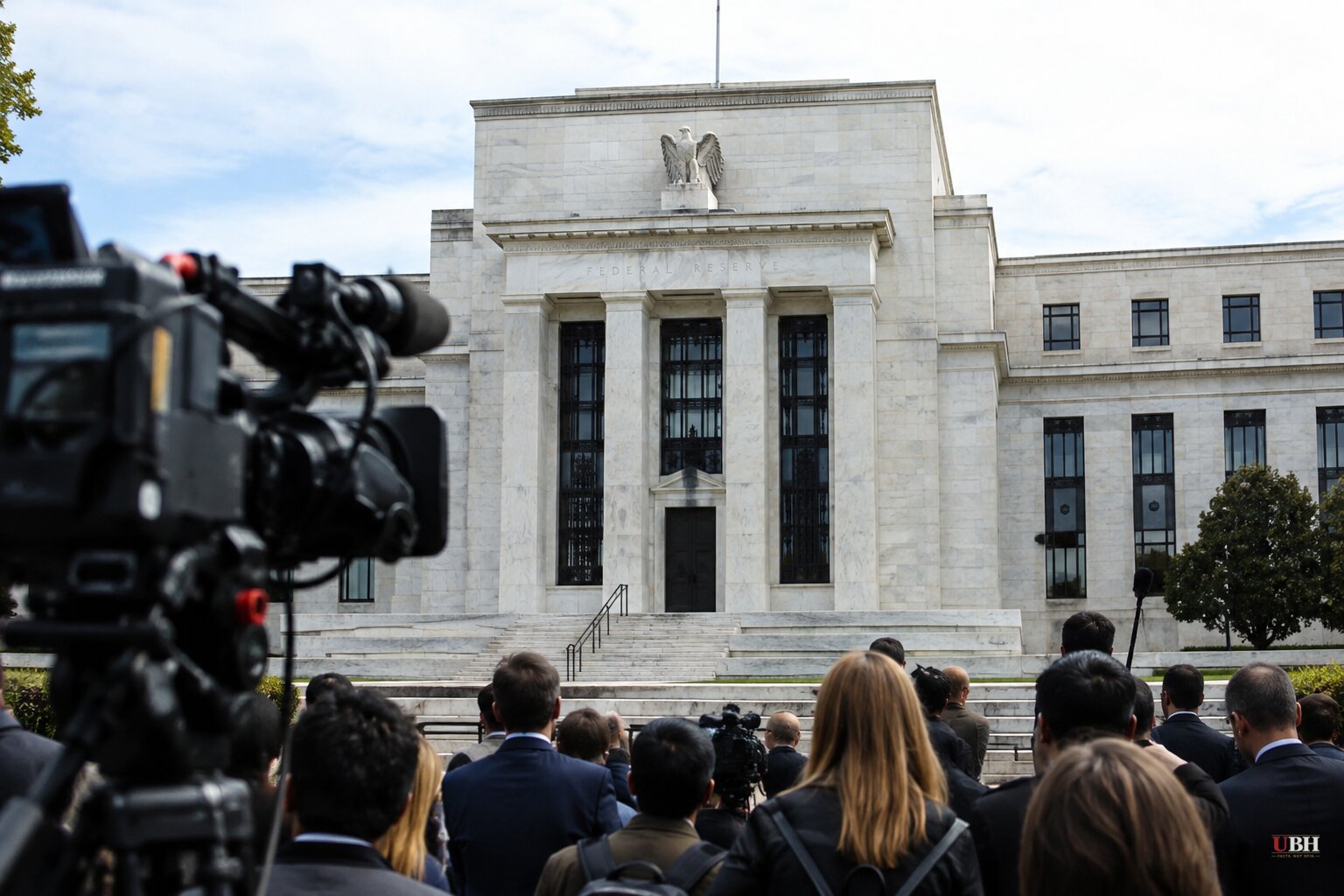
Two policy papers aimed at the Federal Reserve's balance sheet review reach a similar conclusion by different roads: the central bank's footprint is bigger than it has to be.
One comes from Chris Hughes at the Brookings Institution. The other is a note from the Bank Policy Institute. Neither is policy. Both are recommendations.
How the Fed got a giant balance sheet
Hughes traces the current setup, which he calls Ample Reserves, to the aftermath of the Great Financial Crisis. The Fed's large-scale asset purchases flooded the banking system with reserves. That made its pre-crisis interest rate tools ineffective.
The Fed responded by paying interest on reserve balances and using that rate as its main tool for setting monetary policy. Keeping reserves high preserved the option of further monetary accommodation.
Hughes credits the system with real benefits. The Fed can provide liquidity in a crisis without automatically lowering interest rates, and it has generally kept its benchmark rate within its target range.
The costs Hughes lists
The costs, in his account, are specific:
- The Fed pays banks more on reserves than banks pay their depositors. Hughes calls the difference a subsidy to bank shareholders.
- The Fed's portfolio holds short- and long-term Treasuries and mortgage-backed securities. Its sheer size keeps those prices higher than private investors alone would set.
- By swapping long-term bonds in private hands for overnight reserves, the Fed shortens the maturity of privately held government debt. Hughes notes that choice customarily belonged to the Treasury.
- The large footprint exposes the Fed to political criticism and pressure.
- The Fed must keep judging the minimum level that counts as "ample" and guard against falling below it.
Hughes' fix: Elastic Reserves
Hughes argues the Fed can steer interest rates with a much smaller balance sheet. His proposal, Elastic Reserves, would let banks' borrowing needs set the supply of reserves.
The Fed would publish its lending terms and require banks to pledge collateral in advance for certain kinds of borrowing. Reserves would expand when banks borrow and shrink when they repay. Private lenders would stay banks' first source of funding, with the Fed filling gaps.
The Fed would still pay interest on reserves to guide market rates. One of three proposed lending programs is a redesigned Standing Repo Facility offering overnight loans secured by Treasuries and other government-backed securities.
Hughes says the package, paired with changes to liquidity regulation and payment systems, could reduce bank subsidies, limit the Fed's influence in financial markets and strengthen its independence while keeping rate control and adequate bank liquidity.
The Bank Policy Institute's target: liquidity rules
The BPI note starts from a different place. It says current liquidity regulations make liquidity "largely unusable," and that policymakers are already considering revisions.
The focus is the Basel liquidity coverage ratio. The LCR requires banks to hold enough high-quality liquid assets to survive a hypothetical 30-day run, keeping the ratio above 100 percent.
The BPI distinguishes between "stored" liquidity, meaning reserves and government securities a bank owns, and "purchased" liquidity, meaning borrowed funds. The LCR counts only the first. A bank's ability to borrow from the Fed's discount window does not count toward the calculation, even though the window can provide immediate cash if the bank has pre-positioned collateral.
Congress designed the discount window in the 1913 Federal Reserve Act to supply emergency liquidity in times of stress.
The note also describes a "last taxi problem." Take a bank with $100 in deposits and a 25 percent assumed outflow rate. It keeps $25 in liquid assets to hit a 100 percent ratio. The BPI argues those assets are effectively stuck: dip below the requirement and the bank breaks the rule.
Where the two papers meet
The BPI's argument is that giving banks credit for discount window capacity would ease the distortions in current rules and improve both financial stability and lending to the real economy.
It also says that capping that credit would beat the status quo but remain "significantly inferior" to no cap at all.
The note makes a balance-sheet claim as well. In its words, regulation-driven demand for reserves has prevented the Fed from significantly shrinking its balance sheet and "trapped it in a permanent state of quantitative easing." Recognizing discount window capacity, the BPI says, could diminish that demand.
That is where the papers overlap. Hughes proposes changes to liquidity regulation alongside his lending framework. The BPI makes liquidity regulation the centerpiece.
What is still open
The papers disagree on emphasis. Hughes would rebuild how reserves are supplied and keep the Fed's interest-on-reserves tool. The BPI would change what regulators count as usable liquidity and leave the larger operating framework unaddressed.
Hughes also concedes that the current system has worked for liquidity provision and rate control. Any replacement has to match that record.
The Fed's balance sheet review is the venue where those recommendations land. Neither paper says what the Fed will decide, and the BPI note does not say how much discount window credit regulators should allow beyond arguing against a cap.
Sources used for this briefing
4 links from 4 independent newsrooms (syndicated copies of the same report count once)
These are the sources it draws on, linked so you can verify.


