
Unbiased headlines. Facts, not spin.
Unbiased Headlines is an independently owned news organization. We bring you the facts, not opinions, written fresh from 110+ named sources. Sources linked so you can verify it yourself.
 politics
Major Story (7/10)
Justice Department Asks 9th Circuit to Declare Alaska Senate Suit Moot, Still Wants Dismissal Order Vacated
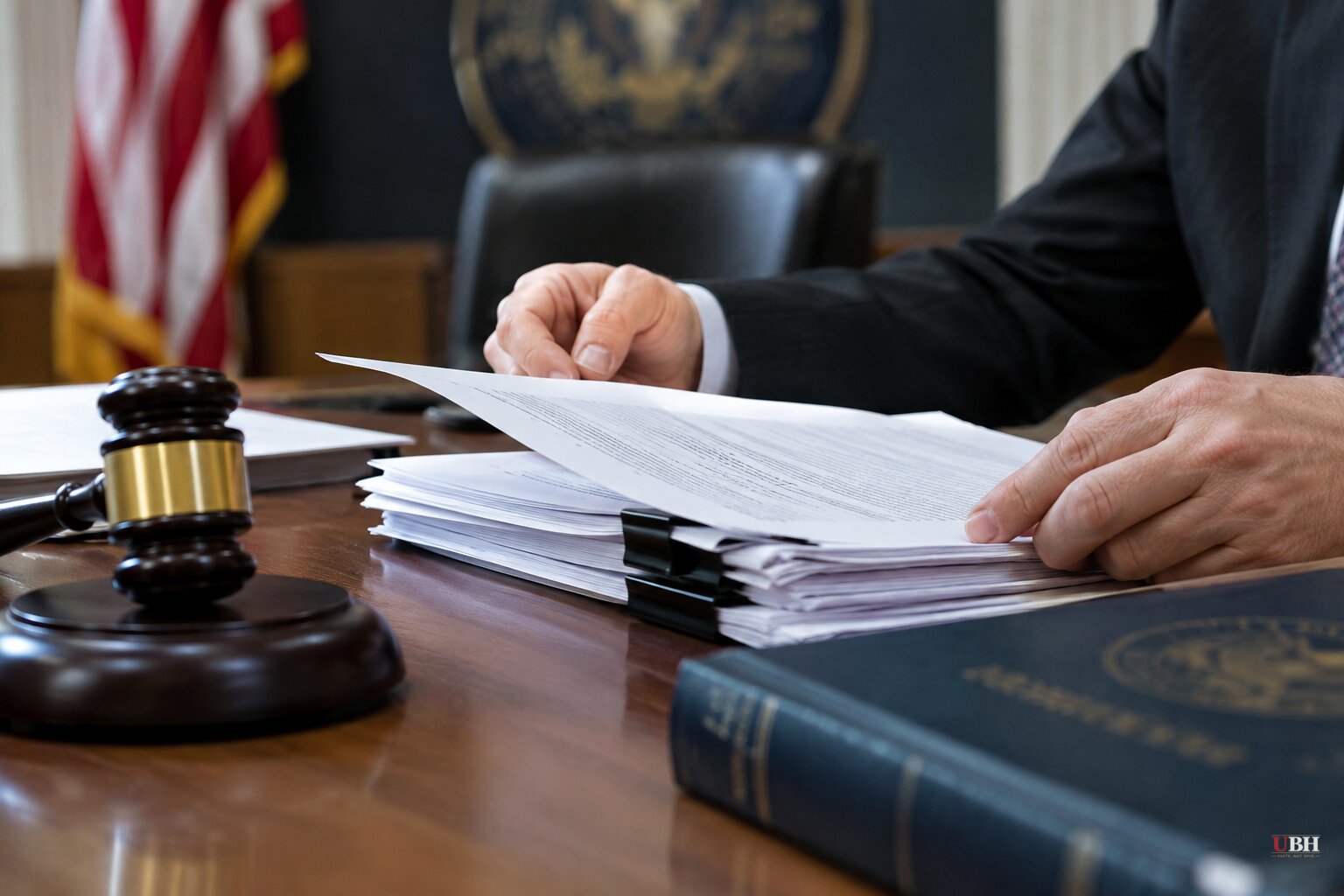
Since the Justice Department sued on Oct. 22 to block certification of Alaska's Senate race if Republican Sen. Dan S. Sullivan lost, the case has been dismissed in district court, appealed within the hour, and then overtaken by the vote count. Today, Nov. 19, the department asked the 9th U.S. Circuit Court of Appeals to declare it moot.
The filing came two days after Peltola was declared the winner. She finished with 50.13% of the vote. Sullivan took 45.8%, the second candidate on the ballot, Daniel J. Sullivan Jr., got 1.7%, and Republican Gerald Heikes got 2.1%.
Because Peltola cleared 50%, Alaska's ranked-choice reallocation never kicked in.
What DOJ told the appeals court
Associate Attorney General Stanley E. Woodward signed the filing. He wrote that the United States sued "to ensure that the State and its officers fulfill Alaska's obligation to protect the integrity of its election." He added that the government "reluctantly acknowledges that there no longer exists any means" of determining whether votes for Daniel J. Sullivan were meant for the incumbent.
The department did not simply walk away. It asked the court to "hold that this case is moot, vacate the underlying order, and remand for dismissal on that ground." Vacating the order would erase the district court's loss from the record.
DOJ also argued that U.S. District Judge Sharon Gleason got it wrong. "The district court could have crafted protective measures to ensure voter privacy pending an investigation," the filing says.
Why the district court threw it out
Gleason dismissed the suit on Sunday, Nov. 1, two days before Election Day. Her 20-page ruling said the government "provides no workable plan as to how it proposes to segregate ballots cast for Daniel J. Sullivan on Election Day and then conduct a court-ordered unspecified 'investigation' of those ballots in a manner that would preserve voter secrecy."
The Alaska Department of Law had called the request "half-baked." The state said ballots carry no voter names and are commingled in the ballot box to protect privacy. Alaska's Division of Elections said the ballot already distinguished the two men: "Dan S. Sullivan," Republican incumbent, and "Daniel J. Sullivan, Jr.," no party affiliation.
The Alaska Supreme Court had already ruled this summer that the Petersburg retiree had a right to be on the ballot. Alaska law has no prohibition on spoiler candidates.
DOJ's filing does not explain how an investigation into voter intent could work when the identities of the voters are unknown.
The decoy question is still open
The underlying complaint did not come from nowhere. President Trump, who said he ordered the suit, called the second Sullivan a "sham" and a stunt to "defraud" voters. Sen. Sullivan and other Republicans used similar language.
The New York Times reported on texts and other documents that it said appeared to show Peltola's campaign helped recruit the second Sullivan. Peltola has denied any involvement, and Sen. Sullivan has long insisted the challenger ran on his own. Trump has demanded that Peltola be prosecuted, and federal investigators went to Alaska before Election Day.
George Mason law professor Ilya Somin, writing at Reason, said Democrats "may well deserve blame for seeking to deceive voters" if the recruitment account holds. He also called the lawsuit meritless, and noted that even if all of the 1.7% of voters who chose Daniel J. had actually intended to back Dan S., it made no difference to the outcome.
Election law scholar Rick Hasen filed an amicus brief arguing the case had no merit and that a win for DOJ would set a dangerous precedent.
Sanctions request pending
In a separate filing last week, Common Cause and the League of Women Voters of Alaska asked the 9th Circuit to uphold Gleason's order and sanction the DOJ attorneys. They called continued pursuit of the case "an embarrassing and sanctionable violation of professional norms."
The lawsuit is not DOJ's only election-related retreat this month. According to a legal-news roundup, the department moved on Nov. 6 to dismiss its California suit over about 20,000 voters suspected of being noncitizens. That came four days after the Supreme Court rejected its emergency appeal.
The Alaska ballot fight also reached the House race. The Guardian noted that Eric Hafner, who appeared as a Democrat despite being held in a federal prison in New York, received 22,715 votes in the ranked-choice contest. Had all of those gone to Democratic Party-backed Hill, the Guardian reported, Hill would have beaten Begich.
Peltola's win is the ninth Senate seat Democrats gained in the midterms, taking the party's total to 56.
What happens next
The 9th Circuit now has to decide two things. One is whether to treat the case as moot. The other is whether to vacate Gleason's order, as DOJ wants, or leave her ruling standing, as Common Cause and the League of Women Voters of Alaska have asked. The court has not set a date for either decision or for the sanctions request.
Sources used for this briefing
8 links from 8 independent newsrooms (syndicated copies of the same report count once)
These are the sources it draws on, linked so you can verify.


