
Unbiased headlines. Facts, not spin.
Unbiased Headlines is an independently owned news organization. We bring you the facts, not opinions, written fresh from 110+ named sources. Sources linked so you can verify it yourself.
 politics
Major Story (8/10)
ICJ Finds Myanmar Forces Killed About 10,000 Rohingya and Infers Intent to Destroy a 'Substantial Part' of the Group
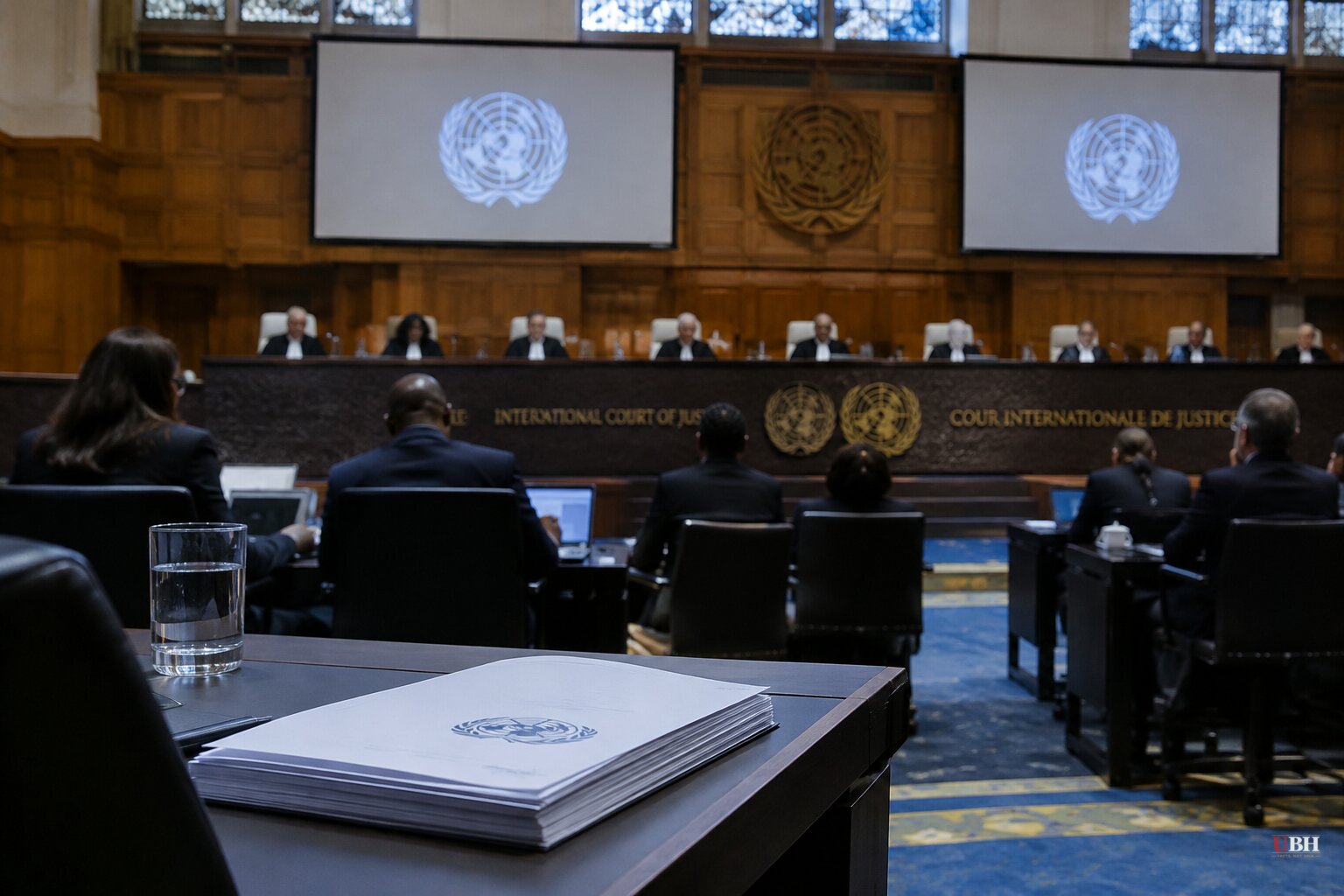
Since The Gambia filed its case at the International Court of Justice in November 2019, the Rohingya question has sat in The Hague for seven years. On Thursday, Nov. 19, 2026, the court delivered its judgment.
ICJ President Yuji Iwasawa read the ruling aloud over about three hours. The court found that Myanmar's security forces "killed thousands of Rohingya civilians, perpetrated widespread acts of sexual violence as well as acts of extreme violence against children, and attacked fleeing Rohingya as they sought to flee in large numbers to Bangladesh."
Iwasawa said the estimate of 10,000 Rohingya violently killed during the 2017 "clearance operations" is supported by the evidence.
The intent finding
Intent is the hard part of any genocide case. Under the 1948 Genocide Convention, the court must find an intent to destroy a group in whole or in part.
The court said the "only reasonable inference" from the evidence of widespread atrocities is that Myanmar's forces intended to destroy a "substantial part" of the Rohingya minority. Al Jazeera reported that Iwasawa said Myanmar acted with "genocidal intent" in the specific cases he cited.
The court also said Myanmar should have known there was a risk of genocide when armed civilians took part in the military campaign. "Myanmar thus violated its obligation to prevent genocide," it said.
Some headlines described this as a criminal conviction. It is not. As Human Rights Watch noted ahead of the ruling, this is not a criminal case against individuals. It is a ruling on a state's responsibility under the convention. No person was sentenced.
What Myanmar says
Myanmar rejected the genocide allegation throughout. Its position is that the 2017 campaign in Rakhine state was a legitimate counterterrorism operation, launched in response to attacks by the Arakan Rohingya Salvation Army on police and security posts. The military called the offensive a "clearance campaign."
The court's finding that the evidence points to intent to destroy a substantial part of the Rohingya runs directly against that account.
How the case got here
The campaign began in August 2017 and drove more than 730,000 mainly Muslim Rohingya into Bangladesh. The Gambia, backed by the Organization of Islamic Cooperation, filed in November 2019. It was the first time a country with no direct connection to the alleged crimes used its membership in the Genocide Convention to bring such a case, according to Human Rights Watch.
In January 2020, the court ordered Myanmar to prevent genocidal acts and preserve evidence. Myanmar was told to report on compliance, and it filed 12 reports.
The Gambia asked the court to declare a breach of the convention, order an end to illegal acts targeting the Rohingya, and ensure those responsible are punished. It also asked for reparations and for guarantees of safe return, including citizenship and legal protections. What the court ordered on those requests remains to be spelled out.
Still in the camps
About 1.2 million Rohingya live in Bangladesh, mostly in crowded camps in Cox's Bazar district. The United Nations counts more than 1.3 million Rohingya displaced across South and Southeast Asia. Conflict, shrinking humanitarian aid and dangerous sea crossings keep many of them vulnerable.
A 23-year-old rape survivor in the camps, who asked not to be named, told AFP: "I want justice. There should be stringent punishment for those who raped women. The ICJ should say something separately about this."
Wider legal reach
The court is also handling genocide allegations tied to the Gaza conflict and the war in Ukraine. Melanie O'Brien, a professor of international law at the University of Western Australia, said: "Genocides have similarities in how they are committed so this decision will have an impact on other cases."
AFP reported that a genocide ruling would add international pressure on Myanmar's leader, Min Aung Hlaing.
That pressure is the only lever. The court's rulings are final and legally binding, with no appeal, but it has no means of enforcing them. Whether Myanmar's military leadership changes course, or whether any government or the UN Security Council acts on the judgment, is the open question after Thursday.
Sources used for this briefing
8 links from 8 independent newsrooms (syndicated copies of the same report count once)
These are the sources it draws on, linked so you can verify.


