
Unbiased headlines. Facts, not spin.
Unbiased Headlines is an independently owned news organization. We bring you the facts, not opinions, written fresh from 110+ named sources. Sources linked so you can verify it yourself.
 politics
Major Story (7/10)
White House Cyber Director Sean Cairncross Leaves Post; Accounts Differ on Whether He Was Fired
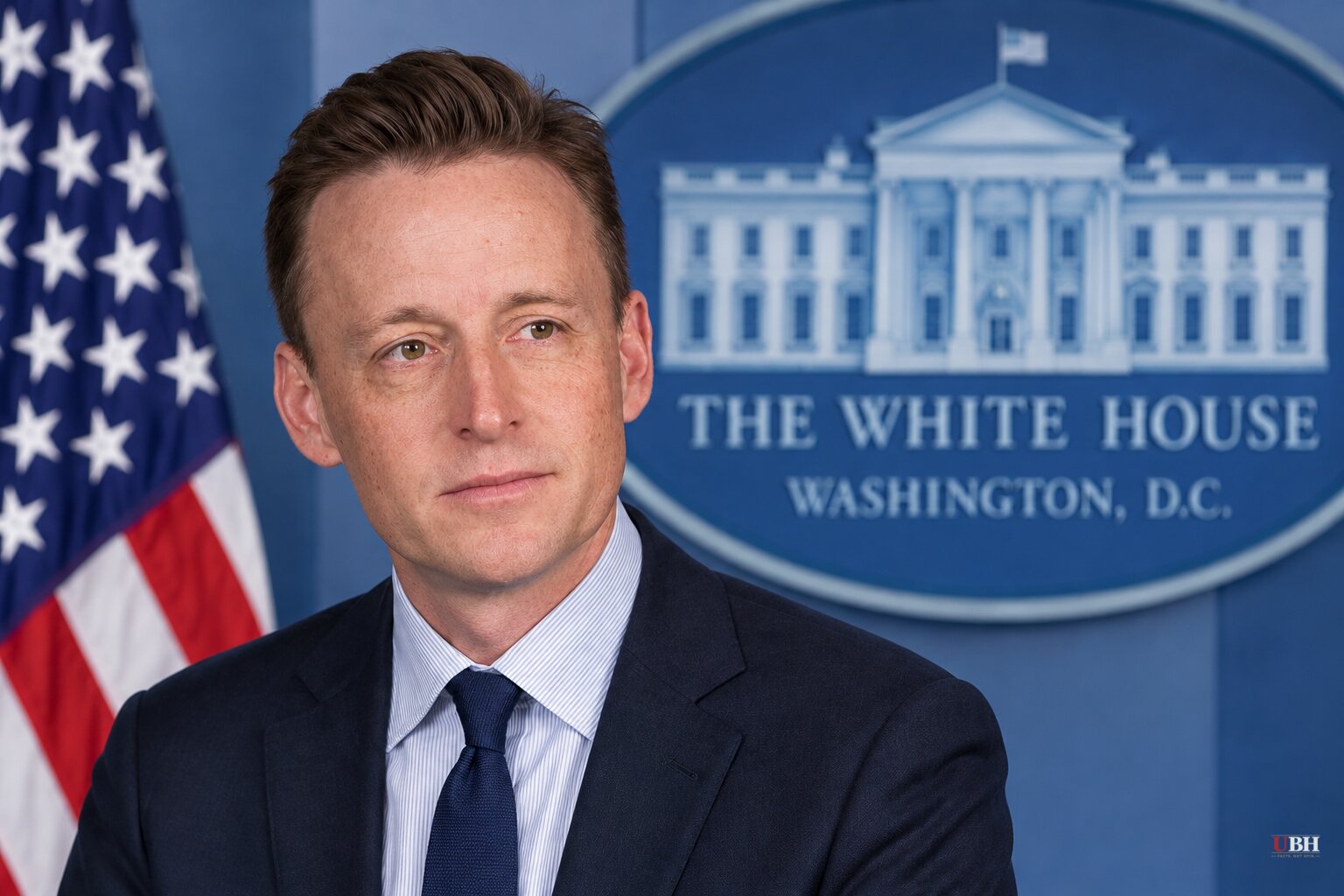
Sean Cairncross is leaving his job as White House national cyber director. A White House spokesperson confirmed the departure Thursday, Nov. 19. Kirsten Davies, the Pentagon's chief information officer, will take over in an acting capacity.
Cairncross, 52, was confirmed in August 2025. His office advises the president on cybersecurity and coordinates cyber strategy across the federal government.
What the White House has not given is a single account of why.
Two versions of the exit
Axios first reported the departure. Two sources told the outlet it was amicable and that Cairncross did not want to serve the final two years of Trump's term. They said he chose to leave now so the White House could try to confirm its preferred successor before Democrats take the Senate.
A person close to the White House told Reuters and AFP something different: that Cairncross was fired, and that "the president fully supported firing Sean Cairncross from his position." That source said he lacked the credentials for the job and that Davies, who is already Senate-confirmed for her Pentagon post, has them.
Axios also cited White House officials saying chief of staff Stephen Miller pushed for the change. One official told Axios that Cairncross "lacked the strong cyber credentials to perform the job." A White House official gave The Hill a similar account, that he was let go with Trump's backing. Cairncross declined to comment.
Cairncross is an attorney. He was chief counsel and chief operating officer at the Republican National Committee, a senior adviser to then-chief of staff Reince Priebus, and CEO of the Millennium Challenge Corporation in Trump's first term. He has no prior career in cybersecurity.
A week of outages
The departure follows a run of failures across sectors. On Friday, the FAA grounded all flights nationwide for more than four hours. A contractor replacing old copper wire at a radio facility in Arkansas caused that outage.
On Tuesday, an internal NSA network used for classified communications went down during routine maintenance. Microsoft email services were disrupted, and Chase Bank had an outage the same day.
Director of National Intelligence Jay Clayton told a House committee Wednesday: "Based on what we know today, after a great deal of diligence, these are separate service outages associated with maintenance and technical changes. They are not a coordinated or state-sponsored attack."
Homeland Security Secretary Markwayne Mullin told lawmakers investigators have "seen nothing that would indicate that they are related." He said he is "98% confident" foreign malicious activity was not behind them. He also said he had "absolutely not" seen so many outages in so short a time.
Secretary of State Marco Rubio said from overseas that there is "zero evidence or any reason to believe" any of the incidents involved hackers, criminals or a foreign state. Asked about the Chase outage in Manila, Trump said: "It's life. When you're big and powerful and you have all the money, things like that happen. It's fine."
No source has publicly tied Cairncross's exit to any specific outage. The reason offered by the White House source who described a firing is his credentials, not the outages.
Democrats press on AI and defenses
Democrats have also said the disruptions do not look like cyberattacks. Their criticism is aimed at the administration's response. They warn that U.S. cyber defenses are lagging behind threats driven by artificial intelligence, and some officials and lawmakers have raised the possibility that AI played a role in the outages. Neither Clayton nor Mullin has endorsed that theory.
Cairncross had a direct role in White House AI policy discussions, according to NBC News. His office oversaw the administration's seven-page cyber strategy, released in March. It pledged to "detect, confront, and defeat cyber adversaries before they breach our networks and systems."
At the Aspen Cyber Summit in November 2025, he said the U.S. had not "done a terrific job of sending a signal to our adversaries that this behavior is not consequence-free."
His head of policy and senior adviser, Thomas Lind, left in June and joined OpenAI in October.
The confirmation clock
The national cyber director post requires Senate confirmation. Democrats take control of the chamber in January, after the midterms. The White House has a narrow window to move a nominee through a Republican-run Senate.
The administration is already working on another cyber appointment. Michael LoSapio, Palantir's chief information security officer, is Trump's nominee to lead the Cybersecurity and Infrastructure Security Agency. He faced a Senate confirmation hearing Thursday, where Sen. Richard Blumenthal questioned him about security concerns after the outages.
The White House has not named a permanent nominee for the cyber director job. Davies will run the office in the meantime.
Sources used for this briefing
8 links from 8 independent newsrooms (syndicated copies of the same report count once)
These are the sources it draws on, linked so you can verify.


