
Unbiased headlines. Facts, not spin.
Unbiased Headlines is an independently owned news organization. We bring you the facts, not opinions, written fresh from 110+ named sources. Sources linked so you can verify it yourself.
 politics
Breaking / Critical (9/10)
Trump, Xi and Putin Issue Matching Statements Backing More Oil Output, UN Overhaul and Limits on ICC; Merz Calls Summit a 'Photo Opportunity'
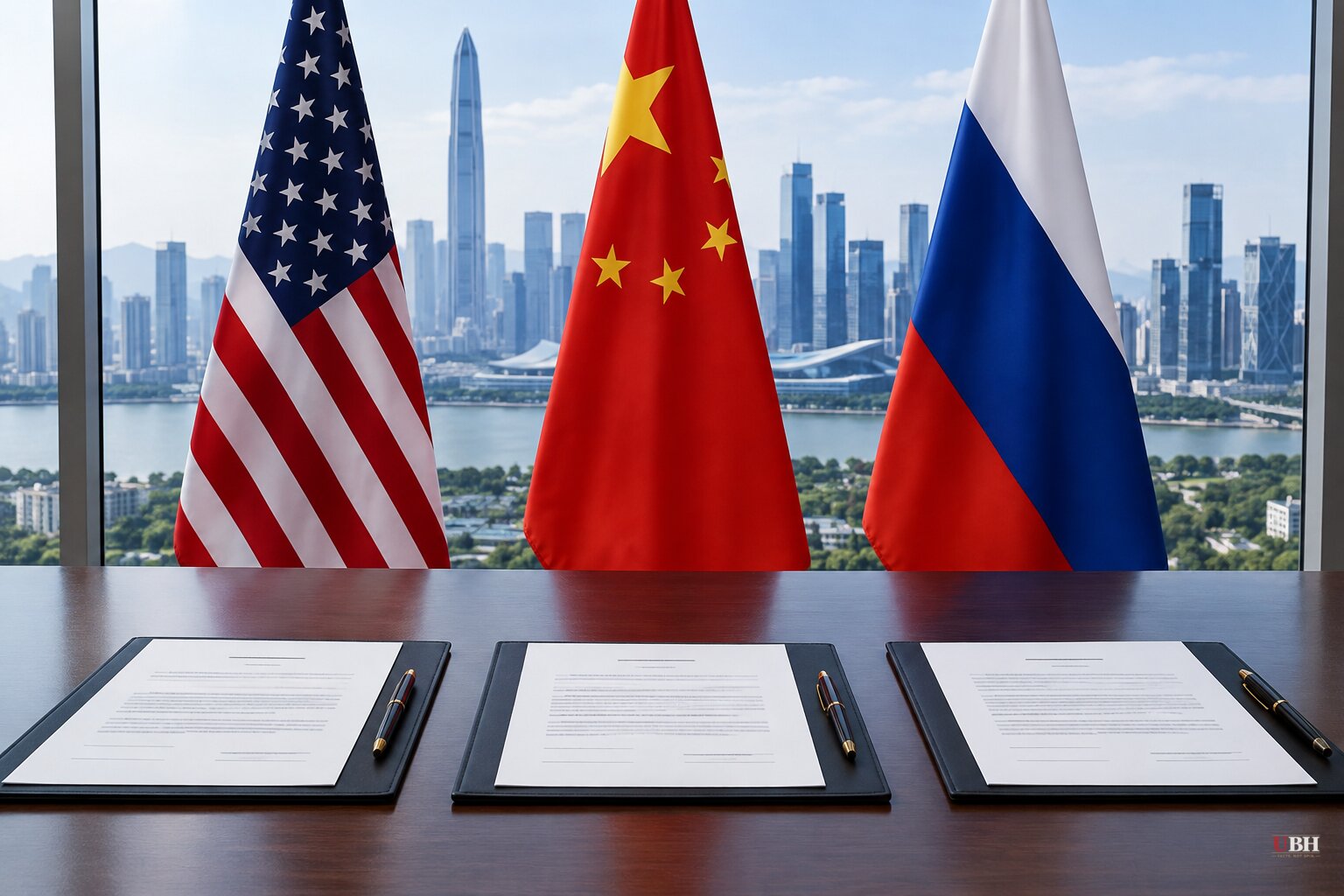
Hours after the Shenzhen trilateral on Thursday, Nov. 19, the U.S., China and Russia each released the same text, titled a "Heads of State Declaration toward Peace." Washington is now party to the wording, not just Beijing and Moscow.
The statement is short. It says Trump, Xi Jinping and Vladimir Putin "had an in-depth exchange of views on the current international situation and committed to maintaining strategic stability and international security."
What the statement says
Four points carry the content.
First, energy. "The three countries plan to increase the production and supply of refined petroleum products for the benefit of all nations," the text says, and it reaffirms "the importance of stable energy flows."
Second, nuclear weapons. The leaders "reaffirmed that a nuclear war cannot be won and must never be fought" and committed to a "dialogue on reducing nuclear risks and preventing the proliferation of nuclear weapons." No arms-control agreement was announced. New START expired in February, and Trump has said he wants a "new, improved and modernized" deal that includes China.
Third, the UN. The three pledged to "reform" it so it can "respond more effectively to global challenges."
Fourth, the International Criminal Court. The text says the ICC "and other similar bodies must not abuse their jurisdiction." Secretary of State Marco Rubio announced new sanctions last month on what he called a "rogue court." Putin has been the subject of an ICC arrest warrant since March 2023. Trump described the court on Thursday as "out of control."
The statement does not mention Russia's war in Ukraine, now in its fifth year. It also does not mention the U.S. war in Iran, where Russia and China have been accused of aiding Tehran.
Leaders' own readouts
The closed-door session ran roughly 70 minutes, according to the AP. Xi called it "positive, constructive and fruitful." Putin called it "open and candid" and said the format was "useful and substantive." Asked whether the image mattered more than the substance, he answered: "It is a serious collaborative work."
Putin also told Xi, "I don't think anyone even expected everything to go so well."
Trump left the villa and boarded Air Force One without taking questions, the AP reported. Earlier he had called Putin "my friend" in a separate meeting and told Xi the U.S. and China had made "significant strides" on economic ties over the past year and a half.
On arms control, Daryl Kimball, executive director of the Arms Control Association, said the meeting could at best start a process toward sustained talks. "We need more than diplomatic theater and photo opportunities," he said. The AP noted China's arsenal of more than 600 warheads is far smaller than the more than 5,000 believed to be in each of the U.S. and Russian stockpiles, which gives Beijing less reason to accept limits.
Berlin pushes back
German Chancellor Friedrich Merz spoke after a Coalition of the Willing meeting in Berlin. He said a "Yalta format will not bring peace to Europe" and called the Shenzhen gathering "above all a photo opportunity."
Merz said Ukraine's future cannot be decided without Kyiv. He pledged support "for as long as needed" and said Russia knows its maximalist demands are unrealistic. He added that a conditional lifting of sanctions on Russia could be considered if there is meaningful progress toward peace.
The oil line has drawn attention on sanctions. Yahoo News reported that the commitment could pave the way for further weakening of U.S. sanctions on Russia. It said Trump previously waived measures against Moscow in hopes of lowering fuel prices before the midterms. None of the three governments has said that is planned.
Ukraine talks run on a separate track
While Putin spoke of peace in China, Russian strikes were hitting Kyiv, according to the BBC's eastern Europe correspondent.
U.S. envoys Jared Kushner and Steve Witkoff met European allies in Berlin. Kushner said Russia is "comfortable" with NATO-like security guarantees for Ukraine as part of ending the war. Witkoff said Trump discussed a peaceful end to the war during the trilateral. Trump also phoned into the Berlin meeting after speaking with Putin, Kushner said.
Neither Russia nor Ukraine has publicly detailed what such guarantees would involve. Moscow has not confirmed Kushner's characterization.
Iran war cost
The Shenzhen statement was silent on Iran, and the bill keeps growing. Arthur Miller, a Pentagon budget official, told the Senate Armed Services Committee on Thursday that the war's cost reached an estimated $48.3 billion as of Nov. 13. That figure excludes damage to U.S. bases attacked in the Middle East.
Sen. Richard Blumenthal, D-Conn., asked for an estimate of that damage. Miller said he did not have one. An Associated Press analysis found Iranian attacks hit aircraft hangars, early-warning systems and troop housing, causing billions of dollars in damage. Committee chair Roger Wicker, R-Miss., told Miller to provide the number as soon as possible.
Sources used for this briefing
8 links from 8 independent newsrooms (syndicated copies of the same report count once)
These are the sources it draws on, linked so you can verify.
More coverage: Donald Trump


