
Unbiased headlines. Facts, not spin.
Unbiased Headlines is an independently owned news organization. We bring you the facts, not opinions, written fresh from 110+ named sources. Sources linked so you can verify it yourself.
 politics
Major Story (7/10)
Event date: September 30, 2026 ·
Ex-State Department policy chief floated Venezuelan control of part of Guyana, sources say; State says policy unchanged
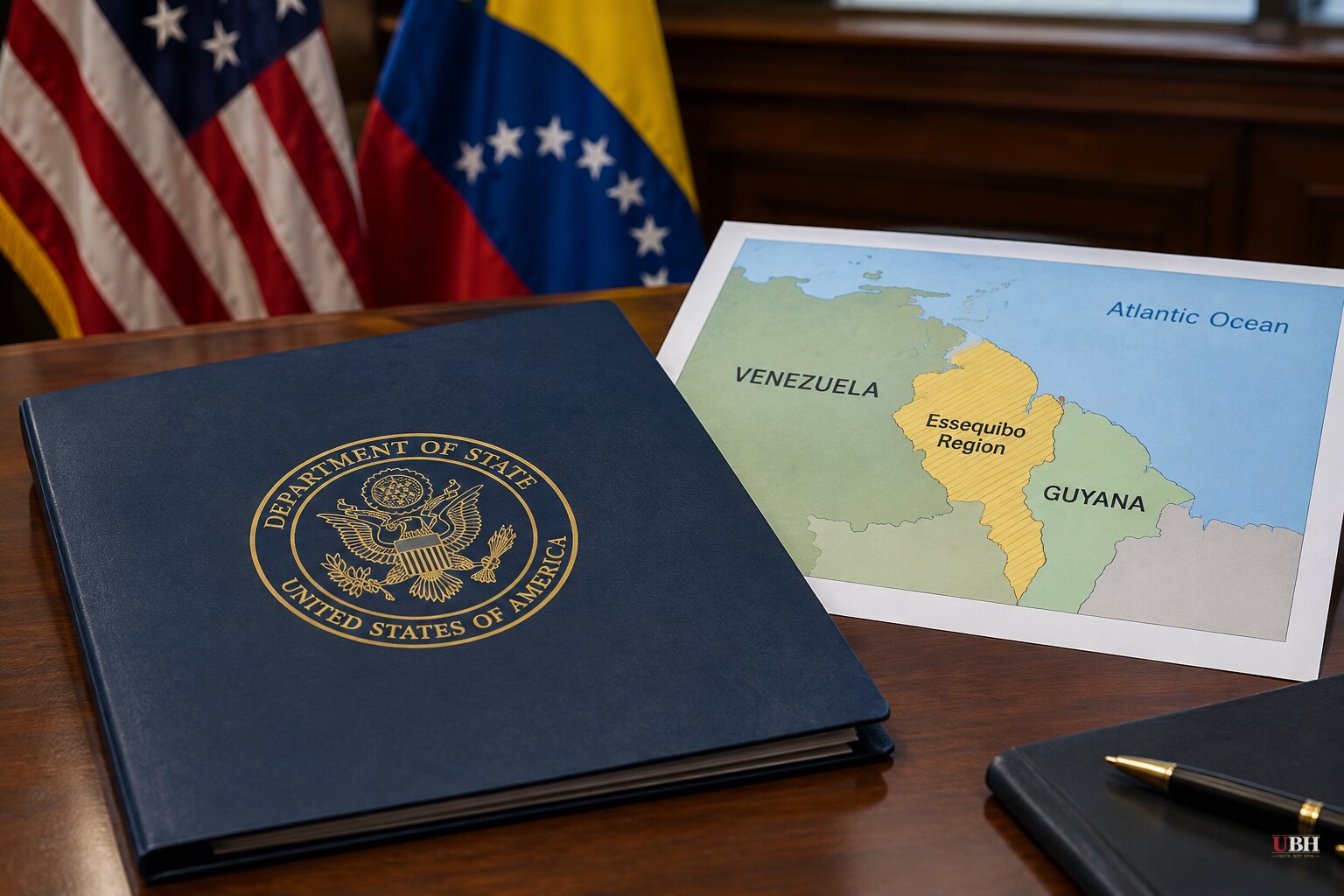
A senior Trump administration official suggested to Guyana in recent months that it consider ceding some territory to Venezuela, according to three people familiar with the matter who spoke to Reuters. The comment rattled Guyanese officials and forced Washington to assure them that U.S. policy on the border had not changed.
The official was Jeremy Lewin, the State Department's policy chief, who left the department at the end of October.
What happened in the September meeting
One of the people said Lewin told Guyanese Foreign Secretary Robert Persaud during a September meeting in Washington that he could help broker territorial talks with Venezuela's acting President Delcy Rodríguez. Two other people said Lewin went further and floated the possibility of Venezuela taking partial control of the Essequibo.
The Essequibo is the western two thirds of Guyana. It is rich in gold, diamonds and bauxite. Venezuela has claimed it for generations. The United States and nearly every other country treat it as Guyanese.
Those are anonymous accounts, and they differ on exactly what Lewin proposed. No plan to transfer Guyanese territory has been announced or adopted.
Two people also said Lewin discussed possible U.S. business activity in the Essequibo with Rodríguez during a July visit to Caracas.
Lewin's version
Lewin does not dispute that the conversations happened. He told Reuters he held "preliminary" talks with the Guyanese and the Venezuelans about the territorial dispute.
He said they followed a May letter from Rodríguez to President Trump asking for U.S. mediation to open direct talks with Guyana. Reuters could not verify the letter's authenticity. Lewin said Rodríguez also raised the issue with him directly in Caracas in July.
He said the conversations were "fully directed and authorized" by the White House. A person familiar with U.S. dealings with Venezuela also said the White House tasked Lewin on the issue.
The White House referred questions to the State Department. It did not say whether it directed any talks on the Essequibo or whether it received a letter from Rodríguez.
Washington and Georgetown respond
A State Department official said the department is "pitched different ideas and policy options from outside parties every day" and that its position on the Venezuela-Guyana boundary has not changed. The official added that the United States "reaffirms its support for the 1899 Arbitral Award," which "should be respected unless or until a new boundary is set by a competent legal body or with the consent of both parties."
That last clause matters. It does not rule out a negotiated change. Guyana's officials have said repeatedly that the Essequibo's status is not negotiable, and the people who spoke to Reuters said the suggestion stunned them.
Guyana's government did not answer Reuters' requests for comment. After the story ran, Persaud posted a Foreign Ministry statement saying the "Guyana-Venezuela border controversy" came up in a September meeting with State Department officials and that the focus was on the International Court of Justice process. The statement did not address the account that Lewin suggested territorial concessions.
The backdrop
The dispute is more than 180 years old. It sharpened after ExxonMobil's offshore oil discoveries in 2015 reshaped Guyana's economy. Guyana took the case to the ICJ in 2018, asking the court to affirm the border set by the 1899 arbitration.
Guyana, a country of just over one million people, is a close U.S. ally. Its relations with Caracas were tense under Nicolás Maduro. Since the U.S. operation that captured Maduro earlier this year, Washington's ties to the Rodríguez government have deepened. Rodríguez was Maduro's vice president, and Trump has praised her work with the United States.
What remains open
The central dispute is about authority. Lewin says he was acting on White House direction. The White House has not confirmed or denied that. The State Department says the policy stands and describes the Essequibo talk as one of many outside ideas.
Guyana has said nothing on the record about what it was told in September beyond the ICJ focus of the meeting. Its position, grounded in the 1899 award, is that the border is settled and the court should confirm it. The ICJ case is still pending.
Whether Rodríguez's May letter exists as described, and whether the administration ever intended to push Georgetown toward a deal, are questions only the White House can answer.
Sources used for this briefing
6 links from 6 independent newsrooms (syndicated copies of the same report count once)
These are the sources it draws on, linked so you can verify.


