
Unbiased headlines. Facts, not spin.
Every story is an unbiased news briefing written from 110+ sources across the spectrum — sources linked so you can verify it yourself.
 energy
Notable (5/10)
July 13, 2026 at 11:55 AM
energy
Notable (5/10)
July 13, 2026 at 11:55 AM
Junkyards Are Paying to Get Rid of EV Batteries. Colorado Passed a Law to Change That.
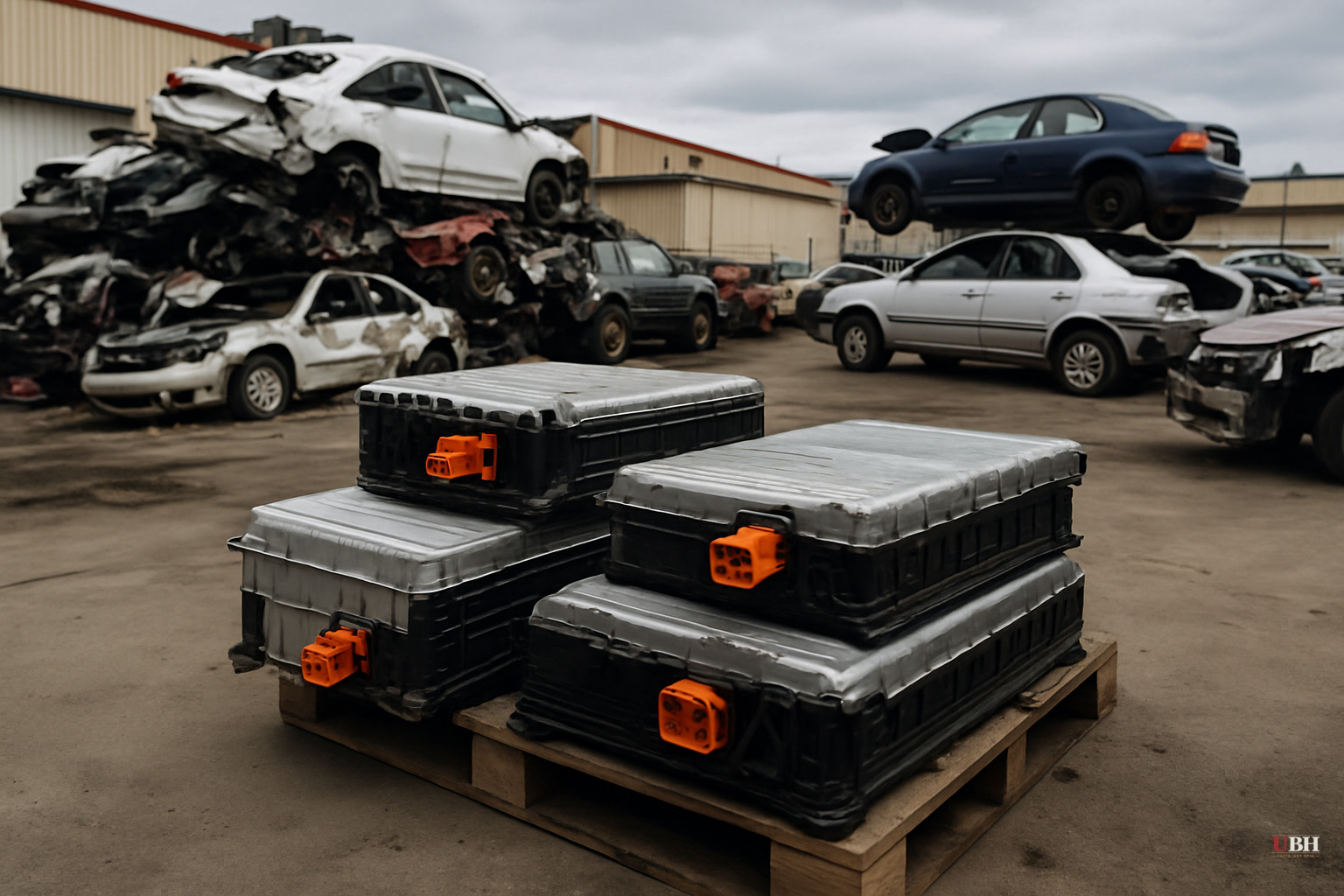
Salvage yard owners are discovering that old electric and hybrid car batteries are less a treasure and more a liability.
Thomas Andrade, co-owner of Everett Auto Parts in Massachusetts, described watching his crew strap two Chevy Volt hybrid batteries to a pallet for shipment to a recycler, according to NPR. He won't make a dime on the deal. He's happy about that, because the alternative is worse.
"The good thing with these is, they'll at least take them at no expense," Andrade told NPR.
These batteries contain real value: nickel, cobalt, manganese, lithium. Recyclers shred them into a substance called black mass, and the minerals inside can theoretically be recovered and reused in new batteries. But the cost of collecting, packaging, and shipping a battery pack often eats up whatever that black mass is worth, according to NPR's reporting.
Across the state at Westover Salvage Yard, CEO Brian Bachand is dealing with a tougher version of the same problem. A working Tesla battery pack sits on his shelf, priced at $1,200, roughly $800 below what Bachand estimates its replacement value could be. Nobody's bought it. If it doesn't sell, his only other move is shipping it to a recycler, and Bachand hasn't found a taker on terms nearly as good as Andrade got.
"We try to price our parts to sell," Bachand told NPR. "We don't run a museum here."
Letting old EV batteries pile up unsold isn't just an inconvenience for salvage operators. Left untreated as ordinary scrap, these packs pose real fire and toxic-leaching risks. Recycling them properly also recovers minerals the U.S. currently imports heavily from China, a dependency that matters for national security, not just climate policy.
The incentive to recycle is real on both counts: safety and mineral independence. The problem is that the market, as it stands, doesn't reward it. Recyclers can't always pay salvage yards for batteries because the cost of transport, dismantling, and processing frequently outstrips what the recovered minerals fetch on the open market.
Battery chemistries vary wildly across manufacturers and model years, which makes standardized, efficient recycling harder to scale. Volumes of retired EV batteries are still relatively low compared to the used-car fleet overall, so recyclers haven't hit the economies of scale that would make the math work on their own.
Colorado has moved to address this gap through state policy, positioning itself as an early test case for how to close the cost hole between what salvage yards need to break even and what recyclers can currently pay. The core idea behind this kind of approach is usually to shift some of the cost burden onto manufacturers or to subsidize the collection and recycling chain until scale brings costs down naturally.
Mandates and subsidies aren't free. If manufacturers are required to underwrite recycling costs, those costs likely get passed to buyers of new vehicles, and if government funds subsidize the gap, that's taxpayer money covering a private industry's growing pains. A skeptic of government intervention would reasonably ask why the answer isn't simply letting the market mature and prices adjust as EV volumes rise and recycling technology improves, rather than locking in a regulatory fix before the industry has had time to solve its own scaling problem.
The safety case for not letting batteries sit as unmanaged hazardous waste is hard to dismiss, and the mineral-security argument, reducing reliance on Chinese-controlled supply chains, cuts across party lines.
No data on the law's real-world results has been published yet. The next test will be whether recyclers start paying salvage yards for batteries again, or whether "they'll at least take them at no expense" remains the best outcome shops like Andrade's can hope for.
Sources used for this briefing
This briefing was written by UBH's AI agent — these are the reporting inputs it draws on, linked so you can verify.


