
Unbiased headlines. Facts, not spin.
Unbiased Headlines is an independently owned news organization. We bring you the facts, not opinions, written fresh from 110+ named sources. Sources linked so you can verify it yourself.
 economy
Major Story (7/10)
Judge Denies Samsung, SK Hynix and Micron Bid to Dismiss DRAM Price-Fixing Class Action
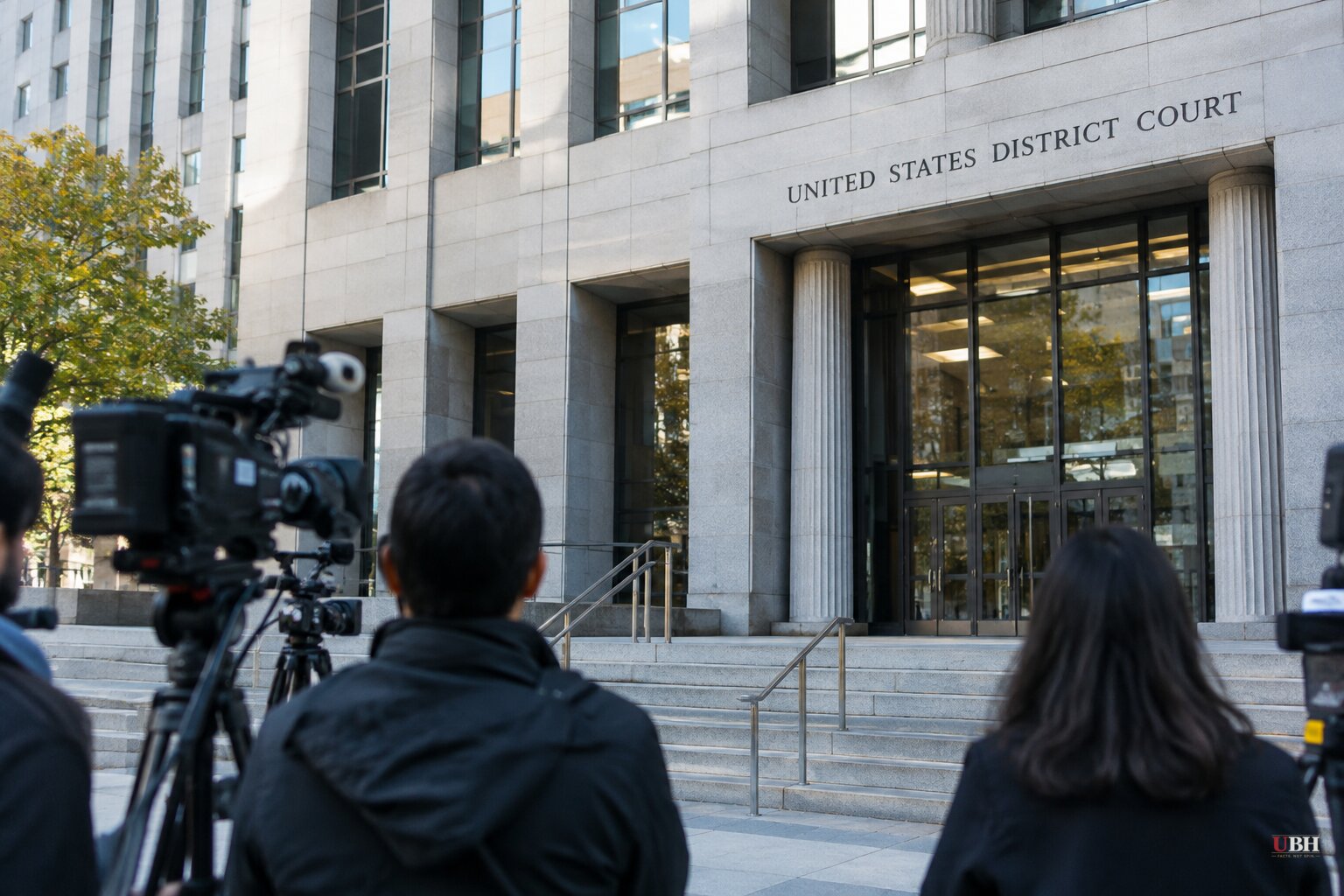
A federal judge in San Jose has refused to throw out an antitrust lawsuit accusing Samsung, SK Hynix and Micron of conspiring to restrict the supply of conventional DRAM.
Judge Noël Wise of the Northern District of California denied the three companies' joint motion to dismiss in full on Nov. 14. She found the complaint plausibly alleges an agreement in violation of Section 1 of the Sherman Act.
No company has been found liable. No ruling says any of this happened. The decision means the plaintiffs get to ask for documents.
What the plaintiffs allege
The case is Garciaguirre v. Samsung Electronics, No. 5:26-cv-06345. It was filed June 25, 2026, by 17 plaintiffs from five states: consumers and small PC builders. They are indirect purchasers, meaning they paid for DRAM inside finished products rather than buying chips from the manufacturers. They seek class status, damages and an injunction.
The three defendants held more than 91% of global DRAM revenue in the third quarter of 2025, according to the complaint.
The plaintiffs lay out a sequence they say points to coordination:
- SK Hynix cut production on Oct. 26, 2022. Micron followed roughly three weeks later.
- Samsung publicly said there would be no artificial production cut, then cut output in April 2023.
- All three announced the wind-down of DDR4 production within about three months of each other.
- They shifted wafer capacity to high-bandwidth memory (HBM), the premium chips used in AI accelerators, and did not expand conventional output despite soaring prices.
- They signed long-term supply deals with AI customers while refusing similar contracts to conventional buyers.
- All three adopted near-identical customer-vetting procedures in January 2026.
- Micron announced on Dec. 3, 2025 that it would shut down its Crucial consumer brand.
The complaint puts the price increase for conventional DRAM at 697% over 18 months. Other descriptions of the allegations cite a jump of up to 500% in a single year. Those are the plaintiffs' figures, and the two numbers measure different spans.
The defense and the judge's answer
The companies argued the suit is a rerun. A near-identical case over the 2016 to 2018 price spike was dismissed in 2020, and the Ninth Circuit affirmed in March 2022. The defendants told the court in September that the new complaint was the same conspiracy theory with an AI label, according to reporting on the filings.
They also argued that cutting output, pivoting to HBM and retiring DDR4 were independent business decisions made to maximize revenue during a period of heavy demand. Their position is that rivals in a concentrated market watch each other closely, like hawks, and react.
Wise rejected the rerun argument. She pointed to newer alleged conduct, including the long-term HBM contracts, the refusal of long-term deals to conventional buyers, the Crucial shutdown and the matching vetting questions.
On the hawk comparison, she wrote that the alleged conduct is "more akin to hawks flying in formation — an activity that hawks ordinarily do not do."
She also declined to ignore the industry's history. Samsung and Hynix paid fines over the 1998 to 2002 DRAM cartel, and Micron received immunity. The judge did set aside the plaintiffs' DDR3-related allegations.
At this stage, Wise said, the cited actions appeared unlikely to have occurred without some prior agreement. That is a plausibility standard applied to the complaint's allegations, not a finding on the evidence.
Why discovery matters
A court can't decide whether three companies moved in parallel because of an agreement or because of the same market signals from the outside. Internal emails, planning documents and communications between the companies can. Discovery is where those surface.
The defendants have until Dec. 7 to answer the complaint. An initial case management conference is set for January 2027.
The ruling does nothing for supply. SK Hynix's CEO has said he expects the shortage to last through 2030, and Micron's CEO said on Oct. 1 that supply will be much tighter in 2027 and 2028 than in 2026. Those statements are among the items the plaintiffs cite as evidence that the shortage is a managed outcome. The companies read the same facts as plain demand economics.
The open question is what the documents show. Either the three firms made parallel decisions on their own, as they contend, or discovery turns up something that looks like an agreement. Neither side has had to produce a page yet. That changes after Dec. 7.
Sources used for this briefing
8 links from 8 independent newsrooms (syndicated copies of the same report count once)
These are the sources it draws on, linked so you can verify.


