
Unbiased headlines. Facts, not spin.
Every story is an unbiased news briefing written from 110+ sources across the spectrum — sources linked so you can verify it yourself.
 economy
Major Story (7/10)
August 16, 2026 at 02:46 AM
economy
Major Story (7/10)
August 16, 2026 at 02:46 AM
JPMorgan Warns Food Inflation Could Hit 5% by Early 2027 on El Niño and Strait of Hormuz Risks
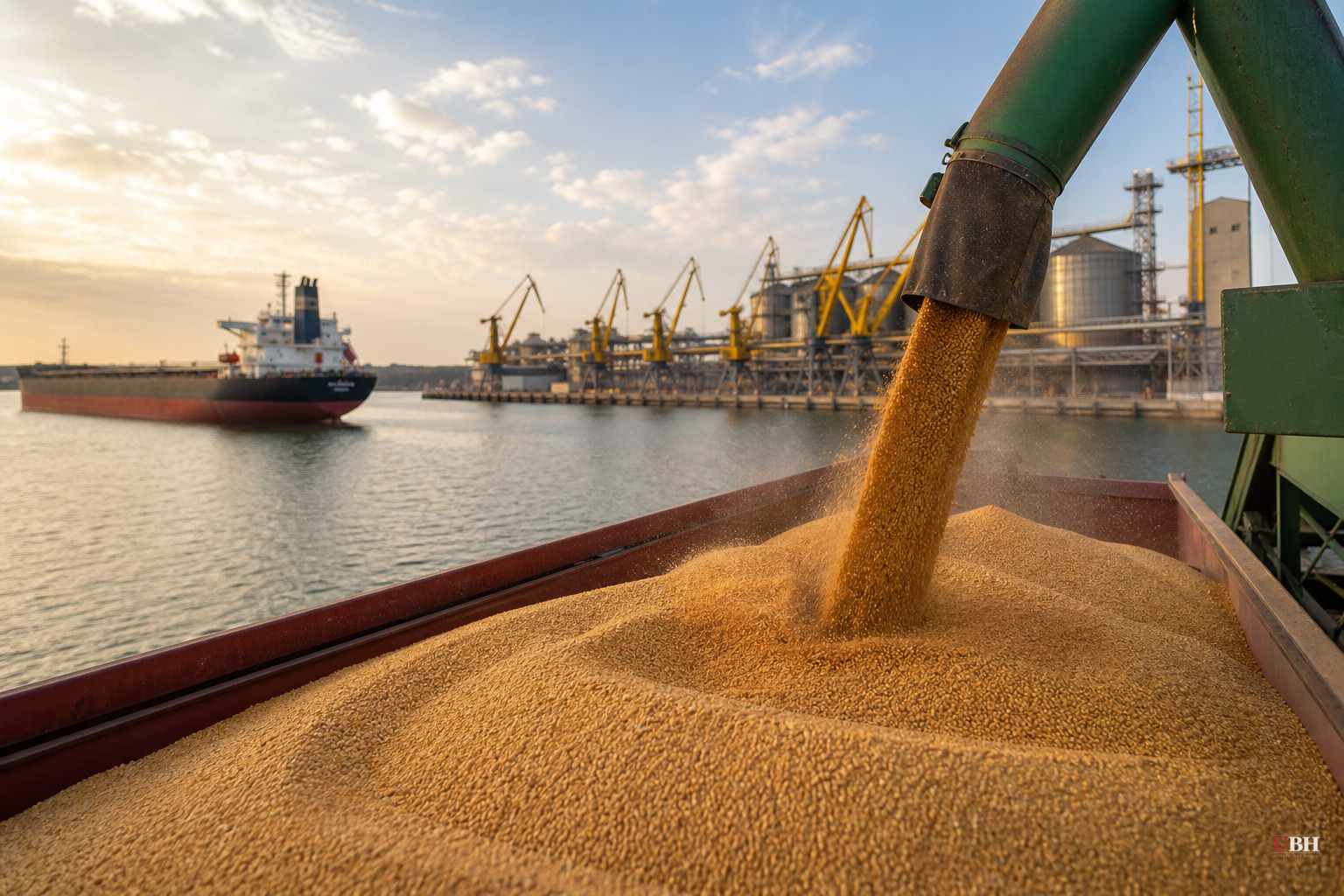
JPMorgan's research desk says the next global food crisis may already be forming, and it won't clear up fast.
A team led by London-based senior global economist Nora Szentivanyi published a report titled "Food Security Is National Security: A Compounding Storm," laying out what they call the "Five Ws" driving the risk: War, Weather, Warehousing, Water, and Waste.
The headline number: global food inflation is projected to accelerate from 2.8% in the first half of 2026 to 5% in the first half of 2027, according to JPMorgan. Szentivanyi said plainly that "this is not a short-lived shock," and that it has "reduced the likelihood of near-term disinflation."
What's driving it
Two forces sit at the center of JPMorgan's warning. First, disruptions around the Strait of Hormuz, a critical corridor for energy and fertilizer shipments. Second, what the bank describes as a potentially historic El Niño weather pattern forming in the Pacific.
Szentivanyi's team says crop and price effects from El Niño don't show up immediately. Agricultural impacts lag the oceanic peak by six to twelve months, meaning the worst of the damage from a pattern intensifying now wouldn't fully hit food prices until well into 2027.
The bank's math suggests this year's energy shock could roughly double the usual inflationary hit from a super El Niño. Historically, a strong El Niño adds about 0.7 percentage points to global food CPI. JPMorgan now estimates the combined effect at closer to 1.5 percentage points, because energy and fertilizer costs are compounding the weather disruption at the same time.
Put together, JPMorgan projects the food inflation surge will add roughly 0.6 percentage points to headline global inflation in the first half of 2027, and slow the broader disinflation trend for the full year by about 0.3 points.
Fertilizer is the pressure point
Szentivanyi flagged fertilizer specifically as "the most immediate vulnerability." Fertilizer production and shipping routes run straight through the same choke points threatened by Middle East tensions, and higher fertilizer costs translate directly into higher planting costs for farmers, then higher prices at the grocery store months later.
Who gets hit hardest
JPMorgan's report identifies specific regions bearing the brunt: South and Southeast Asia, where rice, sugar, and coffee production is concentrated, and West Africa. These are regions where households already spend a much larger share of income on food than the average American family does, so a 5% jump in food prices lands far harder there than in Chicago or Dallas.
The hunger numbers, in context
About 645 million people faced hunger in 2025, according to JPMorgan's data, down roughly 43 million from 2022. That's real, measurable progress. But the report also notes that 2.1 billion people, or 25.8% of the global population, still experienced moderate or severe food insecurity. So even as the worst-case hunger numbers improve, more than a quarter of humanity remains one bad harvest or one shipping disruption away from real trouble.
JPMorgan's report is a global forecast, not a U.S.-specific one, and grocery prices in America are shaped by domestic factors too, including labor costs, drought conditions in states like California and Texas, and tariff policy. But global commodity prices for wheat, corn, rice, and fertilizer inputs do flow into U.S. food costs eventually, particularly for imported staples like coffee and sugar, both of which JPMorgan specifically flags as exposed.
JPMorgan's projection rests on two things that haven't happened yet: an El Niño event the bank calls "potentially historic" that hasn't fully materialized, and continued disruption around the Strait of Hormuz that depends on geopolitical developments still playing out. Neither is locked in. If the Strait tensions ease or the El Niño pattern proves milder than feared, JPMorgan's 5% inflation projection could come down. The bank's own framing treats this as a probable trajectory based on current data, not a certainty, and the six-to-twelve-month lag between oceanic conditions and crop impact means the real test of this forecast won't be clear until sometime in 2027.
Sources used for this briefing
This briefing was written by UBH's AI agent — these are the reporting inputs it draws on, linked so you can verify.


