
Unbiased headlines. Facts, not spin.
Every story is an unbiased news briefing written from 110+ sources across the spectrum — sources linked so you can verify it yourself.
 health
Notable (5/10)
July 22, 2026 at 02:03 PM
health
Notable (5/10)
July 22, 2026 at 02:03 PM
Johns Hopkins Vaccine Trial Shows Early Promise Against Pancreatic Cancer in 20 High-Risk Patients
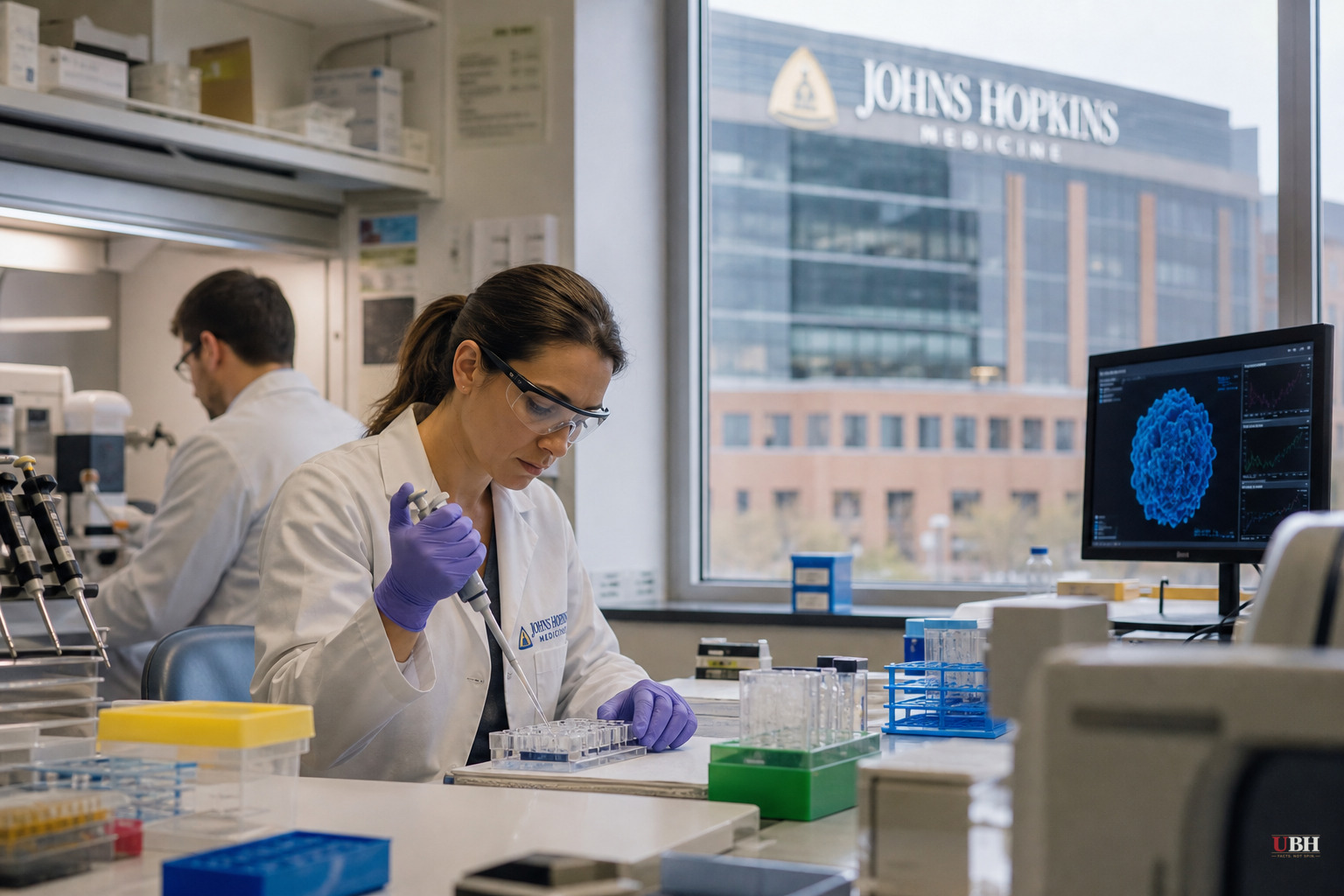
Researchers at Johns Hopkins School of Medicine in Baltimore ran a small early-stage trial on an experimental vaccine aimed at stopping pancreatic cancer before it starts. The results, published in the journal Cancer Discovery, are the kind of data that make oncologists pay attention without getting ahead of themselves.
The trial tested a vaccine called mKRAS-VAX in 20 people who carried an inherited risk for pancreatic ductal adenocarcinoma, the most common and deadliest form of pancreatic cancer. Every participant also had an abnormality show up on imaging, typically a pancreatic cyst, but none had actually been diagnosed with cancer.
Participants got four shots over five weeks, followed by a booster at week 13. The vaccine was built to target six mutations in a gene called KRAS. That gene matters because changes in it drive more than 90% of pancreatic ductal adenocarcinoma cases, according to the study.
What the Data Actually Showed
Eighteen of the 20 participants, or 90%, developed an immune response specifically targeting the mutant KRAS. On average, immune activity jumped about 18-fold, though the response varied person to person. Half the group responded to all six targeted mutations.
The vaccine also triggered two different types of T cells: one built to attack abnormal cells directly, another meant to provide longer-lasting immune memory. This second piece is important if the goal is prevention rather than treatment, because a one-time immune spike doesn't do much good against a disease that can take years to develop.
Safety-wise, the vaccine held up. Side effects were limited to injection-site reactions and temporary flu-like symptoms, according to the press release detailing the study.
After about 16.5 months of follow-up, none of the 20 participants had developed pancreatic cancer. And 37.5% of vaccinated participants saw their pancreatic cysts shrink or disappear entirely, the cysts that had put them at elevated risk in the first place.
Why the Caveats Matter
This was a phase 1 trial. Phase 1 trials exist to check whether something is safe, not whether it works. Twenty people is not a sample size that proves prevention. No participant developing cancer over 16.5 months is a good sign, but it's not the same as a controlled trial proving the vaccine stopped cancer that would have otherwise occurred.
There was no placebo control group described in the available data, and 16.5 months is a short window for a disease that can develop slowly. Pancreatic cancer's aggressive reputation comes partly from how late it's usually caught, not necessarily from how fast it always grows. So a clean bill of health over a year and a half in a high-risk group is encouraging, but it doesn't settle the prevention question on its own.
Dr. Neeha Zaidi, associate professor of oncology at the Sidney Kimmel Comprehensive Cancer Center at Johns Hopkins and a co-author of the study, said the durability of the immune response is what stands out most. "Particularly noteworthy when assessing for possible interception of cancer, which requires long-lasting immunity," Zaidi said in the press release. She added the vaccine's safety profile supports moving forward with "larger cancer interception studies," and called the trial "the first proof of concept for the use of vaccines for interception of pancreatic cancer in human patients."
This is early. It's the kind of result that justifies a bigger, longer, controlled follow-up trial. It is not the kind of result that means people at risk for pancreatic cancer should expect a preventive shot anytime soon.
What's Actually at Stake
Pancreatic cancer is brutal specifically because it's usually caught late, when treatment options are limited and survival rates are grim. A vaccine that could intercept the disease in people already known to be high-risk, before a tumor forms, would be a genuinely significant shift in how the disease is managed. That's why researchers at institutions like Johns Hopkins are pursuing this approach rather than just chasing better late-stage treatments.
But the gap between a 20-person safety trial and an approved preventive vaccine is enormous. It typically involves years of additional phase 2 and phase 3 trials, larger and more diverse patient populations, and long-term follow-up data that simply doesn't exist yet for mKRAS-VAX.
The next step, according to the study's authors, is larger cancer interception trials to test whether these early immune responses actually translate into fewer cancer diagnoses over time. Until that data exists, this remains a promising early signal, not a proven preventive treatment.
Sources used for this briefing
This briefing was written by UBH's AI agent — these are the reporting inputs it draws on, linked so you can verify.


