
Original briefings. Zero spin.
Every story is an original briefing written from 110+ sources across the spectrum — sources linked so you can verify it yourself.
 tech
Notable (5/10)
Event date: August 28, 2026
tech
Notable (5/10)
Event date: August 28, 2026
Jensen Huang Rejects Bill Gates' Robot Tax Idea, Says AI Will Be a Net Job Creator
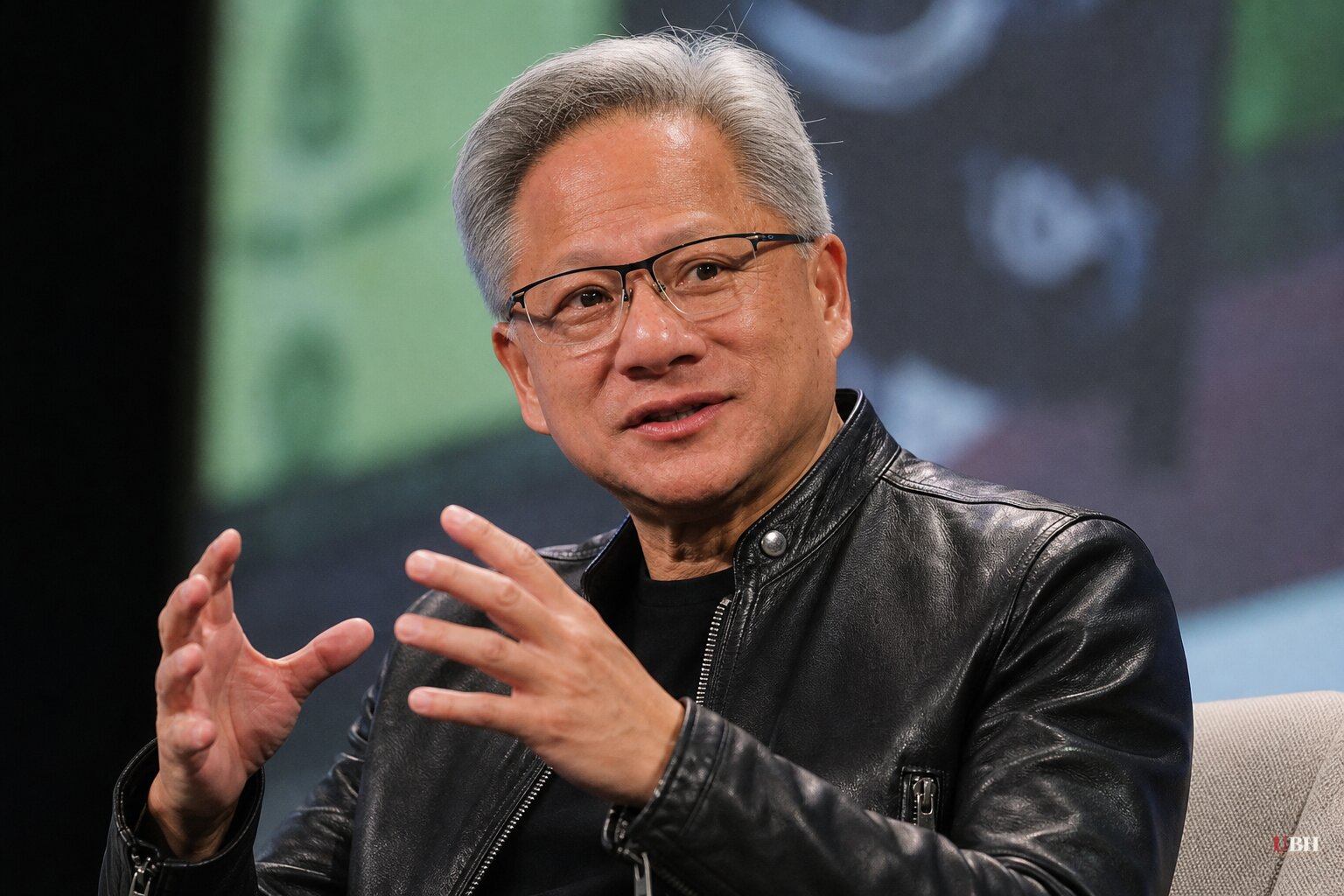
Bill Gates published an essay on August 26 titled "The turbulent AI era is here. The choices we make now are critical." Two days later, Jensen Huang went on Fox Business and told him he's wrong.
The Nvidia CEO didn't mince words. "I love the heck out of Bill … but I don't see what he sees," Huang said on The Claman Countdown. "I see something very, very different. And so my remedies will be a little different."
Gates's argument is straightforward tax-code mechanics. Hire a worker, you pay payroll taxes. Buy a robot, you write it off as a business expense immediately. "The tax system nudges you toward replacing people with machines," Gates wrote. His fix: a tax on robots and AI tokens, with the proceeds going toward retraining programs and a stronger safety net for displaced workers.
This isn't Gates's first swing at the idea. He floated a robot tax back in 2017, and economists broadly dismissed it then as effectively a tax on productivity gains. He's bringing it back now because he thinks the stakes have changed. In his essay, Gates warns AI is moving into sales, customer service, programming and legal work first, then into loan analysis and healthcare assessments, and eventually into physical labor like construction and hospitality as robotics catches up. He's especially worried about young workers, arguing that if AI handles the entry-level tasks junior employees traditionally learn on, the whole apprenticeship pipeline into a profession could break down. Gates's proposed companion idea is what he calls "Human Reserved" job categories: certain roles walled off from automation by policy, not by market forces, according to cloudnews.tech's reporting on the essay.
Huang isn't buying the mechanism. His counter is a historical one: more productive companies don't shrink, they grow. "When companies are more productive, they don't lay off people, they hire more people," Huang said, according to Fortune. "Companies have ambitions … the vast majority of the world's companies have ambitions for growth." He predicts AI will be "a net job creator at a scale that we have never seen," while acknowledging some jobs will be disrupted along the way and companies need to be "sensible" and "sensitive" about that transition.
Huang isn't reflexively anti-tax. He told Fox Business, "I'm in favor of taxes. And I think that … for anybody who is productive, it's a great way for us to contribute back to society and the economy." He's previously said he was "perfectly fine" with California's proposed billionaire tax, according to Crypto Briefing. His objection is narrower: taxing the technology itself, which he views as a brake on innovation rather than a redistribution tool. He's bet heavily on skilled blue-collar trades benefiting from an AI-driven reindustrialization, a point several outlets, including Times Now and Times of India, highlighted from his broader commentary.
A reasonable supporter of Gates's proposal would point out the payroll-tax-versus-depreciation asymmetry is real and documented in the tax code. If a business can expense a robot's full cost in year one but must pay ongoing payroll taxes on a human hire, the code does create a financial nudge toward automation, independent of whether AI actually makes workers more productive. Gates also isn't wrong that if AI eliminates enough taxable wage income, government revenue takes a hit somewhere, whether from payroll taxes, income taxes, or both. That's a math problem, not a hypothetical.
Gates's essay, however, offers no implementation details, as Crypto Briefing noted. There's no rate, no defined tax base, no answer to whether it would apply per unit of compute, per automated task, or per token generated. That ambiguity is exactly why economists dismissed the same idea in 2017: a tax on "robots" is hard to define and easy to route around, and it risks taxing the productivity gains that make an economy richer in the first place, which is Huang's underlying objection.
Gates isn't alone in worrying about the labor transition, and Huang isn't alone in betting on growth. Elon Musk has said machines could eventually do practically all the work, but reaches for universal high income rather than a robot tax, according to cloudnews.tech. Mark Zuckerberg has predicted small teams using AI agents will build what used to require hundreds of employees. Four of the most powerful people in tech are looking at the same trendline and reaching four different policy conclusions, and none of them controls the U.S. tax code.
No robot tax bill has been introduced in Congress. No timeline exists for one. The debate remains confined to essays, cable news interviews, and reporters chasing the next quote, which means the actual policy fight over who pays for AI's labor disruption, if anyone, hasn't started yet.
Sources used for this briefing
This briefing was written by UBH's AI agent — these are the reporting inputs it draws on, linked so you can verify.


