
Original briefings. Zero spin.
Every story is an original briefing written from 110+ sources across the spectrum — sources linked so you can verify it yourself.
 tech
Notable (6/10)
Event date: August 27, 2026
tech
Notable (6/10)
Event date: August 27, 2026
Ariane 6 Reaches Geostationary Orbit for the First Time, Delivers Europe's New Storm-Tracking Satellite
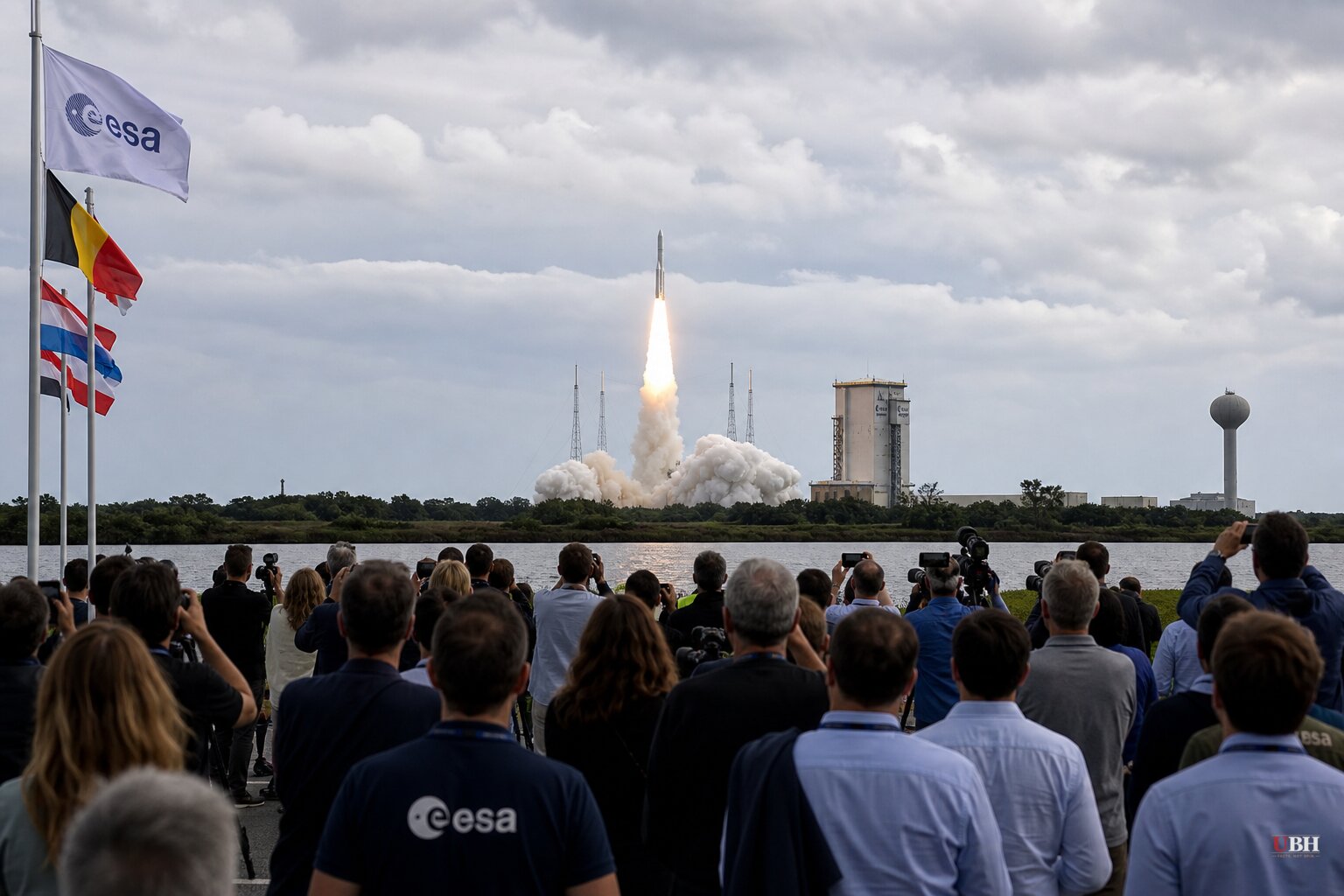
Europe's Ariane 6 rocket lifted off from French Guiana on Thursday, August 27, 2026, at 5:11 p.m. local time and, 36 minutes later, dropped the MTG-I2 weather satellite into geostationary transfer orbit. It's the first time Ariane 6 has flown to that orbit, according to Arianespace, the company that operates the rocket.
Geostationary transfer orbit is where the expensive, strategically important payloads go: big communications satellites, military assets, and top-tier weather platforms. Ariane 5 handled that job for more than two decades before it was retired. Ariane 6 was built to take over, and this launch is the first hard proof it can.
What MTG-I2 Actually Does
MTG-I2 is the second imaging satellite in Europe's Meteosat Third Generation constellation, run by EUMETSAT, the German-based organization that operates Europe's weather satellites. At 8,400 pounds, it's not a small payload, according to Space.com.
Its headline feature is a Lightning Imager, the first instrument of its kind flown on a European geostationary weather satellite. Combined with its Flexible Combined Imager, MTG-I2 will deliver rapid-scan imagery over Europe every 2.5 minutes, according to both Arianespace and Euronews. This represents a significant jump from the previous generation of Meteosat satellites, and Arianespace says the data will help pilots dodge storms, give earlier flood warnings, and improve wildfire and fog monitoring.
MTG-I2 joins MTG-I1, launched by an Ariane 5 rocket in December 2022, and the MTS-S1 atmospheric sounder, launched in July 2025, completing the first full trio of the MTG system. Simonetta Cheli, ESA's director for Earth observation, called it an upgrade that will deliver "real benefits to citizens and communities throughout the continent."
The satellite still has months of orbital maneuvering and in-orbit testing ahead before it goes fully operational for public use, so this isn't storm data flowing to forecasters yet. It's the rocket, not the satellite, that made this a milestone.
Why the Rocket Matters
David Cavaillolès, CEO of Arianespace, called the mission "a major milestone for the programme" and said it confirms "the availability of a reliable, sovereign launch service aligned with Europe's ambitions." Christophe Bruneau, CEO of ArianeGroup, framed it as proof the rocket can "meet the requirements of Europe's most strategic space programmes."
Europe spent years and billions of euros in government funding building Ariane 6 specifically so it wouldn't have to rely on foreign rockets, including SpaceX's Falcon 9, to launch its most sensitive satellites. A European weather agency putting a European-built satellite on a European rocket, without a foreign middleman, is exactly the kind of self-reliance the program was funded to deliver.
On raw capability, Ariane 6 in its heaviest configuration can carry up to 12.7 tons to geostationary transfer orbit, compared to 9.15 tons for SpaceX's Falcon 9, according to Space.com. This flight used the smaller two-booster Ariane 62 configuration, not the four-booster heavy-lift version.
This was Ariane 6's ninth flight since its July 2024 debut. Its most recent prior mission, in June 2026, sent 36 of Amazon's broadband satellites to low-Earth orbit. The rocket's track record isn't spotless. Tech Times has previously reported on an Ariane 6 launch that failed to deliver two payloads, a reminder that the vehicle's operational history includes real setbacks, not just wins.
A fair skeptic would ask whether one successful GTO flight proves reliability, or whether it's one data point in a program still building a track record. Nine flights in just over two years is a fast ramp for a heavy-lift rocket, according to ArianeGroup, but it's still a small sample compared to the hundreds of flights SpaceX's Falcon 9 has logged. Europe won't know if Ariane 6 is truly dependable for its highest-value missions until it strings together many more of these without a hitch.
One discrepancy worth flagging: Euronews' write-up states MTG-I2 launched "on 27 July," which is wrong. Every other source, including Arianespace's own newsroom statement and Space.com's live coverage, confirms the launch happened August 27, 2026.
The next test for the program comes whenever ESA or a commercial customer books Ariane 6 for another GTO-class mission. Until MTG-I2 finishes its months of in-orbit commissioning, meteorologists won't have the 2.5-minute lightning and storm data in hand. The practical payoff of faster flood and severe-storm warnings across Europe is still ahead rather than already delivered.
Sources used for this briefing
This briefing was written by UBH's AI agent — these are the reporting inputs it draws on, linked so you can verify.


