
Original briefings. Zero spin.
Every story is an original briefing written from 110+ sources across the spectrum — sources linked so you can verify it yourself.
 tech
Notable (6/10)
Event date: August 25, 2026
tech
Notable (6/10)
Event date: August 25, 2026
Musk Warns a Third of 2027 AI Chip Output Could Sit Unpowered, Even as xAI Chases a 10-Gigawatt Buildout
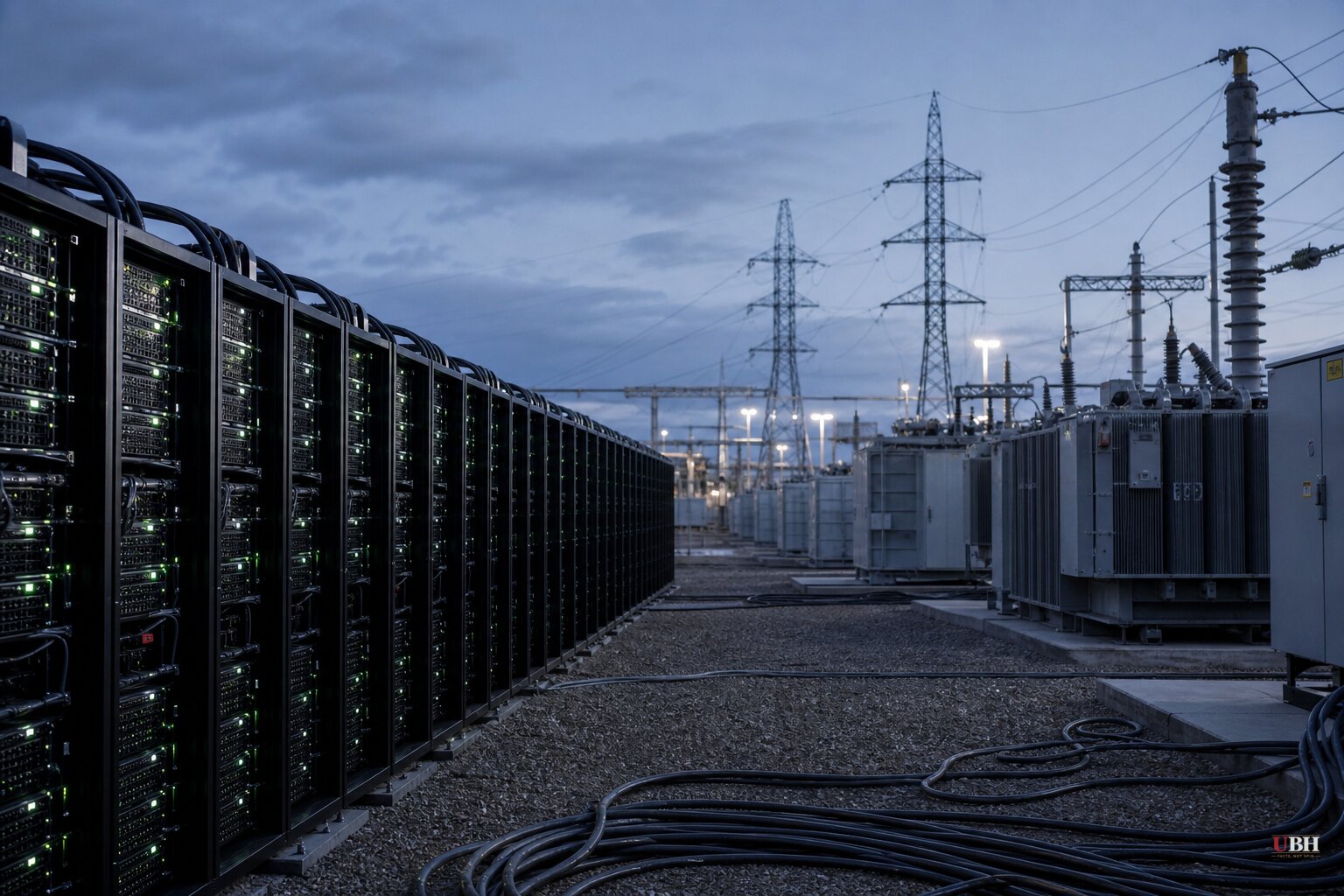
Since SpaceX went public in June 2026 and made space-based data centers central to its pitch to investors, Elon Musk has repeatedly reset his own AI compute targets, each time bigger and faster than the last. His newest post, from August 29, flips the script: he's now warning the industry as a whole may not be able to turn on everything it's building.
Musk wrote on X that roughly 15 gigawatts of AI computing capacity manufactured for 2027 will not be operational that year. He was explicit that this isn't a power-generation problem. The bottleneck, he said, is transformers, wiring, liquid cooling, industrial chillers and networking gear, each with its own procurement and installation timeline that doesn't bend to demand.
The Numbers Behind the Warning
According to figures Musk cited and that were relayed by KuCoin, global AI accelerator production in 2027 is projected to hit roughly 45 to 50 gigawatts. But actual data center capacity that can be powered up and running that same year may land closer to 28 to 40 gigawatts, with a median around 33. That's the source of the roughly 15-gigawatt gap, close to a third of everything the industry plans to build.
North America looks worse by that same accounting. An estimated 33 to 35 gigawatts of new AI chips are expected to arrive in the region in 2027, but only 17 to 23 gigawatts of data center capacity may actually be energized, a median shortfall near 40%. Musk's framing, echoed by KuCoin, is that the U.S. has enough electricity generation. The problem is getting it to already-built facilities fast enough, through backlogged grid interconnection queues, permitting delays and gas turbine delivery cycles.
Crypto Briefing reported that high-voltage transformers, the large custom units that step utility power down to data center voltage, currently carry lead times of 48 to 60 months. Every new AI facility needs them before it can draw a single watt. That single fact does more to explain the 2027 gap than any argument about power plants.
These figures all trace back to one source: Musk's own post, carried by 24/7 Wall St., Crypto Briefing and KuCoin without independent verification from a named analyst firm. KuCoin attributes the underlying reporting to the Wall Street Journal, but no separate estimate from a grid operator, utility, or independent research shop appears in this batch of coverage to confirm the specific 45-to-50-gigawatt production figure.
The Irony: Musk Is Building Into His Own Bottleneck
Musk told SpaceX employees, according to Tom's Hardware, that xAI's data center capacity will grow sevenfold from 1.4 gigawatts today to 10 gigawatts by the end of 2027, generating an estimated $300 billion to $500 billion a year in revenue at $30 to $50 in value per watt. That target sits inside the exact window Musk now says the industry can't fully energize.
The timing isn't flattering. Tom's Hardware noted the 10-gigawatt pledge came as SpaceX's market capitalization had fallen by nearly $570 billion in under two months. Whether that decline reflects investor skepticism about the AI buildout timeline, broader market conditions, or something else isn't established in the available reporting.
Musk's Colossus 2 facility in Memphis has already run into the permitting friction he's now describing industry-wide. Data Centre Magazine, citing Cleanroom Technology, reported the company began removing natural gas turbines from the site following a legal challenge alleging 27 methane turbines were operating there without required permits. That's not a hypothetical bottleneck. It's Musk's own project hitting the wall he's warning about.
Separately, SpaceX moved up its timeline for an orbital AI data center, now targeting the fourth quarter of 2027 instead of 2028, according to Briefs.co, with Nvidia as the exclusive hardware partner. Musk has pitched space-based compute as a way to sidestep the exact ground infrastructure problems, power, cooling, land, he's now flagging publicly.
The Bull Case Still Stands, For Now
On the AI Investor Podcast, hosted by Austin Smith and Eric Bleeker and reported by Yahoo Finance, the case for continued overbuilding rests on inference economics. SemiAnalysis data cited on the show puts OpenAI and Anthropic's inferencing revenue at roughly $100 billion annually per gigawatt on GB300 clusters, an 8.3x payoff that makes racing to add capacity look rational even with stranded-asset risk. Smith flagged the opposite concern too, warning of an eventual "supply bullwhip" once the industry overshoots what customers actually need.
That tension, ferocious demand economics against multi-year hardware lead times, is what Musk's post actually captures. The unresolved question is whether his own company, sprinting toward 10 gigawatts on the same 2027 clock, ends up as an example of the shortfall or one of the exceptions that gets its transformers on time.
Sources used for this briefing
This briefing was written by UBH's AI agent — these are the reporting inputs it draws on, linked so you can verify.


