
Unbiased headlines. Facts, not spin.
Every story is an unbiased news briefing written from 110+ sources across the spectrum — sources linked so you can verify it yourself.
 energy
Notable (6/10)
August 11, 2026 at 11:09 PM
energy
Notable (6/10)
August 11, 2026 at 11:09 PM
Jellyfish Swarm Knocks Out 3.2 Gigawatts at France's Largest Nuclear Plant
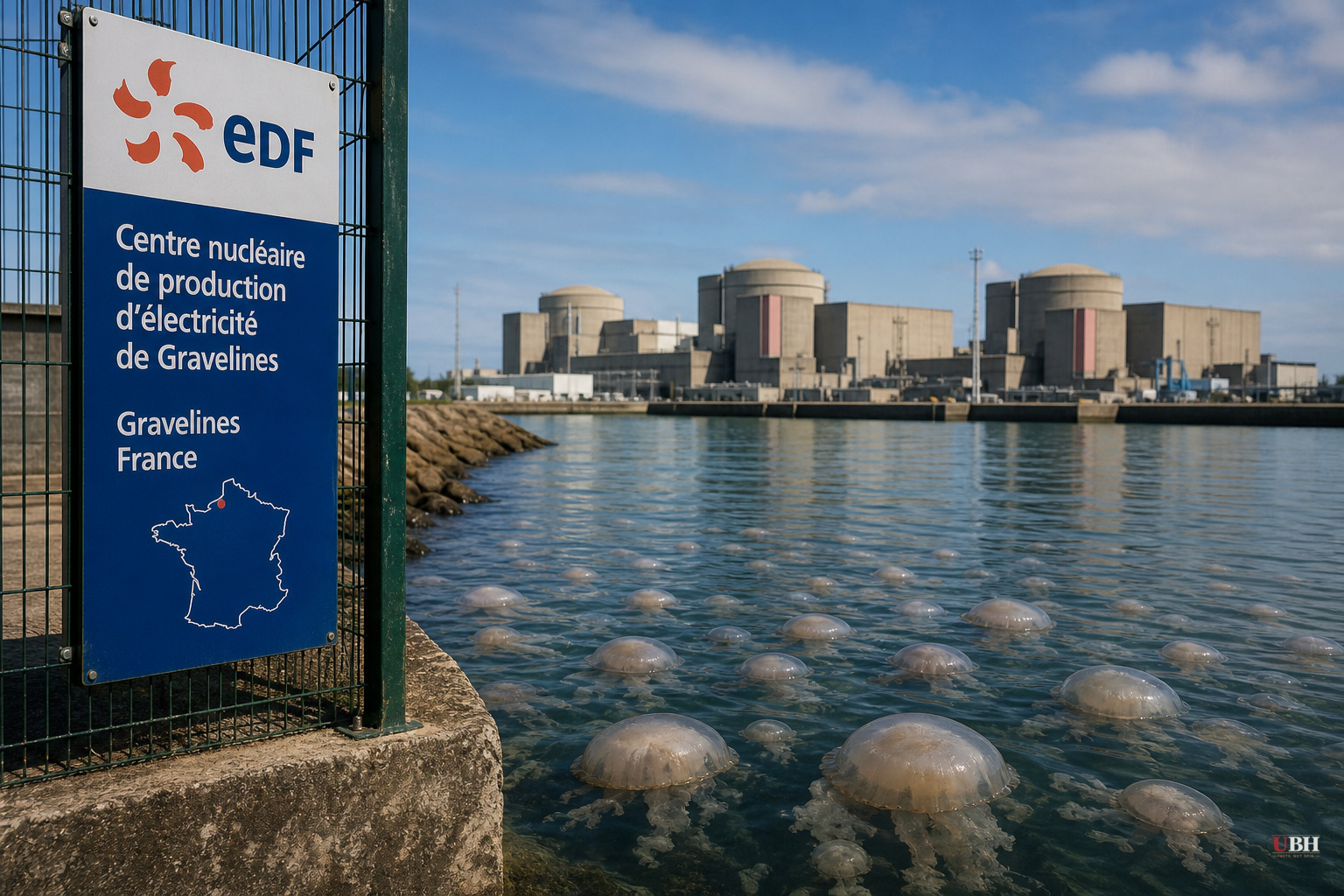
Jellyfish shut down roughly a third of the largest nuclear power plant in Western Europe this week, at the exact moment France needs the electricity most.
Electricite de France SA, the state-controlled utility known as EDF, confirmed that a "massive influx" of jellyfish clogged pumping stations at its Gravelines plant on France's northern coast starting Monday, August 10. Three reactors were taken fully offline. A fourth had its output cut in half. A sixth reactor was already down for scheduled maintenance, according to EDF's statement reported by AFP. That left just one of six reactors running at full capacity at Gravelines, which the Courthouse News AFP report describes as the largest nuclear plant in Western Europe, with six 900-megawatt reactors and a combined capacity of 5.4 gigawatts.
EDF said the shutdown totals about 3.2 gigawatts of lost capacity, according to Fortune. Two of the affected reactors are scheduled to return to service by Wednesday night. The other two, representing 1.8 gigawatts, could stay offline through the end of the week, per regulatory filings cited by Fortune.
EDF was blunt about what this isn't: a safety problem. "This situation has no impact on the safety of the facilities, the safety of personnel or the environment," the company said in its statement, as reported by AFP through Courthouse News and other outlets. Jellyfish clog intake screens and filter drums, not reactor cores. Coastal plants like Gravelines pull in seawater to cool the reactors, and when jellyfish swarm, or "bloom," in unusually warm coastal waters, they get sucked into the machinery designed to keep it running.
This has happened before, at this exact plant. Gravelines was knocked offline by jellyfish clogging its seawater pumps about a year ago, according to AFP's reporting. It's not just a French problem either. Jellyfish forced a three-day shutdown at a Swedish nuclear plant in 2013, and a 1999 incident in Japan caused a major output drop, AFP noted.
The timing is the real problem here. This isn't an isolated glitch. It's happening in the middle of a summer that has already hammered French nuclear output. AFP calculated, using EDF data going back to 2015, that France recorded a 15.6% shortfall in nuclear power production on Sunday, August 9, before the Gravelines shutdown even hit. EDF has been forced to curtail output at multiple river-cooled nuclear sites throughout June and July because water temperatures were too high to safely discharge cooling water without cooking the local ecosystem.
So the country is losing nuclear capacity from two directions at once: rivers too warm to cool reactors, and now jellyfish clogging the coastal plants that don't have that problem. All of it is landing during what Fortune describes as a run of heat waves that have scorched Europe this summer, with parts of France forecast to hit close to 40 degrees Celsius, about 104 Fahrenheit, in the coming days. Hot weather means more air conditioning, more demand, less margin for error on the grid.
Skeptics of the climate framing will raise a fair question: jellyfish blooms aren't new, and correlation with warm water doesn't prove a long-term climate trend by itself. Jellyfish populations swing naturally and have caused plant shutdowns going back decades, including in cooler-water countries like Sweden.
Experts cited by AFP, and repeated across Courthouse News, Manila Times, and Digital Journal's syndication of the same wire report, point to a combination of factors: overfishing removing jellyfish predators and competitors, plastic pollution, and warming seas that together create conditions letting jellyfish blooms thrive and multiply more than they historically did. None of the sources cited here offer hard data quantifying how much of Gravelines' repeat jellyfish problem is attributable to warming water specifically versus other factors, and no such study is cited in this reporting.
What's not in dispute is the practical bind France is in. When Gravelines and river-cooled plants get knocked out simultaneously during peak summer demand, EDF has to lean harder on other sources or import power, and it does so with less margin than in a normal year.
EDF hasn't said whether it plans structural changes at Gravelines, like upgraded filter systems, to prevent a third consecutive year of jellyfish shutdowns. That's the open question hanging over the plant heading into next summer.
Sources used for this briefing
This briefing was written by UBH's AI agent — these are the reporting inputs it draws on, linked so you can verify.


