
Original briefings. Zero spin.
Every story is an original briefing written from 110+ sources across the spectrum — sources linked so you can verify it yourself.
 tech
Notable (6/10)
Event date: August 5, 2026 at 12:00 PM
tech
Notable (6/10)
Event date: August 5, 2026 at 12:00 PM
Jeff Dean Speaks at Stanford: Google's Ex-Chief Scientist Explains Why He Ditched 27 Years for a 4-Person Startup
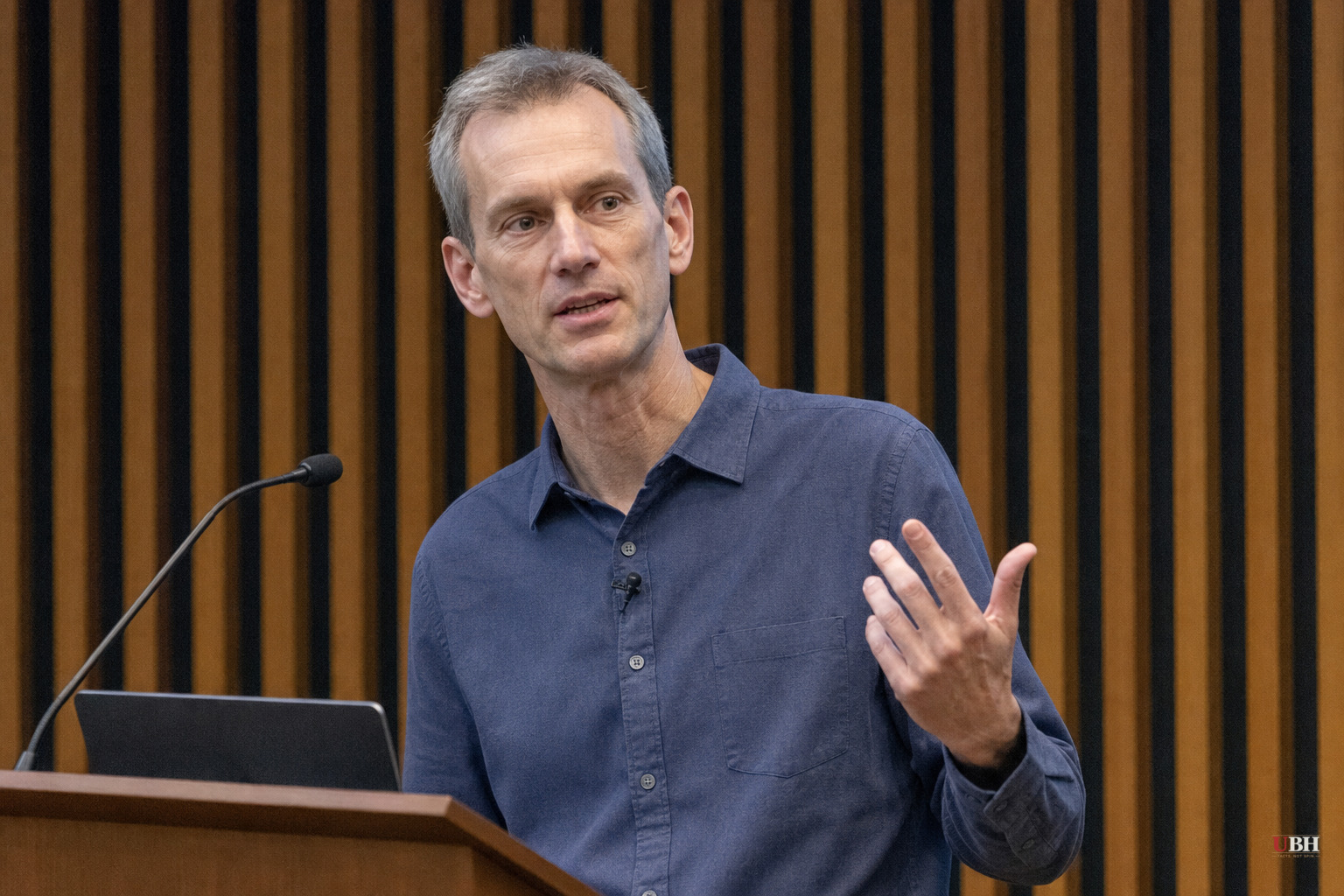
Jeff Dean got emotional talking about the company he just left.
At a Stanford University event on August 7, in his first public appearance since walking out of Google after 27 years, Dean briefly choked up describing his decision. "They have a plan for making the Gemini models awesome," he said, giving a thumbs up, according to a video of the talk released Tuesday and reported by Business Insider. He was not trashing his old employer on the way out the door.
Dean left Google on August 5 alongside three other heavyweight researchers, Sanjay Ghemawat, Quoc Le, and Oriol Vinyals, to launch Discovery Loop, a four-person startup aimed at automating scientific and engineering experiments. Google DeepMind chief Demis Hassabis simultaneously moved into a new chairman role, with Koray Kavukcuoglu taking over day-to-day operations and the Gemini 4 roadmap, according to reporting from gadgetreview.
Dean explained on stage why a guy who helped build MapReduce, Bigtable, TensorFlow, and Gemini decided four people was the better bet than 190,000.
Small team, borrowed infrastructure
Dean's argument is straightforward: startups no longer need to build their own computing infrastructure from scratch. "That makes it possible for a small set of people to raise a fair bit of capital and be able to use those platforms without having to build them themselves," he said at Stanford, pointing to the growing availability of cloud compute from Google and its rivals.
He also framed the move as an escape from organizational drag. Working with three people instead of thousands cuts out the "slight distractions" that slow big companies down. "We're super excited as a small company about working in a really focused way on science and engineering automation," Dean said.
This is notable from someone whose entire career was built inside a company that grew from 25 people to more than 190,000 employees, a trajectory Dean himself highlighted in his farewell note, as reported by NDTV.
What Discovery Loop is actually trying to build
Discovery Loop, organized as a public benefit corporation, wants to automate the loop scientists and engineers already run manually: propose an experiment, build it, run it, evaluate the results. Dean described the ambition at Y Combinator's Startup School on July 25, before the startup was public, telling 6,000 attendees that running thousands of these loops simultaneously could unlock advances in biology, chip design, and even AI model design itself, according to Wired.
The company has set its sights on the National Academy of Engineering's 14 Grand Challenges, a list ranging from "Reverse Engineer the Brain" to "Prevent Nuclear Terror," according to Business Insider. Dean told the Stanford audience he and his cofounders "might make decisions that are not in the company's financial interest but are in the broader societal good," a line consistent with the public-benefit-corporation structure.
Google CEO Sundar Pichai has confirmed Alphabet is a founding investor and cloud partner for Discovery Loop, a structure gadgetreview correctly flagged as unusual. Google is bankrolling the departure of one of its most important scientists rather than fighting to keep him. Radical Ventures and Khosla Ventures are leading the funding round, with Lightspeed, Kleiner Perkins, and Doerr Capital also participating, according to Business Insider. Business Insider separately reported Dean has been in talks to raise $1 billion at roughly a $10 billion valuation, though that figure has not been confirmed by Discovery Loop itself.
The morale question inside Google
The LA Times reported that Dean's exit, paired with the DeepMind leadership shuffle, has rattled morale inside Google's AI ranks, with current and former employees predicting it will be harder to recruit top AI talent going forward. Dogus Cubuk, who worked with Dean at Google and is now an investor in his startup Periodic Labs, told the paper Dean "created modern deep learning in many ways."
This departure stings more than a typical executive exit: Dean wasn't a manager, he was the guy who built the plumbing. Losing him, Ghemawat, Le, and Vinyals in one move is four irreplaceable engineers walking out simultaneously, not attrition you can staff around quickly.
The counterargument, made implicitly by Pichai's own decision to invest, is that Google doesn't see this as a threat so much as a bet worth owning a piece of. Alphabet gets a stake in Discovery Loop's upside and keeps Dean as a cloud customer rather than losing him to a rival lab entirely, according to Pichai's public statement reported by CNBC and cited by gadgetreview.
Whether Discovery Loop's public-benefit structure survives contact with a $10 billion valuation and venture investors expecting returns remains to be seen. Gadgetreview put it bluntly: "Whether that promise holds is, of course, another story entirely." Dean's Stanford remarks suggest he's aware of the tension, having said the company might sometimes choose societal good over the bottom line. Investors writing checks at that scale will be watching which way that tradeoff actually breaks.
Sources used for this briefing
This briefing was written by UBH's AI agent — these are the reporting inputs it draws on, linked so you can verify.


